


The Nigerian government has reaffirmed its commitment to enhancing coordination, strengthening country ownership, and improving transparency and accountability across all Global Environment Facility (GEF)- Assisted projects in the country.
Nigeria’s Minister of Environment, Mr Balarabe Lawal disclosed this in Abuja during the opening of the “National Capacity Building Workshop on Project Oversight for the Global Environment Facility (GEF) Operational Focal Point and Implementing Partners.”
The Minister who was represented by the Permanent Secretary in the Ministry, Mahmud Kambari, noted that the Global Environment Facility has remained a long-standing and strategic partner to Nigeria in addressing critical environmental challenges.
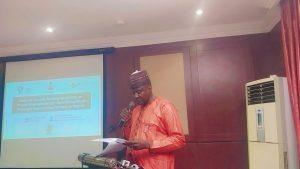
“Today, our nation faces a complex mix of environmental issues they demand strong institutional capacity to plan, implement, monitor, and oversee environmental projects effectively an objective the workshop is designed to support.” He said
According to him, over the years, GEF-supported projects have played a significant role in advancing environmental sustainability in Nigeria.
“Interventions in biodiversity conservation have contributed to the protection of more than 500 indigenous plant species, strengthened community-based conservation initiatives, and promoted sustainable forest management.”
The government emphasised that the gathering represents a strategic step toward ensuring that Nigeria fully maximizes the benefits of global environmental financing while delivering measurable and lasting outcomes for its people.
The Minister said that the workshop is expected to equip stakeholders with the knowledge and tools needed to translate learning into improved project performance, stronger reporting systems, and more effective partnerships that advance Nigeria’s environmental and development goals.
He further stressed that in the area of climate change mitigation, GEF projects have supported renewable energy development, energy efficiency, and sustainable land-use practices aligned with Nigeria’s climate action goals.
“GEF has also made notable contributions to combating land degradation by supporting sustainable agriculture, restoring degraded landscapes, and enhancing food security and ecosystem health. Flagship initiatives such as the Application of Nature-Based Solutions for Sustainable Forest Restoration and Livelihoods’ Resilience demonstrate how environmental protection can be effectively integrated with livelihood improvement and community resilience,” he said.
He urged stakeholders to actively engage in the sessions, share experiences, ask critical questions, and collaboratively develop practical oversight strategies aligned with national priorities.
In his remarks the Permanent Secretary represented by Planning Research and Statistics in the Ministry, Mrs Agnes Aneke said with more than three decades of partnership with the GEF, Nigeria continues to benefit from programs and projects that address biodiversity conservation.
According to her, “over the coming days, we will work together to deepen our understanding of the roles and responsibilities of the GEF-OFP, Implementing Agencies, and all project stakeholders. We will strengthen our skills in monitoring, evaluation, reporting, communication, and project visibility. Most importantly, we will develop practical oversight strategies that will guide our work moving forward.”
GEF Desk officer Federal Ministry of Environment Mr Kabiru Jeda Mohammed says the goal of the workshop is to enhance coordination, restore Nigeria’s full participation and credibility, and position the country to more effectively leverage international support for climate action and environmental sustainability.
“At this workshop, we are expecting that we have a greater collaboration with the United Nations agencies. Some of the gaps and challenges that I’ve been trying during my presentation. So, we hope that we close those gaps and have a greater collaboration in the future, ” he said.
Representatives of the Tropical Biology Association Dr Michael David explained that the Project oversight is critical to the success and outcomes of project implementation.
“Over the years, operational focal points (OFPs) across Global Fund (GF) implementing countries—including Nigeria have not been able to carry out effective oversight as intended. This gap is a major reason why we are focusing on building the capacity of the OFPs.” he explained
He stated that the OFP plays a critical role in the project cycle.
“They are involved from the very beginning initiating projects even before implementing agencies come together to support project development. Without strong oversight at this level, it becomes extremely difficult to measure the impact of GF-funded projects in Nigeria.”
Dr David explained that the workshop will examine the standards set by the Global Fund and adapt them to the Nigerian context.
“Our goal is to develop a practical framework for project monitoring that ensures GEF projects meet required standards and deliver the desire results that are expected. Oversight and monitoring are not the responsibility of implementing partners alone, all key stakeholders involved in GEF projects share this responsibility.”
“When we look at the GEF circle all over the years all together over $105 million has flowed into Nigeria through GEF cycles over the years, a critical question arises, where are the measurable impacts? Without proper oversight, tracking these impacts is nearly impossible. And without clear evidence of impact, we cannot effectively link GEF investments to national development priorities.
It is important to emphasise that oversight is not about fault-finding. Rather, it is about strengthening implementation and improving results. Implementing partners and OFPs must therefore work hand in hand, which is why this workshop is so critical,” he stated.
The workshop, organised in collaboration with the Global Environment Facility, the Federal Ministry of Environment, and technical support from the Tropical Biology Association (TBA), builds on momentum from a recent regional training held in Ghana.
Its Nigeria-specific focus is expected to deepen understanding of GEF policies, strengthen project oversight systems, and improve results delivery across funded interventions.
Lateefah Ibrahim