

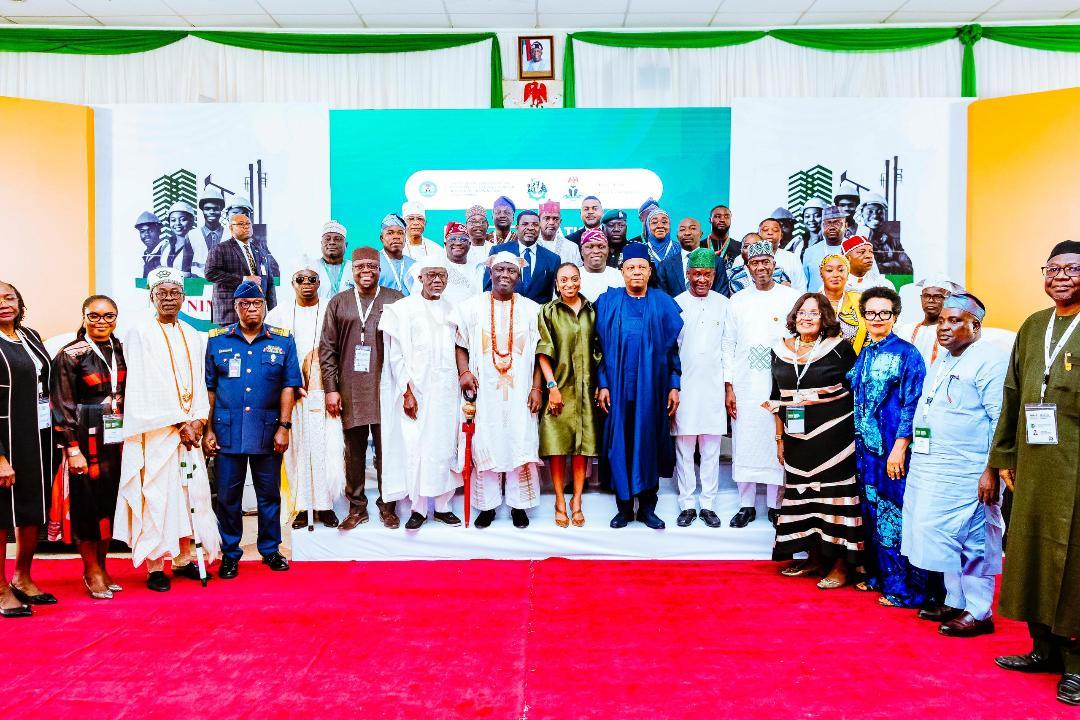
President Bola Tinubu on Tuesday announced plans for Nigeria’s first-ever National Industrial Manpower Development Policy, stressing that the country’s greatest asset lies in its people rather than its natural resources.
He made the declaration in his keynote address at the opening of the National Industrial Manpower Summit (NIMS) 2025, held at the State House Conference Centre, Abuja.
Represented by Vice President Kashim Shettima, the President said Nigeria must urgently invest in its citizens or face dire consequences.
He highlighted the pressing need to bridge the gap between educational output and industry requirements to unlock Nigeria’s economic potential.
The summit, themed “Manpower Development: The Bridge Between Potential and Productivity,” gathered government officials, industry leaders, academia, and international partners to develop actionable recommendations for workforce development.
“For a nation with a median age of about seventeen, Nigeria is an incredibly young country. This youthfulness is a gift, but it is also a responsibility. We must make our young people not just a demographic statistic but a central component of our policy-making process,” President Tinubu said.
He told participants: “An improvement in human capital, along with infrastructure and sound policy, is the bridge between development and setback in every nation. We cannot afford to divest from our people because the world will not pause to wait for us.”
Call for Action
The President described the summit not merely as a forum for discussion but as a call to produce actionable recommendations that will form the basis of Nigeria’s first National Industrial Manpower Development Policy.
“I assure you that this administration will review, adopt, and implement viable proposals with urgency,” he stated.
“Our mission is to align the education and training of our young people, and indeed the larger workforce, with the needs of industry. We must reverse the mismatch between what our institutions produce and what our economy requires. This cannot be realised unless we foster robust collaboration between the public and private sectors to prepare young Nigerians for the demands of today’s job market,” he added.
The President warned that disruptive technologies require a constantly evolving workforce and cautioned that Nigeria risks widening the skills gap if it fails to prepare adequately for the demands of the new technological order.
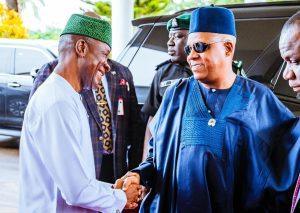
He called for an industrial skills database, sector-specific manpower roadmaps, and an elevated status for vocational and industrial training, insisting that welders, machinists, technicians, software engineers, and factory operators must be “treated with the dignity, respect, and opportunity they deserve.”
The Minister of State for Industry, John Enoh, described the summit as evidence of how President Tinubu’s leadership is hitting the right targets, noting the appointment of the first Senior Special Assistant on Industrial Training and Development as very intentional.
“So, at this gathering, I believe what we are doing is a celebration of that fact. What we are doing is a realisation of what the President’s imagination was. I mean there are moments in a nation’s journey when history itself seems to lean forward. When history does so, it is to watch and see whether we will be able to take advantage of the opportunities before us. So, for me today in this hall, we stand at such a moment,” Enoh said.
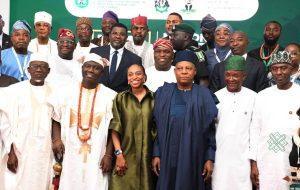
The Minister of Industry, Trade and Investment, Jumoke Oduwole, described national manpower as a key factor for attracting and retaining domestic investment to accelerate Nigeria’s industrialisation and economic development.
“Therefore, this gathering offers a timely opportunity to deepen our conversation and lay out a bold actionable strategy for a more resilient economy. Nigeria’s path to accelerating industrialisation, economic diversification and export-led growth is clear as a mandate of the Federal Ministry of Industry, Trade and Investment, firmly anchored in President Bola Ahmed Tinubu’s 8-point Renewed Hope Agenda which lays out a blueprint for building a stronger, more productive, competitive and inclusive economy,” she said.
The Minister of Labour and Employment, Mohammed Maigari Dingyadi, described the summit as a platform not only for dialogue but also to forge a unified direction on skills development, certification, and industrial manpower planning.
Similarly, the Senior Special Assistant to the President on Industrial Training and Development, Mr Adamson Ayinde Oluwatoyin, called the summit a turning point in the collective “quest to shape the future of Nigeria’s workforce under the vision of President Tinubu and in alignment with the Renewed Hope Agenda.”
The Director General of the Industrial Training Fund (ITF), Dr Afiz Ogun Oluwatoyin, said the summit provided an opportunity for policy dialogue, setting national targets in skills development, and discussing frameworks for mobilising national resources cohesively.
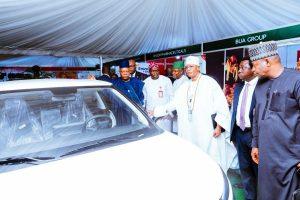
The summit also showcased some made-in-Nigeria goods and products.
PIAK