

The Federal Ministry of Environment has validated the National Green Women Platform (GWP), a groundbreaking initiative designed to empower Nigerian women to take ownership of climate solutions affecting their lives, families, and communities.
The platform seeks to strengthen women’s participation in governance and decision-making around land use, natural resources, and climate action, while granting them access to economic opportunities in reforestation, renewable energy, sustainable agriculture, and green enterprises.
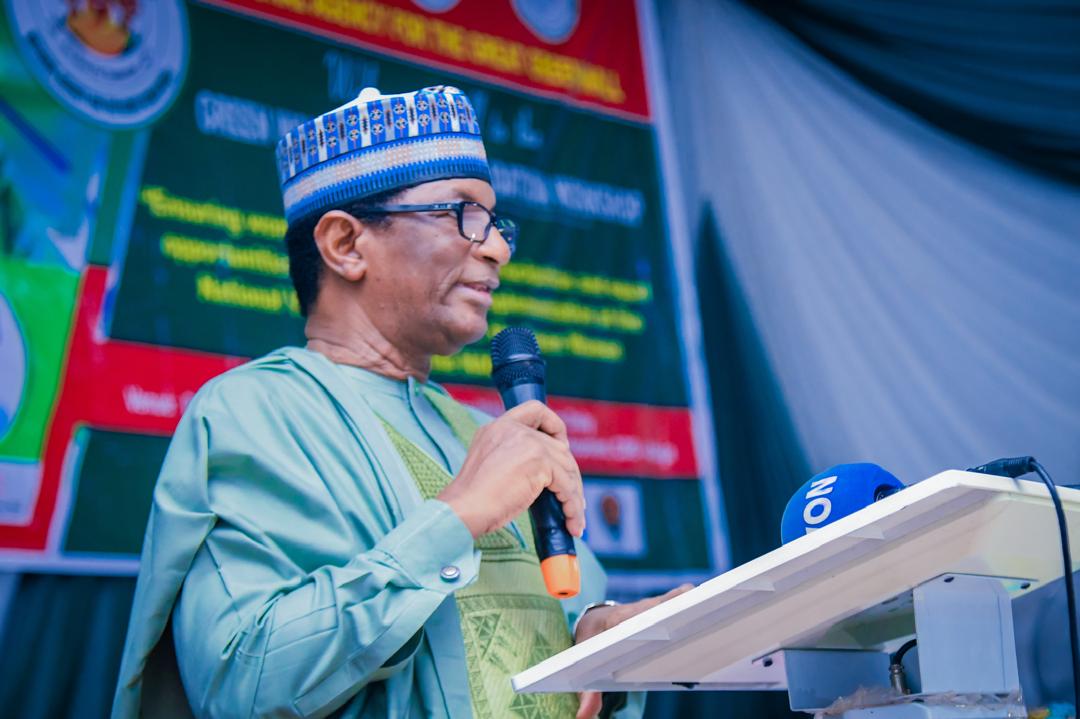
Speaking at the Validation Workshop held in Abuja, the Minister of Environment, Mr. Balarabe Lawal, described the validation as a milestone that marks the beginning of concrete actions to restore degraded lands, create jobs, empower women and youth, and build resilient communities.
“We are affirming that Nigerian women are not simply victims of climate change, but leaders of climate solutions. They are not passive beneficiaries, but innovators and decision-makers. They are not on the sidelines, but at the very center of the Great Green Wall,” he said
The Minister represented by Director of Planning, Research and Statistics, Agnes Aneke Nkechi further explained that “the Green Women Platform represents a movement for empowerment, advocacy, and transformation, enabling women to shape and drive sustainable environmental solutions nationwide.”
“By validating and operationalizing this platform, we are also positioning Nigeria strategically as we prepare for COP30 in Brazil, the success of the Green Women Platform will depend on partnerships and collective ownership. Government must continue to provide the enabling environment through policies and institutions,“ he added.
The Director General of the National Agency for the Great Green Wall (NAGGW), Mr. Saleh Abubakar, has described the Green Women Platform as a unique innovation within the Pan-African Great Green Wall initiative, designed to place women at the centre of efforts to combat desertification, climate change, land degradation, and livelihood loss.
“Here in Nigeria, women are not only custodians of the land but also agents of transformation within their communities. This validation workshop allows us to finalize the GWP’s national framework, define its governance structures, and agree on a practical two-year action plan to guide implementation,” Abubakar said.
He urged stakeholders to fully engage in the deliberations to ensure a strong and inclusive platform that empowers women to build resilience, restore degraded lands, and promote sustainable livelihoods.
“This validation workshop allows us to finalize the GWP’s national framework, define its governance structures, and agree on a practical two-year action plan to guide implementation,” he said.
The Head of Research and Development at the Pan-African Great Green Wall (PAGGW), Dr. Sakhoudia Thiam, underscored the importance of the platform in serving as an observatory for women’s rights and ensuring women’s full participation in local governance and access to natural resources.
“The Pan-African Agency of the Great Green Wall initiated the creation of the Women’s Green Platform in 2018 to support national GGW structures by federating, consolidating, and harmonizing the multiple actions of women across all categories.
The platform must provide guidance, serve as an interface, and represent the many women who do not have access to decision-making spheres — translating commitments into concrete action,”
Dr. Thiam explained.
Similarly, the Regional Gender Officer of the World Food Programme (WFP), Ms. Fatimata Dieng, says the workshop is a critical step forward in positioning women as leaders of climate resilience and sustainable development.
“This platform provides a space to validate the national framework, adopt a two-year action plan, and define governance and resource mobilization structures that will guide its success in Nigeria.
“Let us seize this opportunity to listen, learn, and co-create a future where women are not only beneficiaries but leaders of climate resilience and sustainable development. Together, act now for tomorrow,” she stated.
The Green Women Platform (GWP) demonstrates Nigeria’s commitment to mainstream gender equality in the implementation of the Great Green Wall programme, ensuring that women play a central role in achieving national environmental and climate goals.
By establishing the platform, Nigeria aligns with the regional vision of the Pan-African Great Green Wall and reinforces its commitment to several United Nations Sustainable Development Goals (SDGs).
The initiative also supports the African Union’s Agenda 2063, which envisions an Africa whose development is people-driven, relying on the potential of its people especially women and youths.