

The Federal Government has unveiled plans to tackle Nigeria’s growing health sector financing challenges, including an estimated $134 billion funding gap required to achieve health-related Sustainable Development Goal 3 (SDG-3) by 2030.
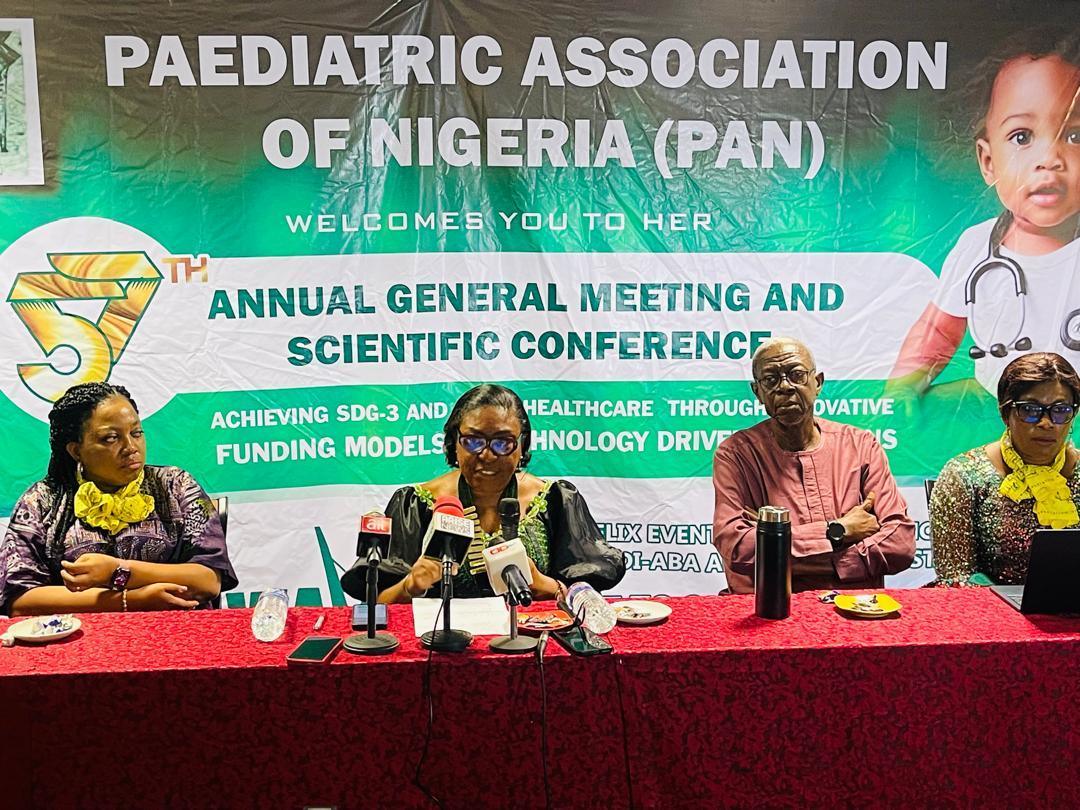
The Minister of State for Health, Dr. Ishiaq Salako, disclosed this on Wednesday at the 57th Annual General Meeting and Scientific Conference of the Paediatric Association of Nigeria (PAN), tagged PANConf Gateway 2025
The conference brought together policymakers, health professionals, and development partners to examine sustainable pathways for reducing preventable child deaths and accelerating Nigeria’s progress towards achieving SDG-3 by 2030.
Read Also: Paediatricians Urges Action on Nigeria’s Child Health Goals
Salako, who was represented by the Deputy Director of Child Health, Dr. Omokore Oluseyi explained that about $103 billion of the funding gap is required to tackle under-five mortality, noting that Nigeria is prioritising child survival through the Health Sector Investment Plan.
He reaffirmed the Federal Government’s commitment to reducing child mortality to the barest minimum, if not eradicating it entirely.
The minister revealed that the Ministry of Health has finalised the National Child Survival Action Plan, which focuses on evidence-based interventions such as newborn resuscitation, integrated nutrition services, and community-based management of childhood illness
“To drive these initiatives, the ministry is leveraging technology, digitalising the integrated community management platform to improve real-time diagnosis, referral, and data capture.”
Salako noted that Nigeria continues to face serious challenges in reducing under-five mortality, contributing over 17 per cent of global child deaths, with preventable conditions such as prematurity, pneumonia, malaria, and malnutrition remaining the leading causes.
He called on all stakeholders to support the effective implementation of the government’s plans by addressing operational and implementation bottlenecks in newborn care, child nutrition, and digital health systems.
“We urge members of Nigeria to identify operational and implementation restrictions across the country. Your audience will continue to guide policy formulation and accelerate our shared nation to end preventable death in Nigeria,” he added.
In a keynote lecture, Professor of Paediatrics at the University of Ilorin, Olugbenga Mokolu, stressed the importance of innovative financing and technology deployment in achieving SDG targets, particularly in reducing child mortality.
Speaking on the theme “Achieving SDG-3 and Child Health Care through Innovative Funding Models and Technology-Driven Solutions”, Prof. Mokolu said bridging the health financing gap would require leveraging domestic resources, expanding social insurance coverage, and deploying digital health solutions.