

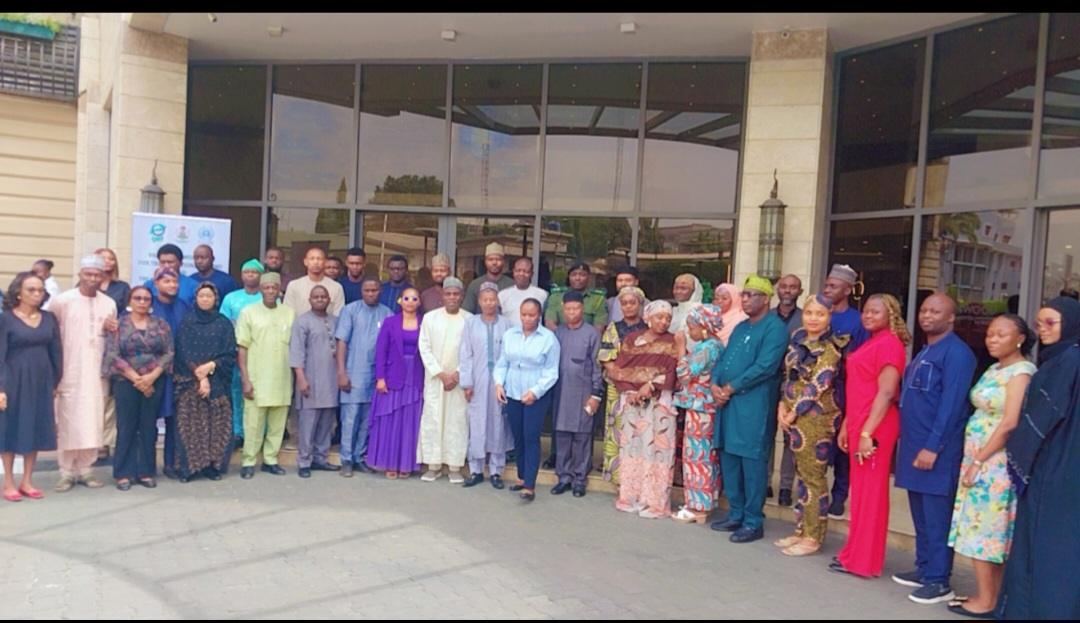
Nigeria has begun the validation of its 7th National Report to the Convention on Biological Diversity (CBD), a key milestone in the country’s efforts to strengthen biodiversity governance and align national actions with the global Kunming-Montreal Biodiversity Framework.
Speaking at the 7th National Report Validation workshop, held in Abuja, the nation’s capital, Minister of Environment Mr Balarabe Lawal says the government remains committed to implementing the Kunming-Montreal Global Biodiversity Framework through a whole-of-government approach as articulated in the country’s NBSAP, stressing the need for coordinated action, sustained financing, robust data systems, and effective partnerships.
The 7th National Report serves as a bridge between global and national efforts, assessing progress on past biodiversity targets, highlighting challenges, and providing a baseline for tracking implementation of the Global Biodiversity Framework.
Represented by the Deputy Director of Forestry in the Ministry, Mr Tijani Ahmed, the Minister says the Nigerian government recognize that achieving the 2030 biodiversity targets requires strengthened coordination, sustained financing, robust data systems, and effective partnerships across sectors.
“I therefore encourage all participants to engage actively and constructively in reviewing the draft report, validating the data and analysis, and providing practical recommendations that will enhance its quality, credibility, and policy relevance. Your inputs will be valuable in ensuring that Nigeria submits a strong 7th National Report that reflects both our achievements and our renewed ambition for biodiversity conservation and sustainable use,” he says.
The Minister emphasised that the 7th National Report is being prepared at a critical moment for both global and national biodiversity action.
“With the adoption of the Kunming-Montreal Global Biodiversity Framework, nations are called to halt and reverse biodiversity loss by 2030 while ensuring that biodiversity supports sustainable development, human well-being, and climate resilience.
“At the national level, Nigeria has revised its National Biodiversity Strategy and Action Plan (NBSAP) to provide a strategic roadmap for translating global biodiversity commitments into concrete and measurable actions.”
He said the NBSAP prioritises ecosystem restoration, sustainable resource use, mainstreaming biodiversity across sectors, capacity development, resource mobilisation, and inclusive governance.
The Minister urged participants to ensure that the report reflects realities on the ground, informs decision-making, guides investment priorities, strengthens accountability, and recognises contributions from sub-national actors, indigenous communities, women, youth, and the private sector.
The Minister of Environment stressed that this workshop is not routine, but an opportunity to align national policies and plans with global biodiversity targets, validate data, and provide practical recommendations to enhance the report’s credibility and policy relevance.
The Director of Forestry, Hajiya Halima Bawa-Bwari, who welcomed participants, described the report as “A mirror reflecting our progress, challenges, and aspirations in conserving the rich biological heritage entrusted to us.”
She emphasised that biodiversity underpins livelihoods, food security, climate resilience, and cultural identity, and called for collaboration, innovation, and inclusivity in ensuring effective conservation across sectors.
The 7th National Report assesses Nigeria’s progress on previous biodiversity targets, highlights lessons learned, and provides a baseline for tracking the implementation of the revised National Biodiversity Strategy and Action Plan (NBSAP).
“Key priorities include ecosystem restoration, sustainable use of biological resources, mainstreaming biodiversity across sectors, resource mobilisation, and capacity development,” she said.
Both the Minister and Director emphasised that the outcomes should inform decision-making, guide investments, strengthen accountability, and highlight the contributions of sub-national actors, indigenous communities, women, youth, and the private sector.
In an overview presentation, John Onyekuru emphasised the importance of assessing progress related to the goals and targets of the Kunming-Montreal Global Biodiversity Framework (KMGBF).
He noted that regular and transparent evaluation is essential to determine whether countries are on track to halt biodiversity loss, restore degraded ecosystems, and ensure the sustainable use of natural resources. “Such assessments rely on measurable indicators, reliable data systems, and coordinated reporting mechanisms that align national efforts with global biodiversity commitments.
Dr Onyekuru further highlighted that assessing progress towards national targets enables governments to identify gaps, strengthen implementation strategies, and allocate resources more effectively.
“By integrating biodiversity indicators into national development plans and monitoring frameworks, countries can track achievements, address emerging challenges, and promote accountability. Continuous assessment not only supports evidence-based decision-making but also fosters collaboration among stakeholders, ensuring that national actions contribute meaningfully to the overall success of the KMGBF,” he added.
The workshop had in attendance stakeholders from ministries, government agencies, research institutions, civil society organisations, the private sector, development partners, and technical experts who contributed to the draft report.
The finalised report will guide policy, resource allocation, and biodiversity conservation, positioning Nigeria as a proactive leader in sustainable development for present and future generations.