

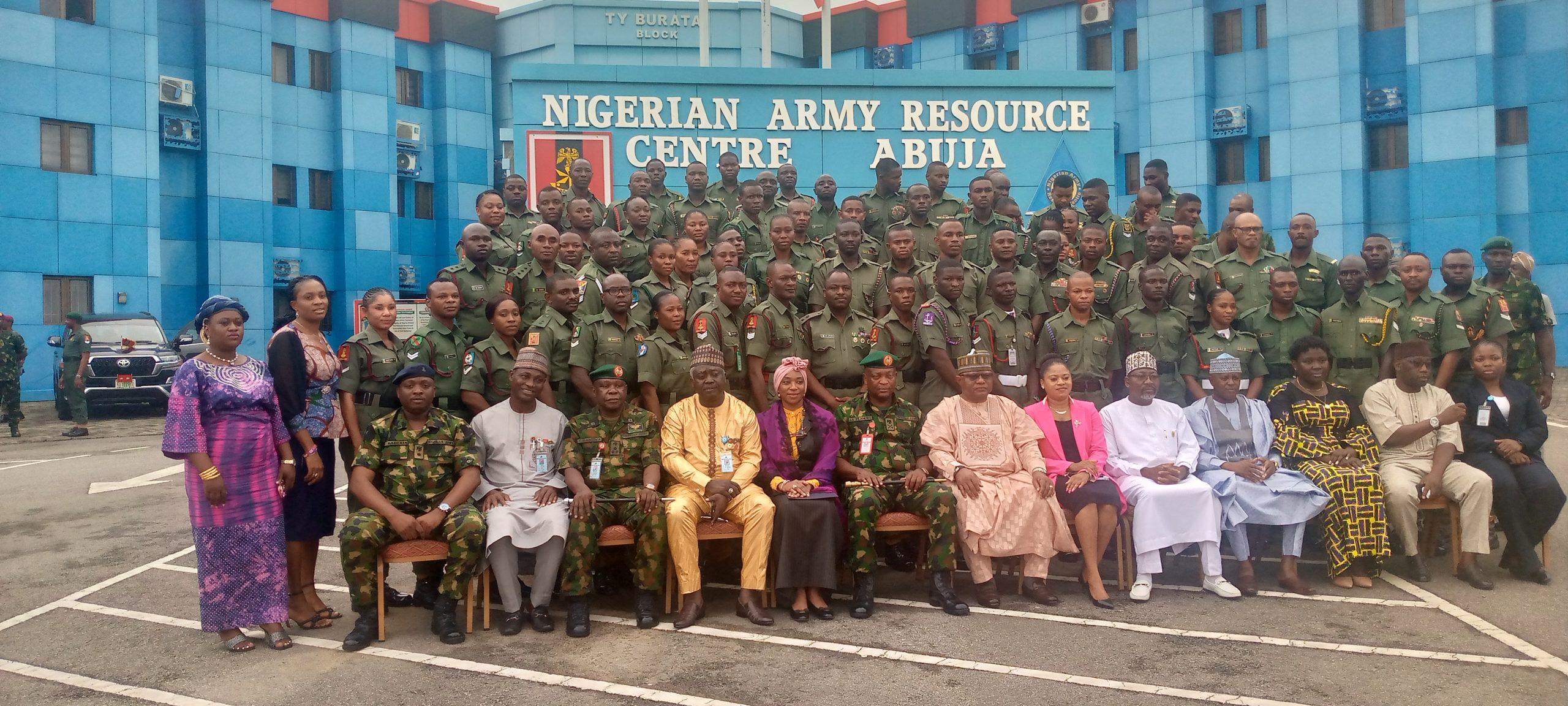
The Nigerian Army has underscored the critical role of indigenous language proficiency in enhancing intelligence-driven operations, saying effective communication with local communities is vital to countering security threats.
Chief of Army Staff, Lieutenant General Olufemi Oluyede, made this known in Abuja during the graduation ceremony of 150 officers from the 19th Indigenous Language Proficiency Course.
He was represented by the Chief of Administration (Army), Major General Lawrence Fejokwu.
The Army Chief stated that “credible and reliable intelligence depends largely on the ability of troops to interact directly with the local populace in their dialects”.
General Oluyede further said that “proficiency in indigenous languages will significantly boost troops’ capacity to counter and respond swiftly to emerging threats”, stressing that unchecked threats could undermine Nigeria’s corporate existence.
He encouraged personnel to consistently practice their oral skills and immerse themselves in local languages, describing language proficiency as a force multiplier in field operations.
General Oluyede also commended the Nigerian Army Resource Centre and Laklik Services Limited for sustaining the initiative and training soldiers effectively.
He reminded graduates that certification was only the beginning of the learning process.
“I reiterate that you all must continue to use every opportunity available to improve on your current proficiency level in the languages you have learned for enhanced efficiency at your various places of deployment
“Failure to pass the annual online recertification test will lead to the withdrawal of benefits associated with the course,” General Oluyede warned.

The Director General of the Nigerian Army Resource Centre, retired Major General James Myan, explained that the programme was conceived due to its importance in operational, administrative, and logistic activities within the force.
General Myan said, “Understanding the language of the environment in which troops operate makes their tasks easier and more effective, particularly in intelligence gathering and community engagement.”
He commended the graduates for their commitment throughout the eight-week training and assured them that the knowledge gained would improve their effectiveness in ongoing and future operations.
They will undergo periodic recertification examinations to sustain proficiency.
One of the participants, Ajala Adiola, praised the programme as a transformative initiative.
Adiola said that “despite having no prior knowledge, within one month I was able to develop strong proficiency in both Yoruba and Hausa due to the effective teaching methods and pedagogy. The course not only improved communication skills but also deepened cultural appreciation and national identity”.
She called for the programme to be expanded to benefit more service personnel and extended to Nigerians at large, stressing that “knowing indigenous languages enhances self-identity and promotes national progress”.
Certificates were awarded to all graduates at the ceremony.
PIAK