

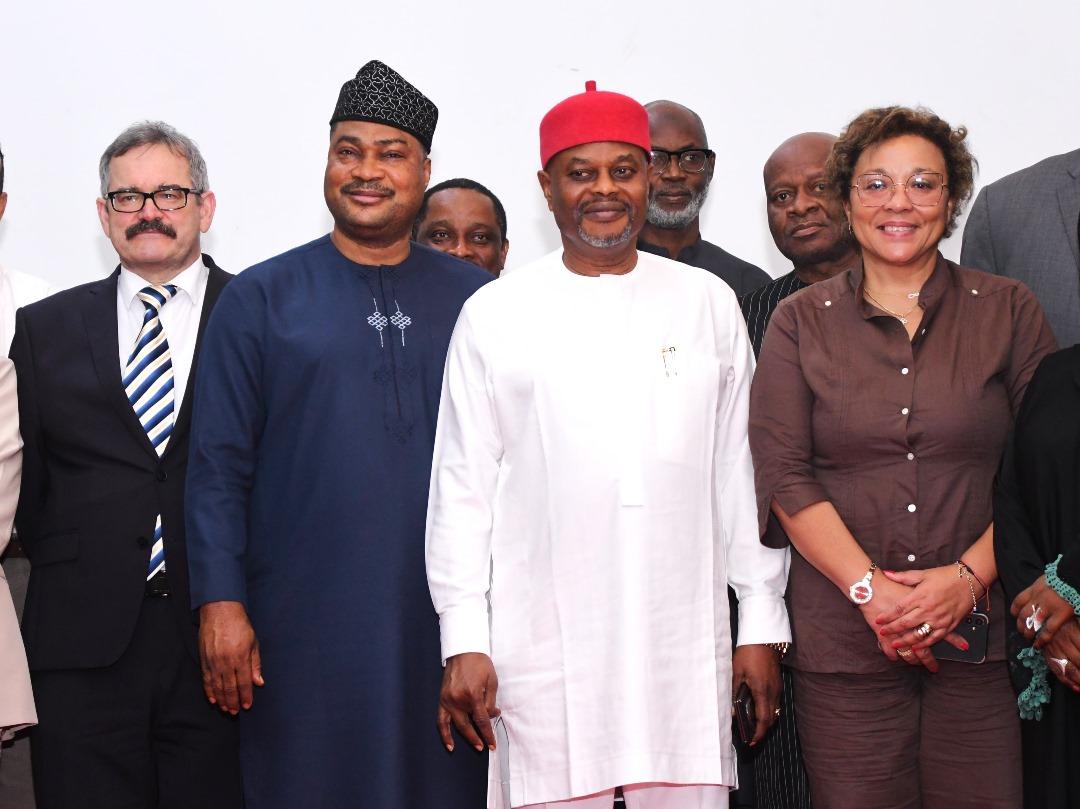
The Nigerian Government has said that research and innovation have moved beyond the walls of laboratories and now sit “at the heart of national development, security, economic diversification, and societal transformation of the nation.”
This was made known by Nigeria’s Minister of Innovation, Science and Technology, Chief Uche Nnaji during a diplomatic briefing on the Inter-Ministerial Committee on Research and Innovation (IMC-RI) in Abuja, Nigeria’s capital.
According to him, the Committee was created to unify and coordinate Nigeria’s research priorities under a single strategic framework, bringing together key ministries such as Education, Health, Agriculture, Energy, ICT, Industry, and Environment, among others, with the Vice President of the country as the Chairman.

Nnaji explained that the Committee’s mandate “is to formulate a National Research and Innovation Strategy, to foster cross-sectoral collaboration, optimise funding infrastructure and build enduring strategic partnership across the globe.”
Competitiveness
He said that the framework has identified five priority sectors with the greatest potential to drive economic diversification, enhance competitiveness, reduce import dependency, and position Nigeria for global leadership.
“The five sectors are Agriculture and Climate Resilience, Manufacturing Excellence, Energy Security, Health Innovation, and National Resources Optimisation,” he said.
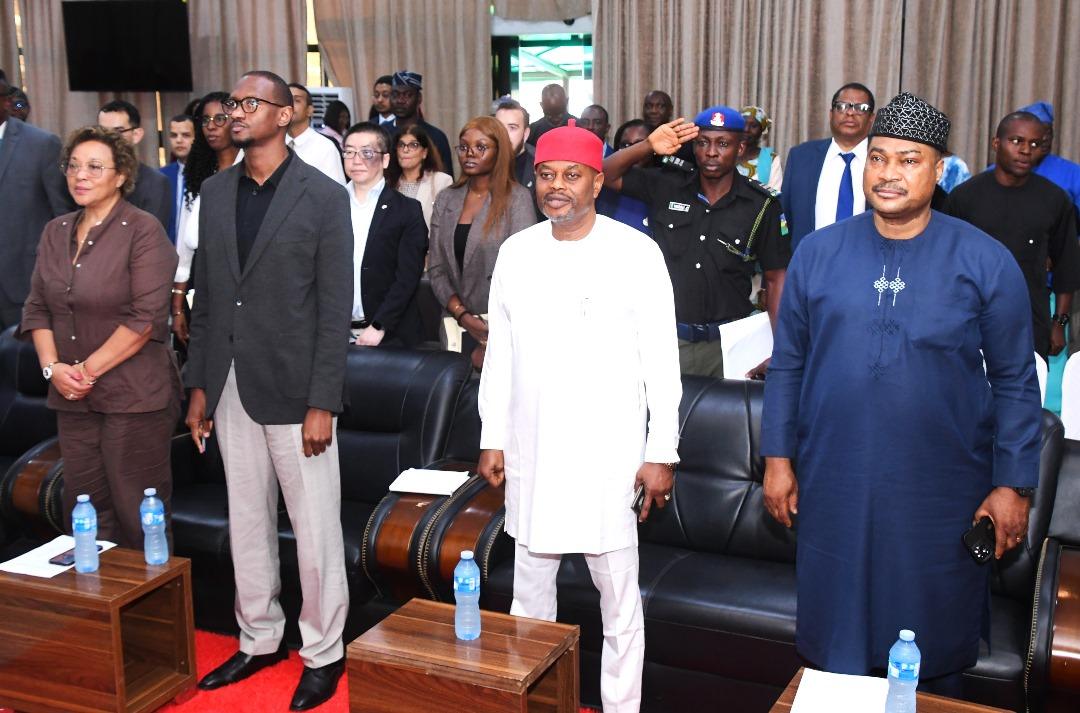
The Minister commended the Ministry of Foreign Affairs, Heads of Mission, and Senior Diplomats for their swift response, assuring them of his ministry’s commitment to “transparency, inclusiveness and excellence, for together we can build an innovation-driven economy to strengthen our scientific and technological bonds.”
Representing the Minister of Foreign Affairs, the Director of Foreign Services, Ambassador Bola Akinremi said the initiative “will help the nation to breakthrough in the area of innovation and also create wealth for the development of the country,” aligning with President Bola Ahmed Tinubu’s Renewed Hope Agenda.”
Also speaking, the Senior Special Adviser to the President on Innovation, Mr. Nasir Yammama, stressed that for the nation to achieve a breakthrough in innovation, “it is essential to implement policies that support and sustain innovation as a catalyst for socio-economic development.”
He said that the Committee is expected to ensure “that every Nigerian is included in matters of prosperity, which encompass all aspects of life.”
In her vote of thanks, the Director of Planning, Research and Policy Analysis, Mrs. Salamatu Mohammed, said the success of the Inter-Ministerial Committee on Research and Innovation depends on “continued collaboration, shared commitments and willingness to translate the outcome into tangible actions which would advance the sustainable development of Nigeria.
Lateefah Ibrahim