


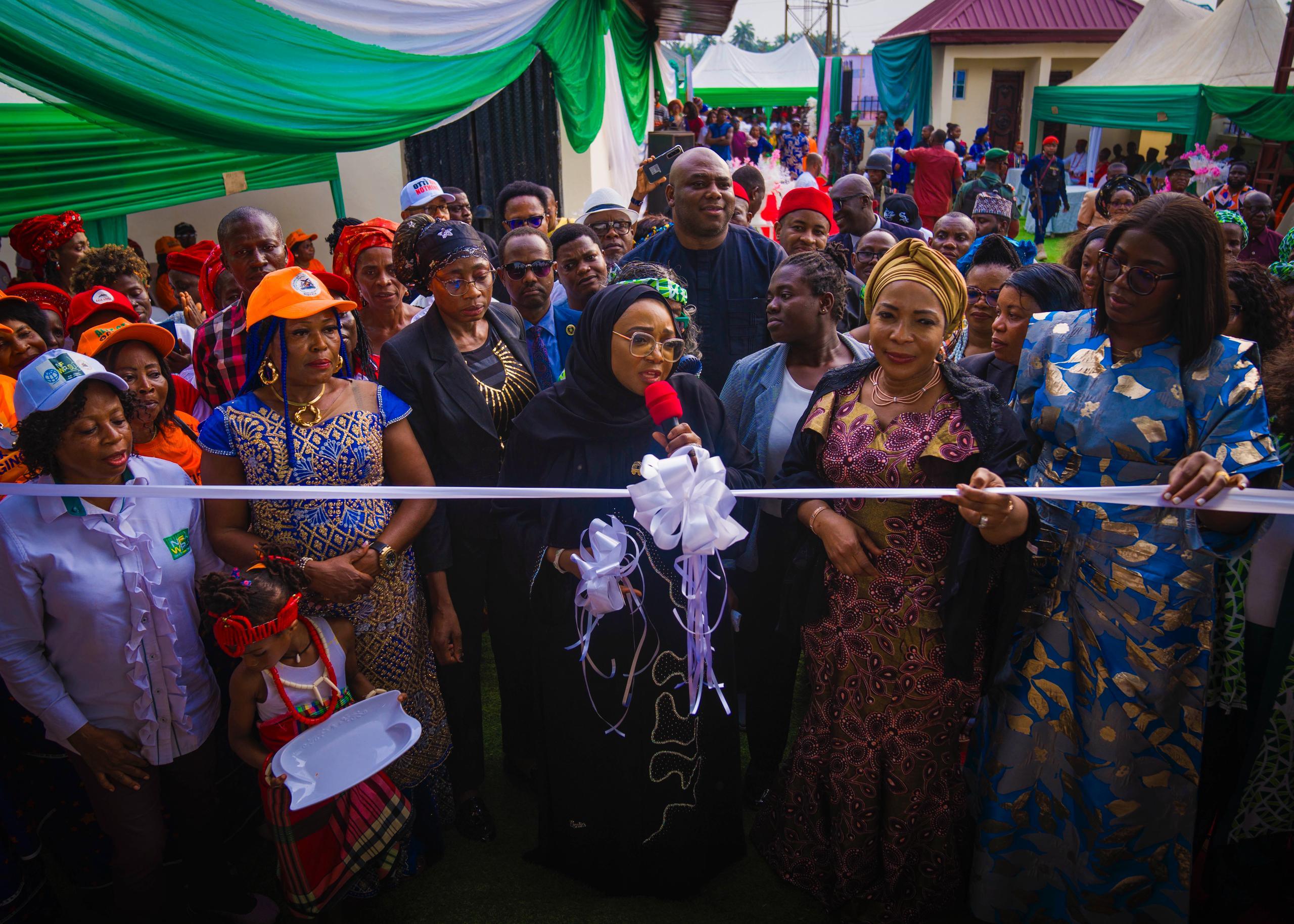
The Nigerian Government has reaffirmed its commitment to Women’s economic empowerment with the commissioning of the Osusu Abaala Women Palm-Oil Collective in Isialangwa North Local Government Area of Abia State under the Nigeria for Women Programme.
Speaking at the event, the Minister of Women Affairs and Social Development, Imaan Sulaiman-Ibrahim, described the initiative as a milestone in advancing rural productivity, inclusive economic development, and structured women-led enterprise.
“What we are witnessing today is not accidental; it is the result of deliberate policy, sustained partnerships, and the resilience of Nigerian women, the commissioning of the Osusu Abaala Women Palm-Oil Collective demonstrates how organised women, when supported with structure, skills, and market linkages, can transition from fragmented informal activity to coordinated, market-oriented production.” the Minister stated.
Sulaiman-Ibrahim noted that the Nigeria for Women Programme was designed to address longstanding structural barriers limiting women’s access to finance, markets, skills, and social capital. Phase I of the programme, implemented between 2018 and 2024 across the six geo-political zones, delivered measurable improvements in income, savings, enterprise development, and collective action.
Building on this success, the Nigerian Government has commenced a national scale-up phase launched by President Bola Ahmed Tinubu, aimed at reaching at least five million women across all 36 States and the Federal Capital Territory as part of a coordinated national strategy on livelihoods, food security, and inclusive growth.
Sulaiman-Ibrahim explained that the expansion aligns with the broader Renewed Hope Social Impact Interventions – 774 (RH-SII 774), a structured delivery framework integrating women’s economic empowerment, food security, social protection, and family resilience across all Local Government Areas nationwide.
“Within this architecture, initiatives like the Nigeria for Women Project Collectives serve as practical entry points for economic inclusion at the community level,” she said.
Highlighting the national significance of the initiative, the Minister noted that the commissioning aligns directly with the Renewed Hope Agenda of President Tinubu, who has positioned women’s economic empowerment as central to national productivity, rural development, and social stability.
She further referenced the President’s declaration of 2026 as the Year of Social Development and Families.
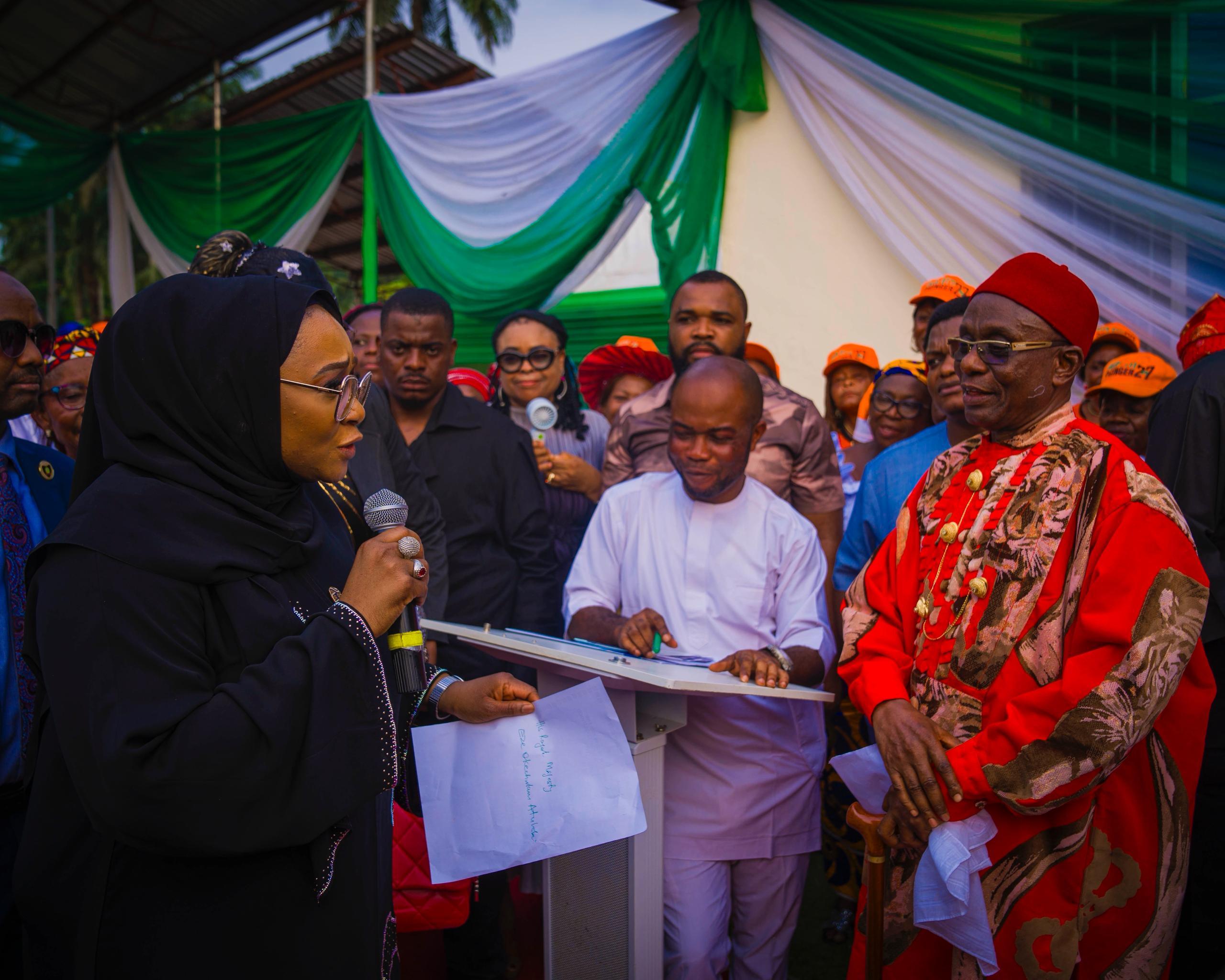
Addressing the beneficiaries, Sulaiman-Ibrahim urged the women of Osusu Abaala to manage the facility with transparency and discipline.
She said; “This facility is an economic asset and a collective responsibility. It must be governed transparently, managed efficiently, and sustained through accountability, reinvestment, and disciplined group leadership.
“With improved processing capacity and stronger market linkages, your productivity, bargaining power, and incomes should increase significantly.”
She commended the President for his visionary leadership and acknowledged the advocacy of the First Lady, Senator Oluremi Tinubu, for elevating the visibility and economic agency of Nigerian women.
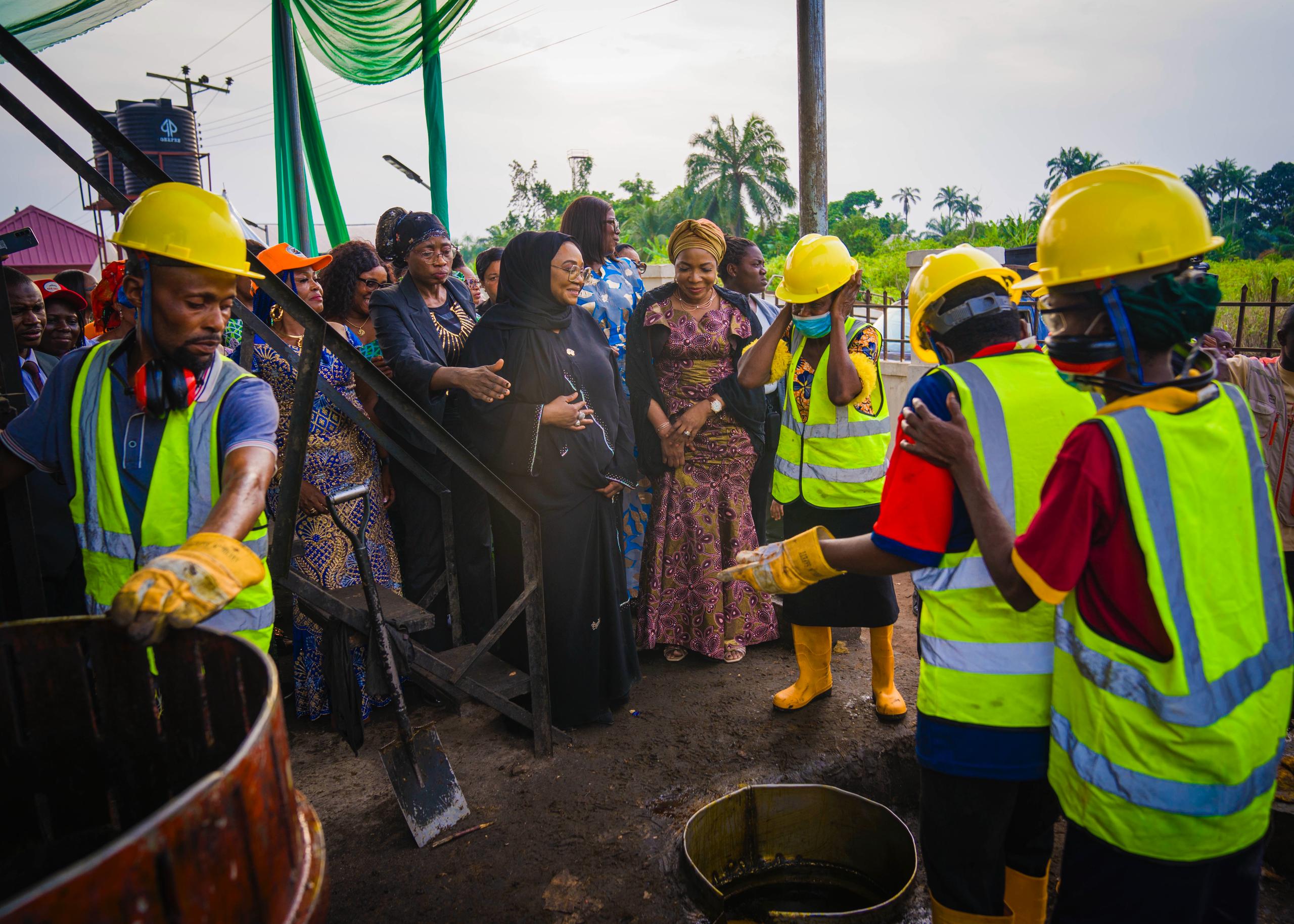
Sulaiman-Ibrahim also commended the Governor of Abia State, Alex Otti, and Her Excellency, Mrs. Priscilla Chidinma Otti, for providing the enabling environment that supports women-focused economic initiatives in the state, describing their partnership as an example of effective federal-state cooperation.
The Minister extended appreciation to the World Bank and other development partners for their technical and financial support, which has strengthened implementation systems and integrated global best practices in programme delivery.
“It is my prayer that the Osusu Abaala Women Palm-Oil Collective will stand as a replicable model of organised women’s enterprise, local value addition, and inclusive agribusiness development,” Sulaiman-Ibrahim said.