


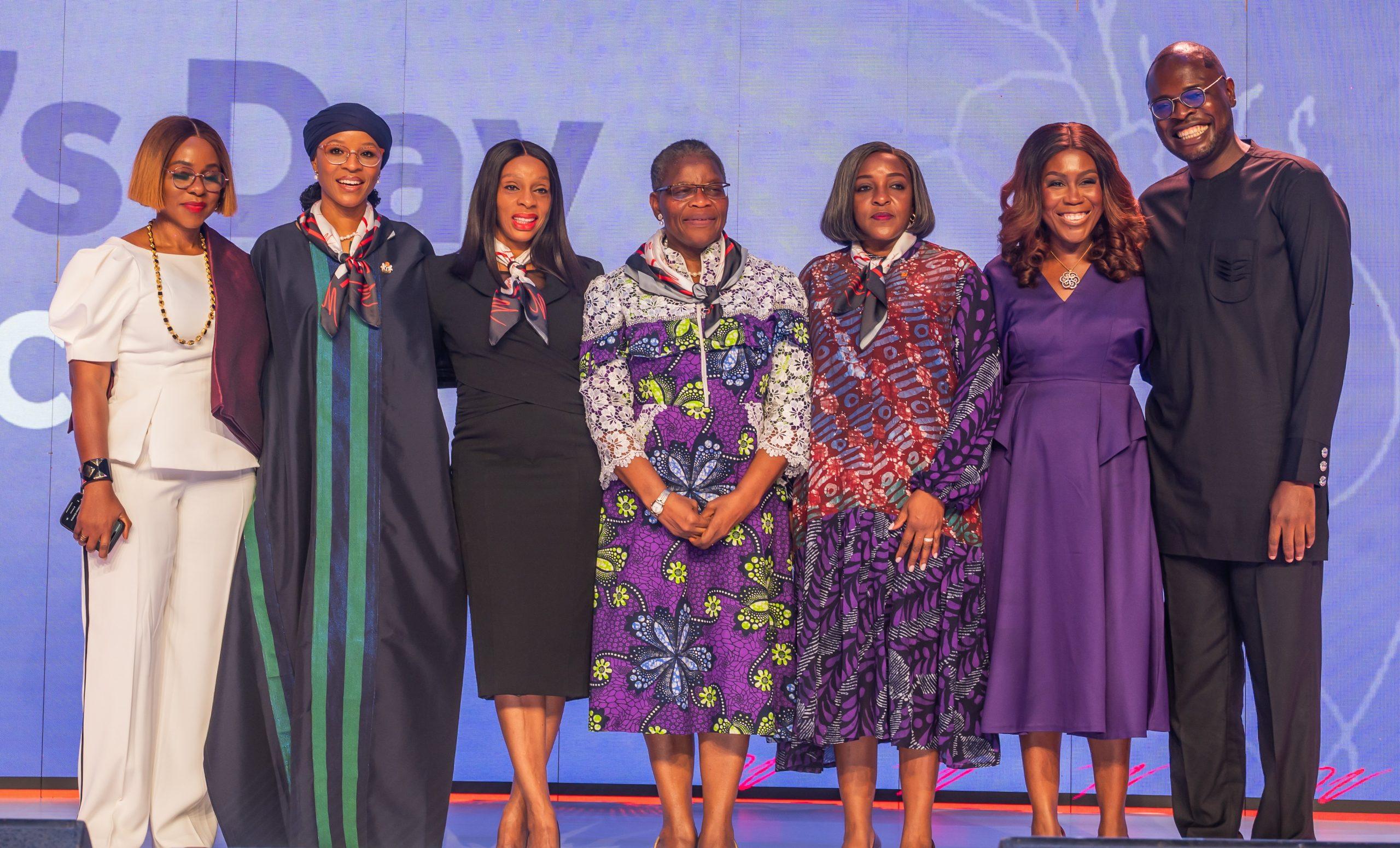
The Nigerian Government has reiterated its commitment to empowering women as key drivers of the nation’s creative economy, with a focus on expanding access to finance, skills development and leadership opportunities.
The Minister of Art, Culture, Tourism, and the Creative Economy, Hannatu Musawa, made the commitment in an address delivered at the International Women’s Day Conference, organised by Access Bank Plc.
Musawa, represented by the Director-General of the Center for Black and African Arts and Civilisation (CBAAC), Mrs. Aisha Adamu, said women were increasingly taking the lead in building businesses, driving innovation, and shaping society.
“Across Nigeria, women have always been the invisible architects of our culture, yet their contributions have been under-represented and undervalued,” she said.
On financing, Musawa noted that women-owned businesses account for about 40 per cent of small and medium enterprises but continue to face significant funding gaps.
READ ALSO: NIPR Pushes Active Women’s Empowerment for National Development
“Too many ideas remain small not because they lack potential, but because they lack access to capital,” she said.
She added that the government was working to unlock targeted funding for women, strengthen market access and improve data systems to support women entrepreneurs, while also promoting their inclusion in leadership and policy-making processes.
Earlier, the Chairman of Access Bank Plc, Mrs Ifeyinwa Osime, called for deliberate and strategic investment in women as a catalyst for sustainable economic growth, seen as a strategic economic decision rather than charity.
Osime said, “When we speak of giving, it is about expanding access to finance, markets, knowledge and platforms that enable women to build sustainable businesses. ” No economy can optimise its potential while underinvesting in half of its population.”
She highlighted the bank’s interventions through its Women Initiative and the entrepreneur Pitch-a-tonne program, which provides financing, training, and healthcare support to thousands of women.
Also, former Minister of Education, Dr. Oby Ezekwesili, said that societies transform when critical issues, such as women’s inclusion, are deliberately prioritised.
“There is no other way societies have transformed than when people who care make an issue a priority,” she said.
She noted that removing structural barriers limiting women’s participation would unlock significant economic potential, adding that agricultural output could increase by up to 30 per cent if women had equal access to inputs as men.
During a one-on-one session, Ezekwesili also emphasised the need to uphold shared values for national and continental growth, stating that “values are our internal currencies.”