

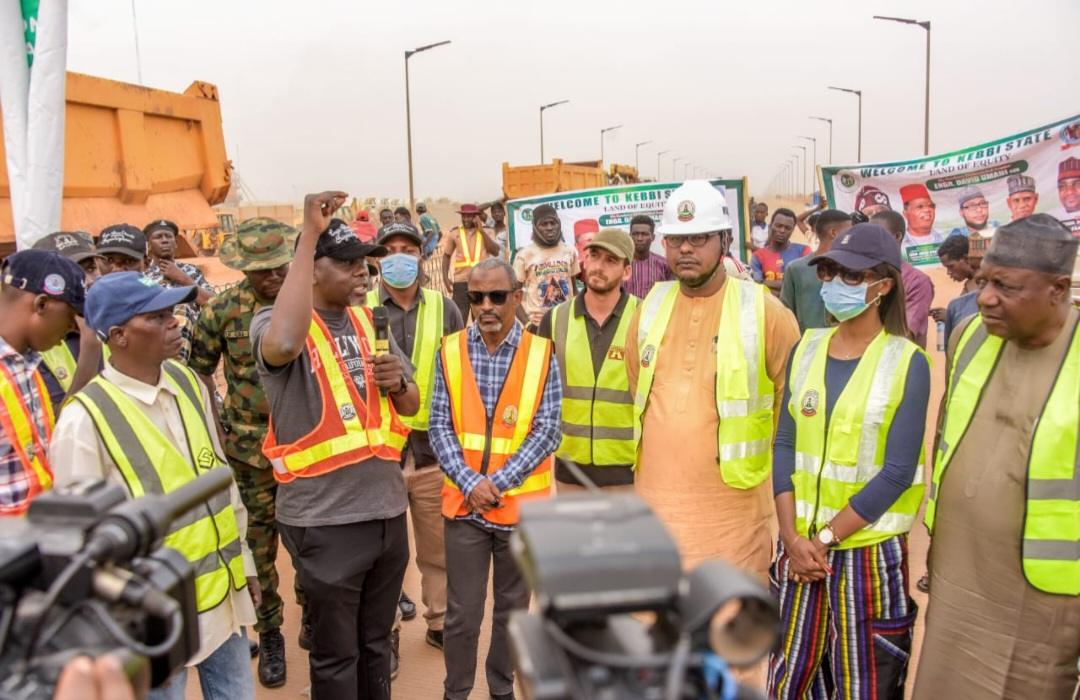
The Federal Government of Nigeria has reaffirmed its commitment to the completion of the 1,068-kilometre Sokoto–Badagry Superhighway, announcing significant progress across the Sokoto and Kebbi State sections of the project.
This was revealed during a joint media tour, project inspection, and commissioning of emergency road interventions conducted by the Federal Ministry of Works in the North-West.
The Senior Special Assistant to President Bola Ahmed Tinubu on Community Engagement (North-West), Abdullahi Tanko-Yakasai, said the project is a clear demonstration of the President’s dedication to developing critical national infrastructure.
He noted that although the superhighway was first conceived during the administration of former President Shehu Shagari in the 1980s, President Tinubu is now actualising the long-delayed vision.
Yakasai urged citizens to support the administration’s drive toward completing legacy and people-oriented projects, adding that the superhighway would transform communities along its corridor by improving transportation, agriculture, trade, and security.
Federal Controllers of Works in Sokoto and Kebbi States confirmed consistent progress on the project.
In the Sokoto axis, Federal Controller of Works, Kassimu Maigwandu, said work covers about 120 kilometres and includes a six-lane concrete road, bridges, solar lighting, CCTV cameras, health posts, security stations, and a rail component. He added that contractors are working simultaneously from six locations with adequate security arrangements.
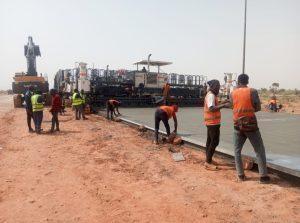
In Kebbi State, Federal Controller of Works, Ishaya Vandu, highlighted ongoing construction milestones, including: continuous Reinforced Concrete Pavement (CRCP) works on a seven-kilometre stretch between Kilometres 177 and 170. Earthworks extending to Kilometre 135. Soil stabilisation over 25 kilometres. Active site clearance along additional sections. Construction teams mobilised from Kilometre 348 with clearance already completed on 10 kilometres.
He expressed optimism that substantial progress would be achieved before the second quarter of the year.
According to Yakasai, the Kebbi axis, spanning more than 250 kilometres is already generating jobs and stimulating economic activities in host communities. He added that the superhighway would include solar-powered lighting, dams, and rail infrastructure to support agriculture, electricity generation, and commerce.
Local engineers, civil society representatives, and residents also commended the federal government, noting that improved road networks have eased movement, boosted farming opportunities, and elevated living standards.
Ministry Commissions Emergency Road Repairs as part of the tour, the Ministry of Works commissioned several emergency/special intervention road projects in Kebbi State, including: Repairs of washed-out embankments and desilting of drains along the Jega–Koko–Yauri corridor. Rehabilitation of flood-damaged sections on Birnin Kebbi–Argungu–Kaniyaka Road. Emergency works on the Bunza–Kamba axis of the Kalgo–Bunza–Kamba Road.
According to the Ministry’s Director of Information, Mohammed Ahmed, the tour was organised to allow stakeholders and the media to independently verify the scale and quality of work on the superhighway and related interventions.
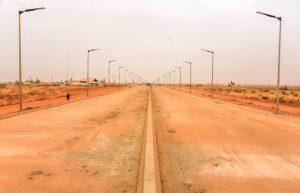
Engineers and residents described the superhighway traversing Sokoto, Kebbi, Niger, Kwara, Oyo, Ogun, and Lagos as a landmark project that will boost national integration, tourism, agriculture, trade, and economic growth.
The Sokoto–Badagry Superhighway, inaugurated on October 24, 2024, remains one of the flagship initiatives under the Renewed Hope Agenda aimed at modernising Nigeria’s transportation infrastructure.