

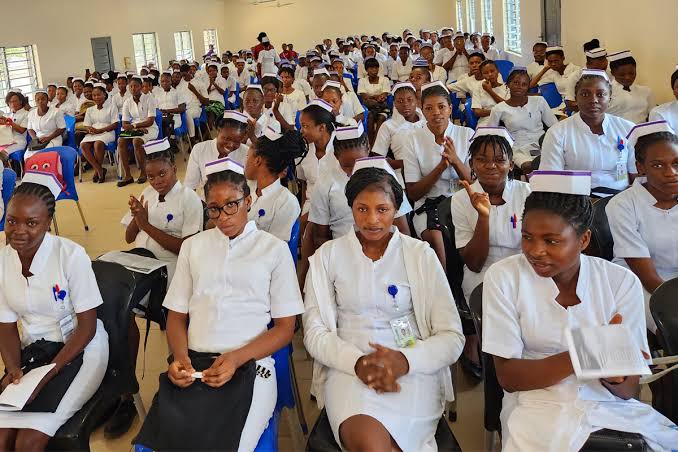
The Nigeria Government has announced plans to unveil a comprehensive blueprint called the Nigeria Strategic Directions for Nursing and Midwifery, aimed at advancing education and creating clear career pathways.
The blueprint will also expand leadership roles, and improve talent retention in the profession.
The Coordinating Minister of Health and Social Welfare, Professor Muhammad Pate announced this in Abuja during the Health Action Training on Person-Centred Care and Caring for the Career.
Pate, who was represented by Dr Abisola Adegoke, Director, Teaching Hospitals Division, said the theme ”for the training resonated deeply with national priorities because person-centred care went beyond clinical treatment.
“It embodies compassion, respect, inclusivity, and responding to each individual’s needs and values, which is rooted in dignity,’’ he said.
The Minister said the administration of President Bola Tinubu had prioritised deliberate investments in healthcare professionals, especially the nursing and midwifery workforce, to close the significant supply–demand gap.
Pate stressed that for care to be truly person-centred, the careers themselves, especially nurses and midwives, must be cared for, as they face immense pressures that affect their mental, emotional and professional well-being.
The Registrar, Nursing and Midwifery Council of Nigeria, Dr Alhassan Ndagi explained that person-centred care required listening to patients before diagnosis, understanding them before prescribing, and reassuring them before treatment.
“It requires a strong shift in our treatment, not just looking at the diagnosis, but finding what matters to the person,’’ he said.
Dr Ndagi noted that “caregivers, including nurses, doctors, and even family members, often faced stress, burnout, and resource constraints, which underscored the need for supportive systems and stronger collaboration among stakeholders.”
Similarly, the Chief Medical Director of the National Hospital, Abuja, Professor Muhammad Raji, explained that person-centred care means recognising patients’ hopes, fears, values, and experiences, while placing them—not the system—at the heart of healthcare decisions.
Professor Raji said; “When care is person, trust grows, outcomes improve, and the human connection that makes healthcare meaningful is restored.
READ MORE:Nigeria Has The Capacity To Export Medical Practitioners
“However, compassionate care can only be sustained if careers themselves are supported,’’ he said.
Professor Raji urged health professionals to develop peer-support systems and encourage conversations that help ease frustration, especially in the face of workplace stress or even violence from patients and their relatives.
Co-founder of Health Action Training, Dr Karl Tizzard-Kleister said his Organisation had worked with Nigerian Nurses for four years through online training under the Nursing Now Challenge and Baudette Trust for Nursing.
He said Nigerian Nurses had shown resilience, commitment, and resourcefulness, even while coping with long shifts, poor internet, and family responsibilities.
“What I’ve learned from them has been life-changing for me. This is why we came here to strengthen the bond we already have with nurses in Nigeria, and to start something that will grow across Africa and the world,’’ he said.
Dr Tizzard-Kleister added that the training would create communities of practice where healthcare professionals support each other, care for themselves, and care more effectively for patients.
Health Action Training is a global initiative that uses drama, role play, and other arts-based and holistic practices to enhance nursing education and build resilience among healthcare workers.
It is designed to equip health professionals with skills in empathy, communication, and compassionate care while also offering strategies for stress management and peer support.
The programme emphasises two main pillars: ensuring that patients are treated as individuals with unique values, beliefs and needs, and supporting caregivers so they can deliver quality services without breaking down under pressure.