


The Nigerian government has generated ₦6.9 trillion revenue in the first quarter (Q1) of 2025, representing a 40 per cent year-on-year (Y-o-Y) increase over ₦5.2 trillion posted in the corresponding period of 2024.
The Finance Minister and Coordinating Minister of the Economy, Mr Wale Edun, disclosed this on Monday in Abuja at the citizens and stakeholders’ engagement session, attributing the 40 per cent rise in revenue to ongoing reforms, particularly in foreign exchange (FX) policy and improved fiscal governance, buoyed by enhanced deployment of technology and automation across Ministries, Departments, and Agencies (MDAs).
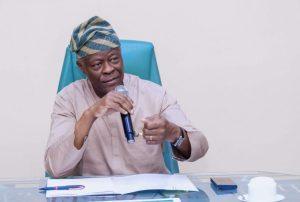
“The government is determined to collect all the revenues due to it. Through improved transparency, automation, and plugging revenue leakages, we’ve moved from an annual revenue of about ₦12.5 trillion to over ₦20 trillion in 2024.
In the first quarter of this year (when we even take April into account)—the first four months—we do have a substantial increase in revenue, and that effort continues.
There is a commitment to diligently go after all that should be brought in. So, by the end of April, about ₦6.9 trillion was generated, and as I’ve said, rising,” said Mr Edun.
He acknowledged that some revenue-generating agencies and government-owned enterprises were not remitting in a timely manner, arising from auditing and reconciliation procedures, thereby limiting inflows.
“Institutions that are mandated to remit up to 80 per cent of their operating surpluses to the federal purse under the Fiscal Responsibility Act and the 2020 Finance Act often delay until audited figures are finalised,” he stated.
According to him, under the President Bola Tinubu administration, there is a stronger debt-related security to the position before.
He explained that debt service-to-revenue stood at 60 per cent at the end of 2024, far below the 150 per cent recorded in the first quarter (Q1) of 2023 when the former administration was in power, a situation which translated to debt servicing exceeding generated revenue.
He also admitted that oil revenue performance was below target due to oil prices falling below production benchmark and global price fluctuations.
“We’re not where we expected to be on oil output. Every effort is being made to raise production, but this has had an impact on short-term revenue projections and debt service funding,” he said.
However, the minister was optimistic about the long-term gains from Nigeria’s return to value-added exports and industrialisation.
He cited the country’s growing domestic refining capacity, led by the 650,000 barrels-per-day Dangote Refinery and other modular refineries, which collectively provide up to 1.2 million barrels per day in capacity.
“This reduces raw exports, creates jobs, and boosts foreign exchange earnings by exporting refined petroleum products and supplying domestic industries with inputs,” he said.
He disclosed that the third phase of the government’s economic plan was to increase investment in production to reduce the multidimensional poverty, adding that several macroeconomic indices were on the right trajectory.
He alluded to Shell Development Company’s renewed interest to invest over $5 billion in oil production in the country, despite concerns in some quarters that the company was divesting its onshore assets from Nigeria.
At the event, the Managing Director and CEO of Ministry of Finance Incorporated (MOFI), Dr Armstrong Ume Takang, who was represented by Tajudeen Ahmed, said 20 portfolio companies’ assets, under management, had grown ₦38 trillion in just two years of MOFI’s transformational touch.