


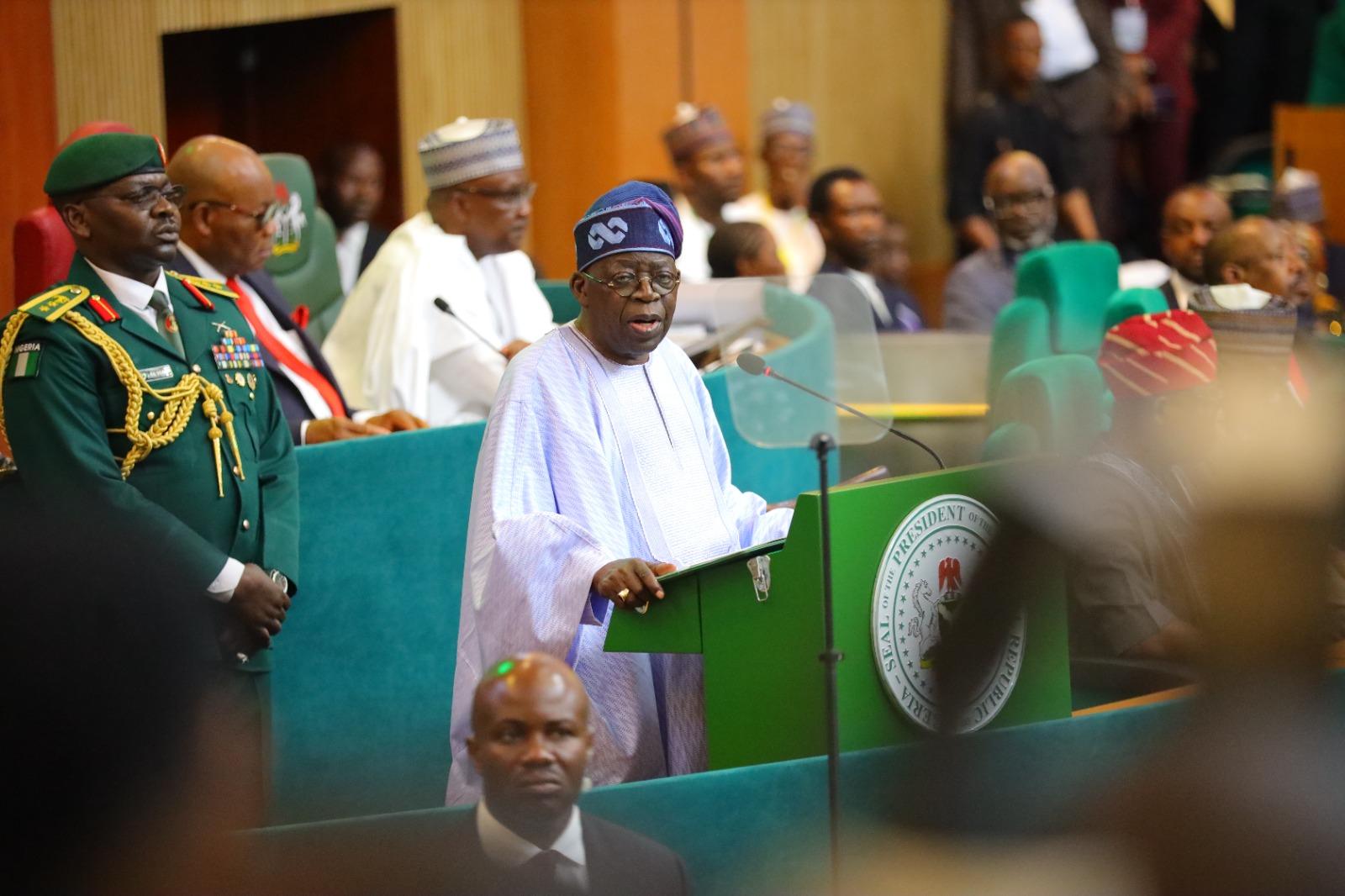
President Bola Ahmed Tinubu has said that Nigeria is beginning to witness the positive impact of his administration’s economic reforms, with marked improvements in growth, inflation control, foreign reserves, and credit accessibility.
Speaking at the National Assembly on Thursday, June 12, during the Democracy Day celebrations, the president detailed how his administration took swift and decisive steps to restructure Nigeria’s struggling economy upon taking office.
“Upon assuming office, my team and I moved to reform our ailing economy. We introduced fundamental reforms to correct structural imbalances that prevented maximum growth,” Tinubu stated.
According to him, the results are already evident. Nigeria’s Gross Domestic Product (GDP) grew by 3.4% in 2024, with the fourth quarter hitting 4.6%, the highest quarterly growth in over a decade. Inflation, he said, is gradually easing, leading to price stability in essential food items like rice and beans.
The president also revealed that Nigeria’s net foreign reserves have increased fivefold, and the naira exchange rate has stabilised. He further noted that the country’s balance of payments has turned positive and that Nigeria’s sovereign credit rating is on the path to recovery, buoyed by efforts to boost both oil and non-oil exports.
“These gains mean that state governments no longer need to borrow just to pay salaries,” he added.
In addition to macroeconomic improvements, President Tinubu underscored the progress in expanding consumer credit to Nigerians. “In less than a year, over 100,000 Nigerians, including 35,000 civil servants, have accessed affordable consumer credit through the Nigerian Consumer Credit Corporation (CREDICORP), enabling them to purchase vehicles, power their homes, and acquire life essentials,” he said.
Looking ahead, he announced a new youth empowerment initiative. “This July, we will launch a bold new initiative to empower 400,000 young Nigerians, including youth corps, with access to consumer credit,” the president revealed.