
 conversion kits)
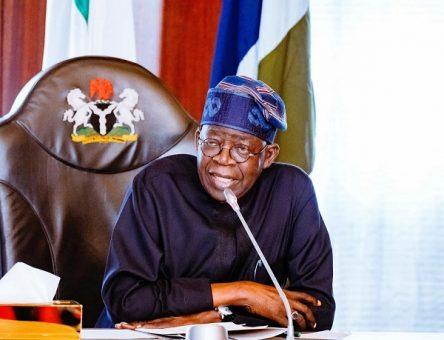
The Nigerian President, Bola Ahmed Tinubu has directed the immediate deployment of about 100,000 Compressed Natural Gas (CNG) conversion kits across the country.
The intervention is to cushion Nigerian commuters from the adverse effects of the escalating Middle East conflict.
It also forms part of the Nigerian Government’s broader strategy to ease transportation costs and promote alternative energy options amid the surge in petrol and diesel prices linked to the ongoing United States–Israel conflict with Iran.
The Executive Chairman of the Presidential Initiative on Compressed Natural Gas (Pi-CNG), Ismaeel Ahmed, disclosed the President’s directive to journalists on Tuesday at the State House, Abuja, after a meeting with the President.
Ahmed said that “President Tinubu is closely monitoring global developments and their implications for Nigeria’s energy costs, particularly the impact of the escalating Middle East conflict on fuel prices and transportation across the country.’
He noted that in response to the situation, the President has directed the Presidential Compressed Natural Gas (Pi-CNG) initiative to accelerate the nationwide rollout of CNG infrastructure and alternative mobility solutions as part of efforts to ease pressure on commuters and reduce dependence on petrol and diesel.
“The President, as usual, is always trying to get information on what is going on, especially with the war in the Middle East and the rising cost of petrol and diesel.
“He wanted to know what we are doing at Pi-CNG and EV to scale up the availability of gas and CNG everywhere in the country so that people would have less cost of transportation”, Ahmed said.
He further said that the Presidential directive on the immediate roll out of 100 CNG kits would be done in the next two weeks.
He explained that ‘the kits, which will be distributed in collaboration with multiple stakeholders, will enable vehicle owners, including tricycle operators, to convert their engines to run on gas.
“So we have about 100,000 kits that we’re going to deploy in the next two to three weeks. The conversion centres will all be bustling with a lot of activities.”
The Pi-CNG chairman said that the initiative will also fast-track the development of infrastructure for CNG refuelling and electric vehicle charging across the country.
According to him, the President specifically directed that infrastructure expansion should focus on key transportation corridors, particularly in the northern part of the country.
“We must be able to fast-track the infrastructure in bringing gas, CNG and electric mobility charging infrastructure to every part of the country, especially within the Northern Corridor,” Ahmed said.
He stated that the Nigerian Government is putting in place the necessary infrastructure to facilitate the shift to cleaner transportation systems, including the establishment of refuelling outlets and charging hubs for gas-powered and electric vehicles.
Ahmed said that about 77 CNG refuelling are currently under construction or at advanced stages of completion across the country.
He identified Kano as a practical example, noting that two Liquefied Compressed Natural Gas (LCNG) stations are already in operation in the state, while additional satellite or “daughter” stations are being developed.
Ahmed further explained that the government is working towards creating a continuous corridor of refuelling points along key transportation routes, linking Lokoja to Abuja, Kaduna, Zaria and Kano, and extending onward to Maiduguri.
“These are all places that we are going to litter with a lot of refuelling units,” he said.
Ahmed said that the “Pi-CNG initiative is working with local and international manufacturers to support vehicle conversion and the local assembly of CNG-powered and electric vehicles.’
He stressed that a number of automobile manufacturers have expressed readiness to establish vehicle assembly operations in Nigeria, a development that would stimulate employment opportunities and deepen growth within the domestic automotive sector.
Ahmed also disclosed that the Pi-CNG initiative is working closely with the Rural Electrification Agency (REA) to introduce solar-powered charging infrastructure to support electric mobility, especially in communities that are not connected to the national grid.
He said that the importation of electric vehicles by Nigerians is gradually increasing, stressing that the government is now concentrating on building the enabling infrastructure required to sustain their adoption across the country.
“People are already bringing in their electric vehicles regardless. What we have to do now is to ensure that there is enough infrastructure for them to work with, especially off-grid,” Ahmed said.
He added that the President expects rapid results from the initiative to ensure that Nigerians can quickly access cheaper and more sustainable transport alternatives.