

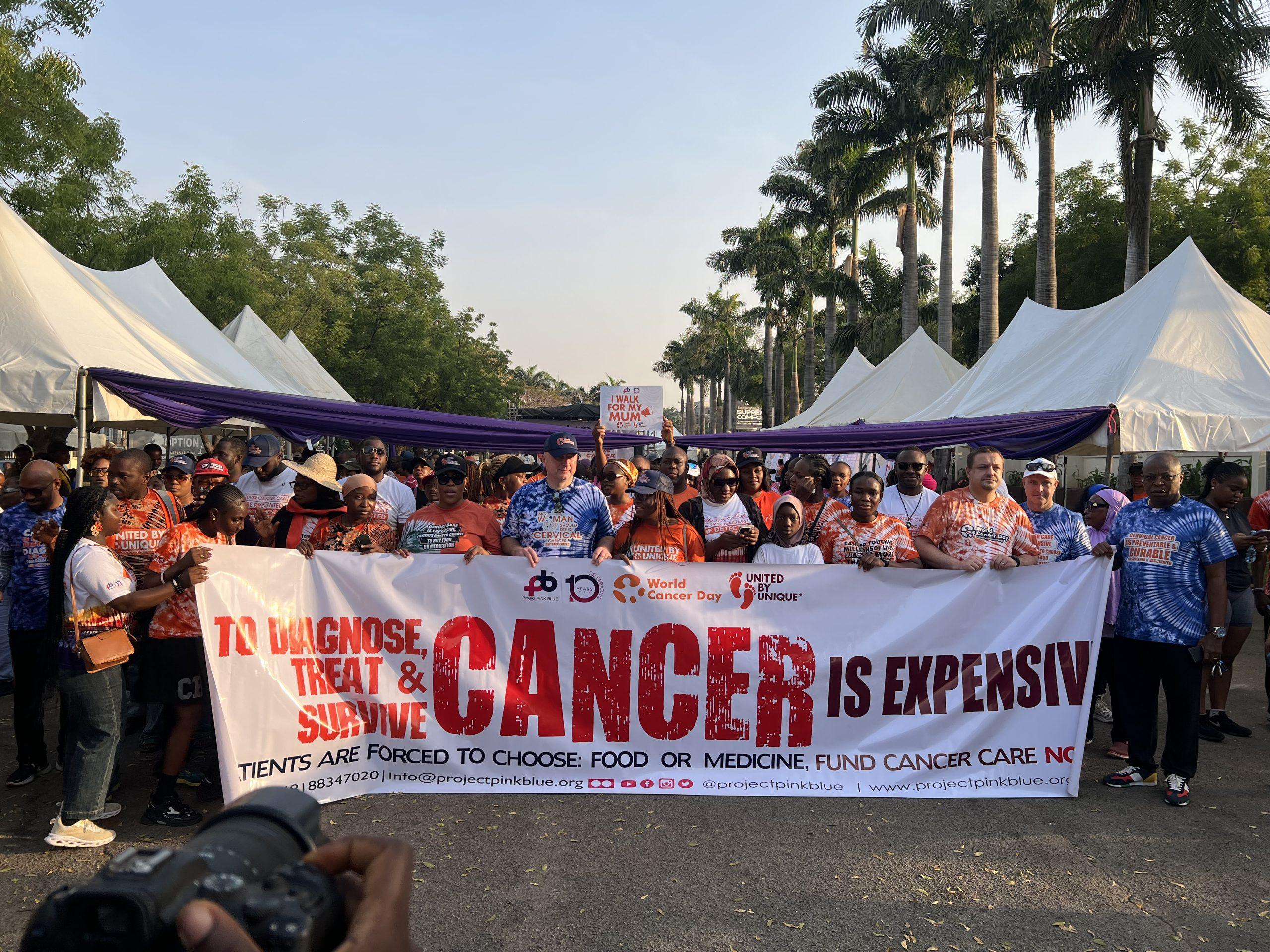
Project PINK BLUE – Health & Psychological Trust Centre, a leading cancer advocacy organisation, organised a series of events today at Transcorp Hilton Abuja.
The programme featured a 5km walk, a 20km cycle, and a 10km run against cancer, bringing communities together to promote awareness and collective responsibility.


Cancer survivors, family members, and supporters walked side by side in a powerful show of unity, calling for increased investment and intervention in cancer prevention, diagnosis, and treatment for Nigerians. Data from Project PINK BLUE indicate that Nigeria recorded 127,763 new cancer cases and 79,542 deaths in 2022, highlighting the scale of the challenge and the urgency of coordinated action to improve outcomes.

The figures further emphasise the importance of strengthening early detection and access to quality care. Currently, a significant proportion of cancer cases in Nigeria are diagnosed at advanced stages, which complicates treatment and reduces survival chances. Expanding screening, improving access to affordable treatment, and addressing systemic barriers present an opportunity to save more lives and improve the quality of care nationwide.
Breast and prostate cancers are prevalent, with breast cancer being the leading cause of cancer-related deaths among women. Diagnostic delays are exacerbated by a shortage of infrastructure, particularly in rural areas, and financial constraints.
The financial burden is perhaps the most excruciating aspect of Nigeria’s cancer epidemic. Nearly 90% of healthcare expenditures are paid out-of-pocket, turning diagnostic tests, chemotherapy, radiotherapy, and medications into financially catastrophic events for families.
Programme Associate at Project PINK BLUE, Ms Faridah M. Banwo, highlighted that: “Several patients are considering whether to buy food and eat or to buy their cancer medication. Cancer patients are borrowing money to purchase their chemotherapy, and family caregivers are selling properties to access radiotherapy.”
The high costs of healthcare in Nigeria stem from several factors, including the exit of pharmaceutical companies, drug inflation, and reliance on imported medications. Project PINK BLUE’s advocacy efforts, such as the 2024 World Cancer Day symposium titled “Economy, Taxation & Cancer Control: The Exit of Pharmaceutical Companies from Nigeria,” played a crucial role in President Bola Tinubu signing an executive order on June 28, 2024. This order introduced a zero tax on imported pharmaceutical products.
Additionally, as of January 17, 2026, certain tariff benefits have been extended to non-commercial medical supplies, but current economic conditions persist. However, despite these positive developments, the organisation emphasises the need for further action to ensure that treatments remain accessible to all.
Runcie C.W. Chidebe, Executive Director of Project PINK BLUE, emphasised the need to shift blame from cancer patients to the healthcare system. He called for the Federal Government to implement an organised national cancer screening program, like Nigeria’s successful HIV/AIDS screening initiatives.

State governments should establish cancer health funds and trusts to support indigent patients. Increased budgetary allocation for the National Cancer Health Fund is essential to subsidise treatments and medications.
Government intervention is urgently needed to address Nigeria’s cancer crisis through investments in screening, cost subsidies, and healthcare infrastructure.
Project PINK BLUE will host a high-level policy makers and government engagement symposium on National Cancer Control on Tuesday, February 10, 2026, at Transcorp Hilton Abuja.