

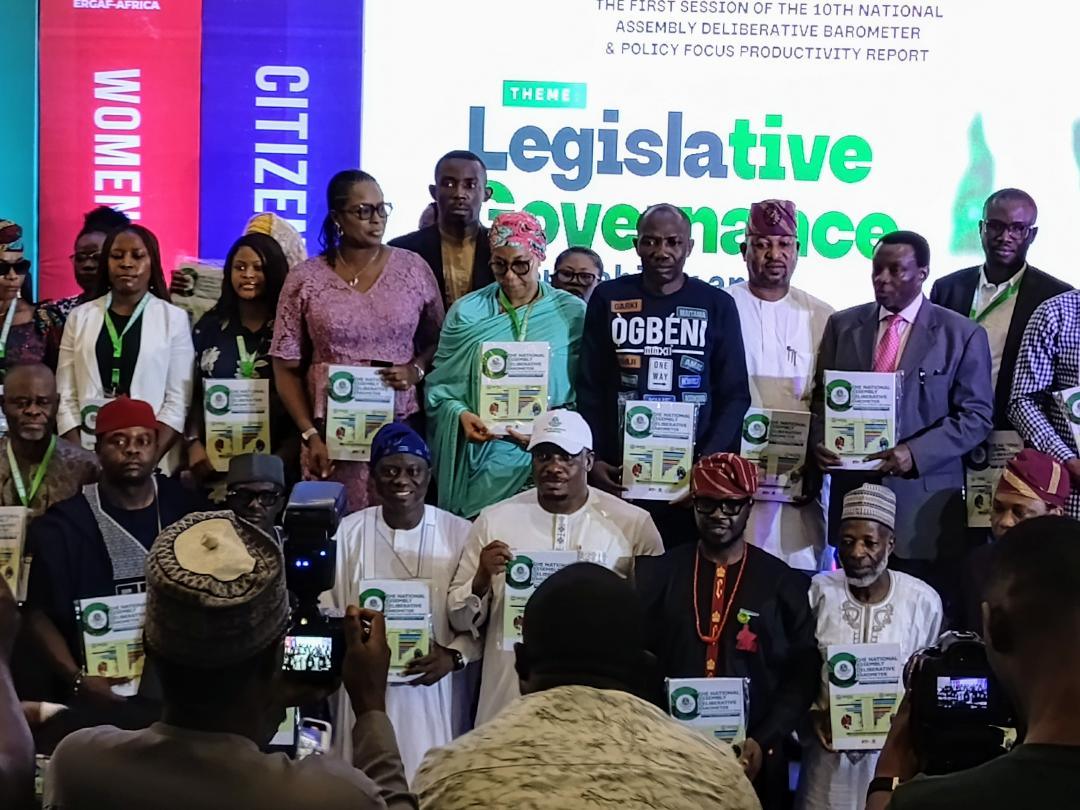
The Speaker of Nigeria’s House of Representatives, Tajuddeen Abbas, has underscored the importance of active citizen participation in consolidating the country’s democracy.
Speaking in Abuja at the unveiling of the National Assembly Deliberative Barometer, Abbas said that such initiatives should not be limited to policymakers but should serve as a platform for wider public engagement.
“They are designed to empower citizens to engage, critique, and make informed demands from their representatives. Initiatives such as this provide the bridge to close the gap between representation and public expectation,“ Mr. Abbas said.
“Through advocacy, research, and public enlightenment, it has consistently worked to strengthen accountability and participation in governance. I must commend the organisers for convening this timely meeting, which reinforces the importance of collaboration between parliament and civil society.
He added: “Today, we are gathered here for the unveiling of Africa’s first interactive and deliberative barometer, which underscores the need to place data and accountability at the centre of our legislative process.”
“This platform tracks the productivity of lawmakers and evaluates policy, and it is a tool that can advance democratic growth in measurable ways. This compels us to constantly raise the standard of representation, lawmaking, and oversight by spotlighting legislative output. This initiative, therefore, calls for a stronger impact on the legislative process and the deepening of our democratic culture.”
The Speaker said that the House of Representatives was firmly committed to transparency and active citizenship engagement.
“This commitment is reflected in our legislative agenda, which places openness and accountability at the heart of parliamentary practice. We have institutionalised reforms such as the annual NASS Open Week and the Citizenship Legislative Roundtable Dialogue Engagement, which are held not only in Abuja but also in selected northern and southern cities.
“These platforms provide opportunities for Nigerians to interrogate legislative performance, contribute to debates, and hold representatives accountable. We have also created platforms for regular engagement with the youth, women and people living with disabilities because we believe that the voice of everyone whose mandate we carry is important in our legislative process,“ Speaker Abbas stated.
He stressed that beyond institutional reforms, the barometer aligns with the vision of the 10th House to entrench evidence-based lawmaking.
“In an age where governance must respond to data, we recognise that decisions backed by facts are stronger, more credible and more impactful.
“The report and dashboard being unveiled today will serve as a reference point for legislators and stakeholders seeking to evaluate and strengthen parliamentary contributions to national development,” he said.
Mr. Abbas also said that the gathering emphasises the value of partnership between the legislature and civil society.
He explained: “Effective governance thrives when state institutions and non-state actors share knowledge and complement one another. By investing in a tool that tracks legislative productivity, CISLAC and ERGAF-Africa have provided a mirror through which we can examine ourselves honestly and pursue continuous improvement.
“Furthermore, this effort has continental significance. Nigeria is setting an example that other African parliaments can learn from. The practice of measuring legislative productivity with data-driven instruments should not be limited to our own National Assembly but encouraged across the continent, as it strengthens institutional credibility and enhances citizen trust in democratic processes.“
The Executive Director of the Civil Society Legislative Advocacy Centre, CISLAC, Mr. Auwal Ibrahim Musa Rafsanjani, said that CISLAC was very pleased to be partnering with ERGA-AFRICA for the event.
“Today, we gather to reinforce the importance of improving the effectiveness and transparency of legislative practices in Nigeria.
“As we embark on the journey of assessing the 10th Assembly, we stand at a crucial juncture in Nigeria’s democratic development. Our mission is for the legislature to serve the people with integrity, dedication and a firm commitment to accountability.
“The Deliberative Barometer offers an innovative scorecard that enables us as Nigerians to evaluate the legislature’s performance, understand the impacts of legislative active actions and ensure that lawmakers remain responsive to the needs and aspirations of their constituents across the country.
“This report reflects the need for lawmakers to cultivate a culture of open dialogue, active engagement, and inclusive governance. It provides a framework for evaluating the advancements made by the legislature in meeting its obligations, tackling pressing societal challenges, and enhancing the overall effectiveness of legislative processes in the 10th Assembly in Nigeria. Through its insights, lawmakers can identify areas where they need improvement, recognise their accomplishments, and ensure accountability to the Nigerian people.“
Delivering a keynote titled “Legislative Governance and Productivity Index: An Insight through the ERGAF-Africa NASS Deliberative Barometer and Policy Focus Report,” the Director General, National Institute for Legislative and Democratic Studies (NILDS), Prof. Abubakar O. Sulaiman, said that the report assesses the activities of the 10th National Assembly using data collected from June 2023 to June 2024.
“The report is therefore timely, as it contributes to the need to promote an assessment of legislative governance that is data-driven. The legislature is the most important aspect of any democracy. No nation can be said to be operating a democracy if it does not have a functional legislature.
“While the executive and judicial arms of government have had the opportunity to grow over the years, the legislature, which is the symbol of our constitutional democracy, experienced distortions due to military incursion in our democracy. Fortunately, the return to democracy in 1999 has offered our dear country the opportunity for all its democratic institutions to grow,” Prof. Suleiman said.