

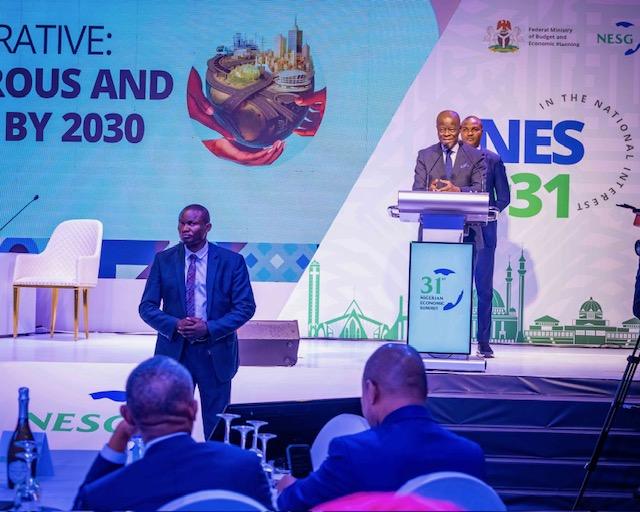

“This is the first time in three decades that the macroeconomic environment has been anywhere near what I would say would be prescribed,” Edun stated, stressing that the Tinubu administration’s economic policies are aligned with global best practices.
The minister outlined a three-stage reform process designed to break the cycle of macroeconomic instability caused by external shocks, oil price fluctuations, fiscal imbalances, and weak investment environments.
He explained that the reforms centre on macroeconomic correction, revenue enhancement, technological integration, and private sector participation—key pillars of President Bola Tinubu’s Renewed Hope Agenda.

Read Also: Nigeria Intensifies Drive For Non-Oil Export Growth
According to Edun, recent data indicate encouraging results, with the economy growing by over four per cent in the second quarter of 2025, industrial output rising by more than seven per cent, and inflation showing early signs of easing.
“These are not just abstract statistics,” he said.
“They are proof that the reforms are taking root, confidence has returned, and the economy is largely stable at this stage.”
On fiscal reforms, Edun highlighted the impact of fuel subsidy removal and the liberalisation of the foreign exchange market, which together have released up to five per cent of GDP back into the federation.

He added that revenue automation, tax reforms, and central billing systems are strengthening transparency and efficiency in public finance management.
He revealed that oil theft had dropped sharply—from 37.6 million barrels in 2021 to 4.1 million barrels in 2024—while states and local governments are now receiving higher allocations, reflecting improved fiscal federalism.
The Minister reaffirmed the government’s commitment to social investment programmes targeting 15 million households, noting that 8.1 million have already benefited.
He said the direct cash transfer initiative, linked to beneficiaries’ National Identification Numbers (NIN), ensures transparency and accountability.
“Mr President insisted on maintaining the gold standard—every beneficiary must be uniquely identified and paid digitally,” Edun said.
“That’s part of the empathy and inclusion promised in the Renewed Hope Agenda.”
On human capital development, Edun cited the establishment of the Nigerian Education Loan Fund, the rollout of digital health infrastructure, and pharmaceutical value chain reforms designed to improve access to healthcare and reduce reliance on imported medical products.
He also underscored the importance of preparing Nigerian youth for the global digital economy, noting that Africa is projected to account for 25 per cent of the world’s workforce by 2050—with Nigerians expected to play a pivotal role.
Looking ahead, the Minister pledged to continue cutting waste, plugging leakages, and prioritising capital projects such as the Sokoto–Badagry Highway, Ajaokuta–Kaduna–Kano Gas Pipeline, and the National Fibre Optic Project.
“We must align spending with productivity-enhancing sectors and ensure that every naira works for the Nigerian people,” he added.
The 31st Nigerian Economic Summit brought together policymakers, business leaders, and development partners to review progress on the federal government’s Renewed Hope 8-Point Agenda, with discussions focused on driving non-oil exports, industrialisation, and sustainable development.