

Temitope Mustapha, Abuja
President Bola Tinubu has asserted that under his leadership, Nigeria’s economy is recovering rapidly and the reforms initiated over two years ago are now delivering tangible results, announcing that external reserves rose to $42.03 billion in September—the highest level recorded since 2019.
The President, on Wednesday, in a nationwide broadcast to mark Nigeria’s 65th Independence Anniversary, stated that the second quarter 2025 Gross Domestic Product grew by 4.23%, indicating Nigeria’s fastest pace in four years and outpaced the 3.4 percent projected by the International Monetary Fund.
The Nigerian Leader also said that inflation declined to 20.12% in August 2025, prompting the lowest level in three years while promising that his administration is working diligently to boost agricultural production and ensure food security, reducing food costs.
President Tinubu highlighted twelve significant economic milestones realised through the strategic implementation of the administration’s fiscal and monetary policies. He emphasised that Nigeria’s foreign reserves have strengthened considerably compared to three years ago.
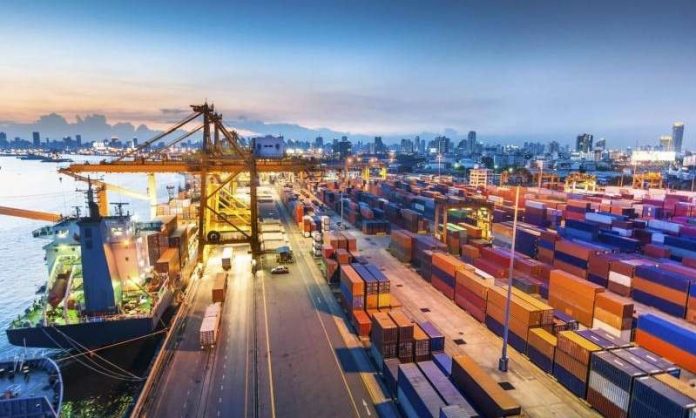
He noted that Nigeria has also emerged as a net exporter, posting a trade surplus for five consecutive quarters, a surplus he declared marks a pivotal shift, with the country now exporting more goods and services than it imports.
The Nigerian President added that the Naira had stabilised significantly following the turbulence and volatility experienced in 2023 and 2024.
He said that the disparity between the official exchange rate and the parallel market had narrowed considerably, he attributed this result to the foreign exchange reforms coupled with increased capital inflows and remittances.
“The era of multiple exchange rates, which had encouraged corruption and arbitrage, is now behind us. Moreover, the Naira’s value against the US dollar is no longer directly tied to crude oil price fluctuations, reflecting a more resilient and diversified currency framework.”
According to the President, “We are now a Net Exporter: Nigeria has recorded a trade surplus for five consecutive quarters. We are now selling more to the world than we are buying, a fundamental shift that strengthens our currency and creates jobs at home. Nigeria’s trade surplus increased by 44.3% in Q2 2025 to ₦7.46 trillion ($4.74 billion), the largest in about three years. Goods manufactured in Nigeria and exported jumped by 173%. Non-oil exports, as a component of our export trade, now represent 48 per cent, compared to oil exports, which account for 52 per cent. This signals that we are diversifying our economy and foreign exchange sources outside oil and gas.
“Oil production rebounded to 1.68 million barrels per day from barely one million in May 2023. The increase occurred due to improved security, new investments, and better stakeholder management in the Niger Delta. Furthermore, the country has made notable advancements by refining PMS domestically for the first time in four decades. It has also established itself as the continent’s leading exporter of aviation fuel.
“Our tax-to-GDP ratio has risen to 13.5 per cent from less than 10 per cent. The ratio is expected to increase further when the new tax law takes effect in January. The tax law is not about increasing the burden on existing taxpayers but about expanding the base to build the Nigeria we deserve and providing tax relief to low-income earners.”
Increase in Non-Oil Revenue
President Tinubu also listed the attainment of a record-breaking increase in non-oil revenue, achieving the 2025 target by August with over N20 trillion. In September 2025 alone, “we raised N3.65 trillion, 411% higher than the amount raised in May 2023.
“We have restored Fiscal Health: Our debt service-to-revenue ratio has been significantly reduced from 97% to below 50%. We have paid down the infamous “Ways and Means” advances that threatened our economic stability and triggered inflation. Following the removal of the corrupt petroleum subsidy, we have freed up trillions of Naira for targeted investment in the real economy and social programmes for the most vulnerable, as well as all tiers of government.
“ We have a stronger foreign Reserve position than three years ago. Our external reserves increased to $42.03 billion this September—the highest since 2019.
“Nigeria’s trade surplus increased by 44.3% in Q2 2025 to ₦7.46 trillion ($4.74 billion), the largest in about three years. Goods manufactured in Nigeria and exported jumped by 173%. Non-oil exports, as a component of our export trade, now represent 48 per cent, compared to oil exports, which account for 52 per cent. This signals that we are diversifying our economy and foreign exchange sources outside oil and gas.
Under the social investment programme aimed at supporting poor households and vulnerable Nigerians, the President revealed that N330 billion has been disbursed to eight million households, many of whom he said have received either one or two out of the three tranches of N25,000 each.
President Tinubu highlighted a remarkable turnaround in coal mining, which rebounded from a 22% decline in Q1 to an impressive 57.5% growth in Q2.
He spotlighted the sector as one of Nigeria’s fastest-growing industries, underscoring the robust potential of the country’s solid mineral resources, as a supportive value-added production of minerals extracted from the soil.
The President also said that “the administration is expanding transport infrastructure across the country, covering rail, roads, airports, and seaports. Rail and water transport grew by over 40% and 27%, respectively. The 284-kilometre Kano-Kastina-Maradi Standard Gauge rail project and the Kaduna-Kano rail line are nearing completion. Work is progressing well on the legacy Lagos-Calabar Coastal Highway and Sokoto-Badagry Highway. The Federal Executive Council recently approved $3 billion to complete the Eastern Rail Project.”
President Tinubu recognised global observers’ acknowledgment of Nigeria’s economic progress noting Sovereign credit rating agencies reflecting the country’s strengthened economic fundamentals while the Nigerian stock market is witnessing an unprecedented surge, with the all-share index soaring from 55,000 points in May 2023 to 142,000 points as of September 26, 2025.
“The world is taking notice of our efforts. Sovereign credit rating agencies have upgraded their outlook for Nigeria, recognising our improved economic fundamentals. Our stock market is experiencing an unprecedented boom, rising from an all-share index of 55,000 points in May 2003 to 142,000 points as of September 26, 2025.
“At its last MPC meeting, the Central Bank slashed interest rates for the first time in five years, expressing confidence in our country’s macroeconomic stability,” the President added.
Hauwa Abu