

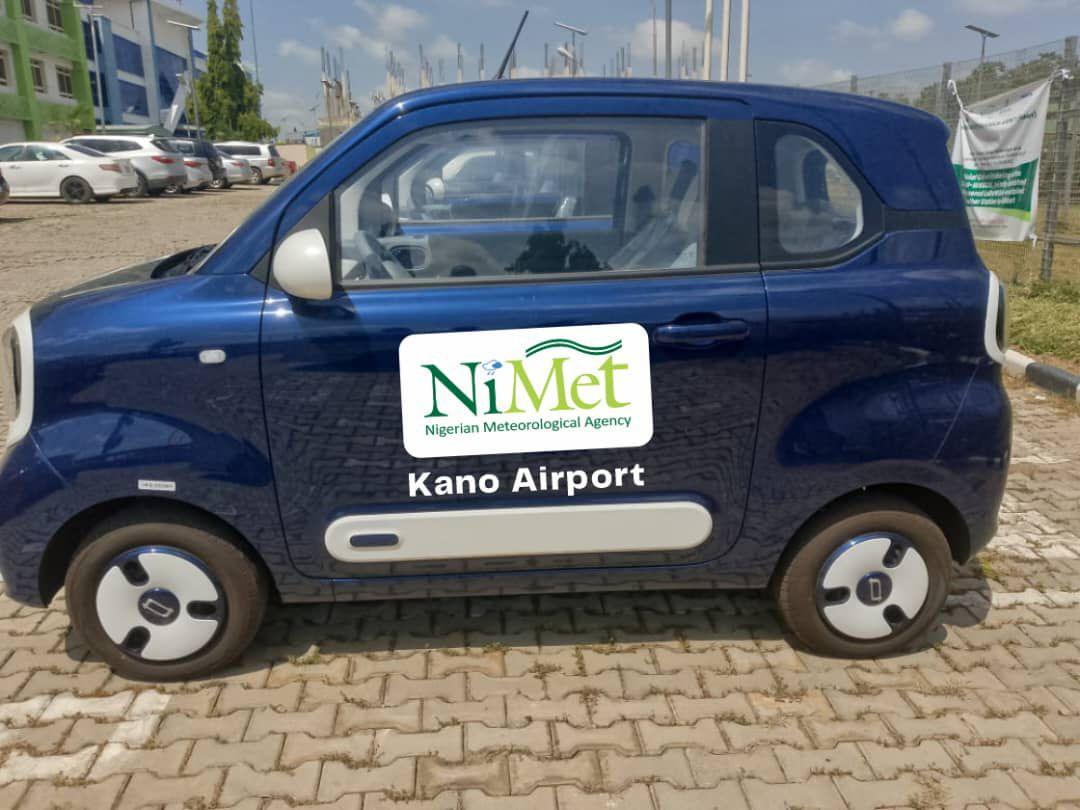
The Nigerian Meteorological Agency (NiMet) has made a significant advancement in sustainable innovation through the implementation of electric vehicles (EVs) for airside operations at the nation’s five International Airports in Lagos, Abuja, Kano, Port Harcourt, and Enugu.
The move marks the first-ever use of EVs in Nigeria’s aviation sector, positioning NiMet as a pioneer in environmental responsibility and operational efficiency within the industry.
In a statement issued by the Agency’s spokesperson, Elioenai Anzizi, “the initiative aligns with President Bola Tinubu’s Renewed Hope Agenda, which prioritises clean energy, innovation, and climate resilience.”
Anzizi noted that each airport will be equipped with dedicated charging stations, supporting EVs capable of covering up to 200 kilometres on a single charge.
“Beyond advancing environmental goals, the introduction of electric vehicles will significantly enhance NiMet’s operational services. The quiet and efficient EVs will facilitate smoother airside logistics, reduce downtime linked to fuel supply challenges, and cut operational costs — all of which contribute to more reliable, timely, and energy-efficient service delivery. By minimizing emissions and maintenance demands, NiMet can channel more resources into its core functions of weather forecasting, climate monitoring, and aviation safety,” Anzizi said.
According to the Agency, the initiative also supports Nigeria’s national carbon credit targets and reinforces NiMet’s commitment to global sustainability standards.
The deployment of EVs reflects the leadership of Professor Charles Anosike, NiMet’s Director-General/CEO, whose administration has continued to champion innovation, sustainability, and operational excellence.
“Under his leadership, NiMet continues to drive forward-thinking initiatives that not only modernise its operations but also strengthen its role as a key player in advancing green growth and environmental responsibility within the aviation sector,” Anzizi stated.