


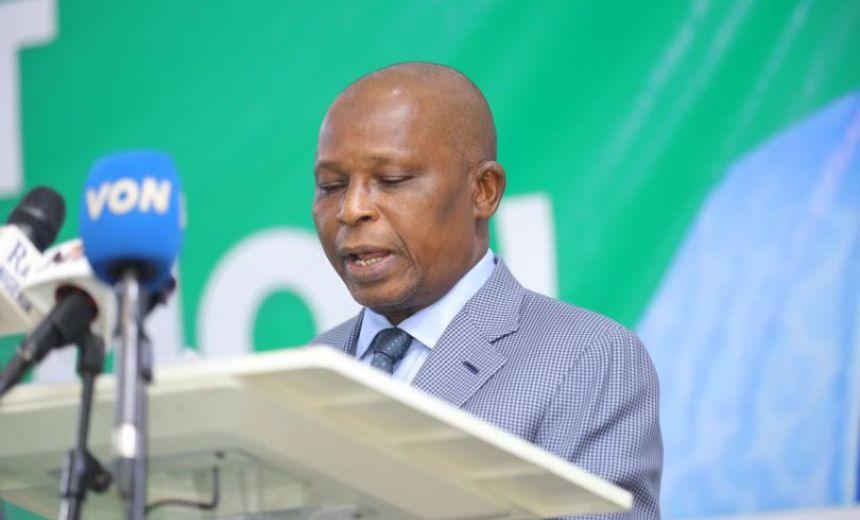
The Attorney-General of the Federation and Minister of Justice, Lateef Fagbemi, has decried the persistent non-release and inadequate allocation of funds as major impediments to the effective delivery of justice sector reforms by the Federal Government.
Mr Fagbemi made the disclosure while presenting the 2026 budget proposal of the Federal Ministry of Justice before the House of Representatives Committee on Justice in Abuja.
He explained that the Ministry’s mandate and engagements are anchored on achieving the goals and initiatives outlined in the National Policy on Justice 2024 and its Strategic Plan 2023–2027.
According to him, these objectives align with the justice sector roadmap under the Renewed Hope Agenda of the current administration.
The Minister, however, lamented that insufficient budgetary allocations and delays in the release of appropriated funds have significantly constrained the Ministry’s capacity to execute critical projects and deliver essential services to Nigerians.
Highlighting key milestones recorded despite the funding challenges, Fagbemi listed reforms in criminal justice administration, counter-terrorism efforts, progress towards exiting the Financial Action Task Force (FATF) grey list, as well as strides in asset recovery and financial management.
Read Also: Women Affairs Ministry Seeks Upward Review of N134.2billion 2026 Budget
House Committee on Finance Begins Budget Defense for MDAs
AGF Backs Technology-Driven Reforms to Overhaul Justice System
Providing a breakdown of budget performance, he disclosed that the Ministry received N6,675,702,827.32 out of N7,499,524,027 appropriated for overhead costs over a ten-month period, representing 82 per cent performance.
For capital expenditure, he said the Ministry was issued a warrant of N869,630,896.30 out of a total capital allocation of N6,749,616,425 representing just 12 per cent performance. He further noted that the 12 per cent capital warrant was not cash-backed, effectively stalling project implementation.
Fagbemi added that the Ministry received no funding for its 2025 capital projects, stressing that the funding constraints are not peculiar to the Ministry of Justice alone.
On the 2026 proposal, the Minister revealed that the Ministry has earmarked N23,680,142,209.50, covering personnel, overhead, and capital expenditures.
Scrutiny and Accountability
In his response, the Chairman of the House Committee on Justice, Olumide Osoba, assured that the Committee would thoroughly scrutinise the Ministry’s budget estimates and those of its agencies to ensure that justice sector reforms are not hampered by inadequate funding.
Osoba also pledged that the Committee would exercise effective oversight over funds approved in the Ministry’s annual budgets to guarantee accountability and optimal utilisation.