

By Golfa Francis, Yola
In a significant cultural milestone, the traditional ruler of the Nungura Kingdom in northeastern Nigeria has hailed the official return of his people’s original tribal name — “Nungura” — as a vital step towards preserving cultural identity, promoting peaceful coexistence, and boosting tourism and economic investment.
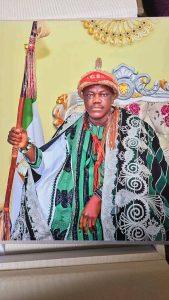
Speaking in an exclusive interview with Voice of Nigeria, the Kwandi Nunguraya, traditional ruler of the Nungura people, (Dr.) Kuruhaye Dishon Dansanda II, applauded the World Ethnologue Organization and the Adamawa State Government for officially recognizing the correction of the tribal name from “Lunguda” to “Nungura” — a name he says was distorted by early traders during the pre-colonial era.
”The name ‘Lunguda’ was never ours. It was a mispronunciation by traders who couldn’t say ‘Nungura’. Restoring our original name reconnects us with our heritage, and this identity must be preserved and protected,” he said.
With over 7,159 languages spoken globally, Nigeria stands out with around 520 living indigenous languages. Alarmingly, twelve of these have already gone extinct, highlighting the urgency to preserve local languages and identities. Adamawa State alone boasts 50 ethnic nationalities, making it a cultural melting pot and an important region in the global effort to safeguard endangered languages and traditions.
READ ALSO: Culture Ministry, Anambra Partner to Establish Cultural Villages
The Kwandi emphasized that cultural institutions — such as traditional leadership and festivals — play a central role in conflict resolution and in promoting peace across Nigeria’s diverse communities.
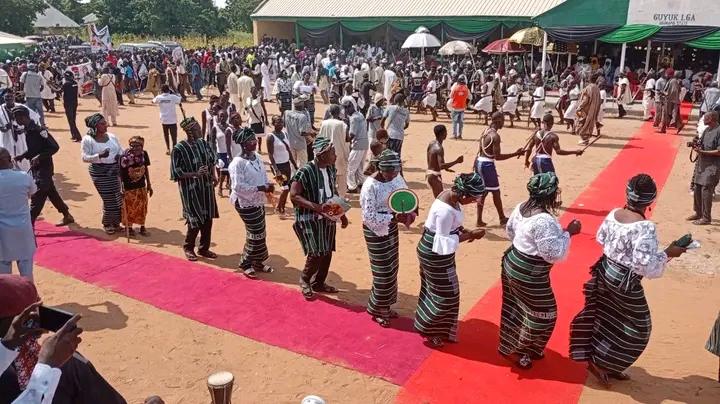
“Each year, for the past six years of my reign, we’ve celebrated our cultural festival in Guyuk Local Government Area. It brings people together, regardless of religion or social background. Peace and unity are at the heart of our culture,” he said.
This year’s efforts were internationally recognized during the 2025 World Tourism Day, where the Nungura Cultural Festival received an award for the Best Cultural Festival in Adamawa State. The traditional ruler affirmed his commitment to strengthening this recognition by enhancing the festival’s appeal to local and international tourists.
“Our hands are open to investors and tourists. We want the world to see what we have — not just our language, but our history, dances, cuisine, and architecture. This festival is more than a celebration; it’s a tool for economic growth and national unity,” he said.
Despite the Nungura people being spread across Adamawa, Gombe, and Borno States, the cultural festival remains a unifying force.
“Distance cannot divide us. We are one people, one blood, one entity — that is the true meaning of Nungura,” he declared proudly.
National monuments
The traditional leader also highlighted the Elephant House, a revered Nungura monument, as a national treasure. It has been listed among Nigeria’s top 100 national monuments by the National Commission for Museums and Monuments, adding historical and touristic value to the region.
The ruler called on well-meaning Nigerians, diaspora members, cultural enthusiasts, and global investors to support the Nungura Cultural Festival, positioning it as a national and potentially international tourism brand. He believes that with increased investment, the festival could become a flagship event for peace building and sustainable development in Nigeria and Africa at large.
Global Relevance
Around the world, cultural heritage is increasingly being recognized as a powerful tool for fostering peace and dialogue in post-conflict and diverse societies.
UNESCO and global peace building organizations have emphasized that preserving indigenous languages and traditions can reinforce social cohesion, give voice to marginalized groups, and create inclusive economies.
In regions like northeastern Nigeria, where communities have faced the impacts of conflict and displacement, traditional institutions and cultural practices offer both healing and hope.
By investing in heritage-based tourism and identity preservation, the Nungura Kingdom is not only protecting its past but also shaping a future rooted in dignity, unity, and opportunity — echoing a lesson the world can learn from.