

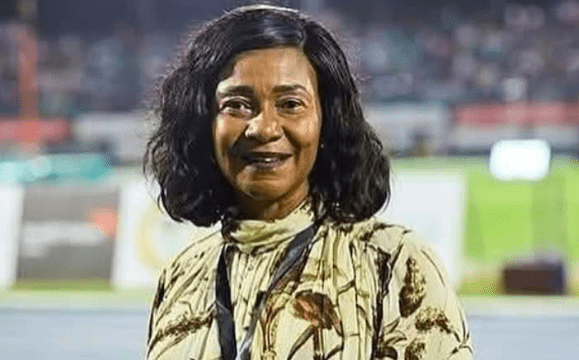
As Nigeria intensifies its preparations for the upcoming international sporting calendar, a legendary voice from the nation’s athletic history, Mary Onyali-Omagbemi, issued a reminder: infrastructure and talent mean little without the proper welfare of the athletes.
Drawing from a career that spanned two decades and five different Olympic Games, the veteran athlete emphasised that the gap between Nigeria and the world’s elite sporting nations is often not a matter of skill, but of security.
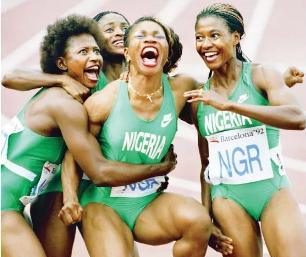
Onyali-Omagbemi won a bronze medal in the 4x100m relay at the 1992 Olympics in Barcelona, the first time an African women’s team ever won a medal in that event.
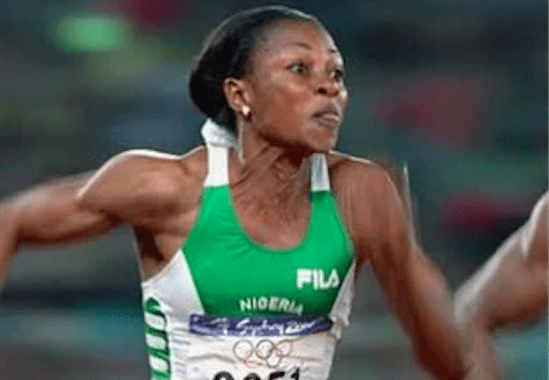
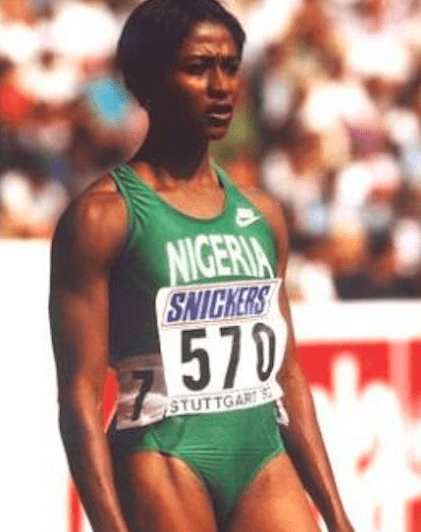
She also won another bronze in the 200m race at the 1996 Atlanta Olympics, becoming the first Nigerian to win two Olympic medals. In 1994, Onyali-Omagbemi won gold in the 100m at the Commonwealth Games.
The sprint legend reaffirmed her unwavering loyalty to Nigeria, revealing she turned down offers from four countries to switch allegiance during her illustrious career.
Speaking to reporters, Onyali-Omagbemi said athlete defections are not a new phenomenon. She said such moves have occurred across generations and are often driven by personal considerations.

“Whether to represent Nigeria or not is a matter of personal interest and feelings. You prioritise what matters most to you,” she said.
“I was approached while competing for Nigeria. What is happening now is not new, it has been happening for years.”
Onyali-Omagbemi declined to disclose the identities of the countries that courted her, but emphasised that she could not abandon Nigeria, despite acknowledging that conditions elsewhere might have been more favourable.
“I will not mention them, but I could not leave my country for anybody. Yes, the treatment could be better,” she added.
The five-time Olympian declared that athlete welfare remains the single most critical factor if Nigeria is to translate its continental dominance into Olympic podium finishes.
Onyali-Omagbemi acknowledged longstanding welfare challenges facing Nigerian athletes, describing inadequate support as a major factor behind decisions to change nationality. However, she expressed optimism that ongoing reforms could improve the situation.
However, she pointed to initiatives under the NSC as signs of progress. She highlighted the Elite Podium Board, on which she serves, as a structured effort to address performance gaps and welfare concerns.
Onyali-Omagbemi stressed that restoring Nigeria’s athletics dominance would require long-term planning, patience and sustained investment across multiple Olympic cycles.
“Olympic success does not happen overnight,” she noted. “It takes about three Olympic cycles —roughly 12 years- for an athlete to reach the podium. Stardom never happens by accident.”
She also commended sports administrators, including NSC Chairman Shehu Dikko and Director-General Bukola Olopade, for renewed efforts to strengthen governance and athlete support.
Highlighting grassroots development as critical to future success, she cited programmes such as MTN Champs for their role in discovering and nurturing young talent.
“Other countries are also striving for podium finishes. It takes willingness, discipline, determination and dedication,” she said. “Funding is key; sports development is capital-intensive worldwide. If we fund adequately, we will get results.”
She concluded that with sustained reforms and investment, Nigeria has the potential to reclaim its status among the world’s leading athletics nations.