

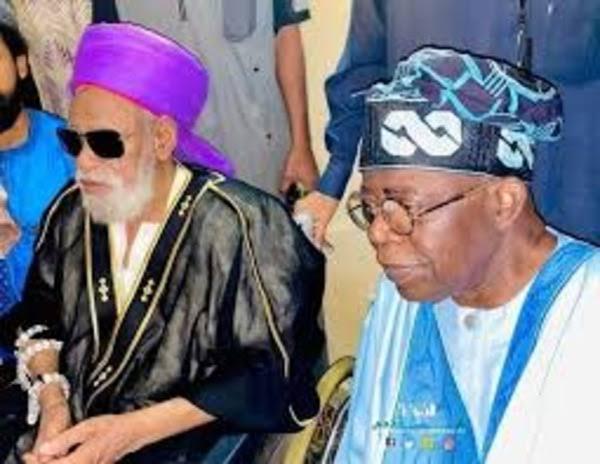
President Bola Ahmed Tinubu has mourned the passing of Sheikh Dahiru Usman Bauchi with profound sorrow, describing the death of the revered Islamic scholar and eminent leader of the Tijjaniyya Muslim Brotherhood as a deeply painful and nationally significant loss.
Mourning the centenarian scholar, President Tinubu paid tribute to Sheikh Dahiru as a moral compass and spiritual guide who devoted his entire life to teaching, preaching, and nurturing generations in the values of faith, peace, and upright living.
The President noted that Sheikh’s death represents a monumental loss not only to his family and vast community of followers but to the country at large.
He fondly recalled the blessings and moral encouragement he received from the Sheikh during the build-up to the 2023 presidential election.
“Sheikh Dahiru Bauchi was a teacher, a father and a voice of moderation and reason. As both a preacher and a distinguished exegete of the Holy Qur’an, he championed peace and piety. His death has created a huge void,” President Tinubu said.
The President extended his heartfelt condolences to the late cleric’s followers across Nigeria and beyond, urging them to honour his memory by upholding his teachings on peaceful coexistence, deepening their relationship with God, and showing kindness to humanity.
Sheikh Bauchi, the eminent Tijjaniyya Muslim Brotherhood leader and one of Nigeria’s most influential clerics, died on Thursday at the age of 101.
Sheikh Dahiru Usman Bauchi (1924–2025) was one of Nigeria’s most revered Islamic scholars, a towering spiritual figure, and a leading authority of the Tijjaniyya Sufi Order in West Africa.
For decades, he was widely regarded as one of the foremost custodians of Islamic scholarship, Qur’anic commentary, and spiritual discipline in the region.
Sheikh Bauchi’s Leadership
The late Islamic scholar led Nigeria’s largest annual Tijjaniyya events, attracting tens of thousands of followers physically and millions via radio and television.
He also supported interfaith peace initiatives and cautioned against extremism and sectarianism.
He also stood as a unifying figure, promoting peaceful coexistence among diverse Muslim communities.