


By: Timothy Choji, Abuja
President Bola Tinubu says the Nigerian government is poised to address challenges confronting business activities in the country in order to boost the economy in line with his Renewed Hope Agenda.
The President made the declaration in Abuja on Monday, at the opening ceremony of the first Customs Partnership for African Cooperation in Trade (PACT).
In achieving this, he said the administration quickly embarked on unifying the foreign exchange window, removing fuel subsidies to redirect resources to critical infrastructure, and modernizing port operations with 24-hour clearance.

President Tinubu described the National Single Window as central to Nigeria’s continental trade strategy, assuring that phase one of the transformative digital platform will go live in March 2026, “with full rollout by December 2026.”
He said with the current reforms, the Nigerian economy is bouncing back, thus making the country a force to be reckoned with in Africa and beyond.
“We believe that our institutions have been deliberately aligned into a unified trade-enablement architecture, dismantling the traditional silos that once separated agencies. The Nigeria Customs Service now advances digital clearance systems and risk-based inspections.
“The Nigerian Ports Authority drives port efficiency. The Central Bank enables local-currency settlements through PAPSS. The Standards Organization harmonizes product standards with continental frameworks. NEPC and NEXIM Bank strengthen export readiness and provide targeted financing.
“This coordinated, integrated institutional approach is essential for successful continental integration, for no single agency can deliver the scale of reform required for Africa’s prosperity.”
African Approach
President Tinubu further stated that “Nigeria is approaching this responsibility with practical systems and infrastructure rather than rhetoric, even as he said the strength of a continental market can only be engineered and not declared.
“We adopted the Pan-African Payment and Settlement System to boost intra-African trade, and we prioritized non-oil export growth across key sectors. These reforms reinforce one another, creating a coherent foundation for stronger continental commerce and competitiveness. Each decision was a step towards a Nigeria that trades with confidence and an Africa that negotiates from a position of strength.
“Intra-African trade is projected to expand from fifteen percent in 2023 to twenty-five percent by 2030 under AfCFTA frameworks. Nigeria’s non-oil exports to African markets increased thirty-eight percent year-on-year in 2024. Cargo clearance time at major seaports has reduced by approximately thirty percent since 2023.
“Paper-based compliance processes are being systematically replaced through digital trade reforms and automation. These metrics validate a fundamental principle: when structural barriers fall and systems function predictably, African trade expands rapidly and dynamically. Outcomes are never in doubt when processes are disciplined.
“Nigeria remains firmly committed, structurally and operationally, to building an Africa that trades by design, where integration is practical, measurable, and effective. Our ambition is simple: a continent where borders facilitate opportunities rather than inhibit them,” he declared.
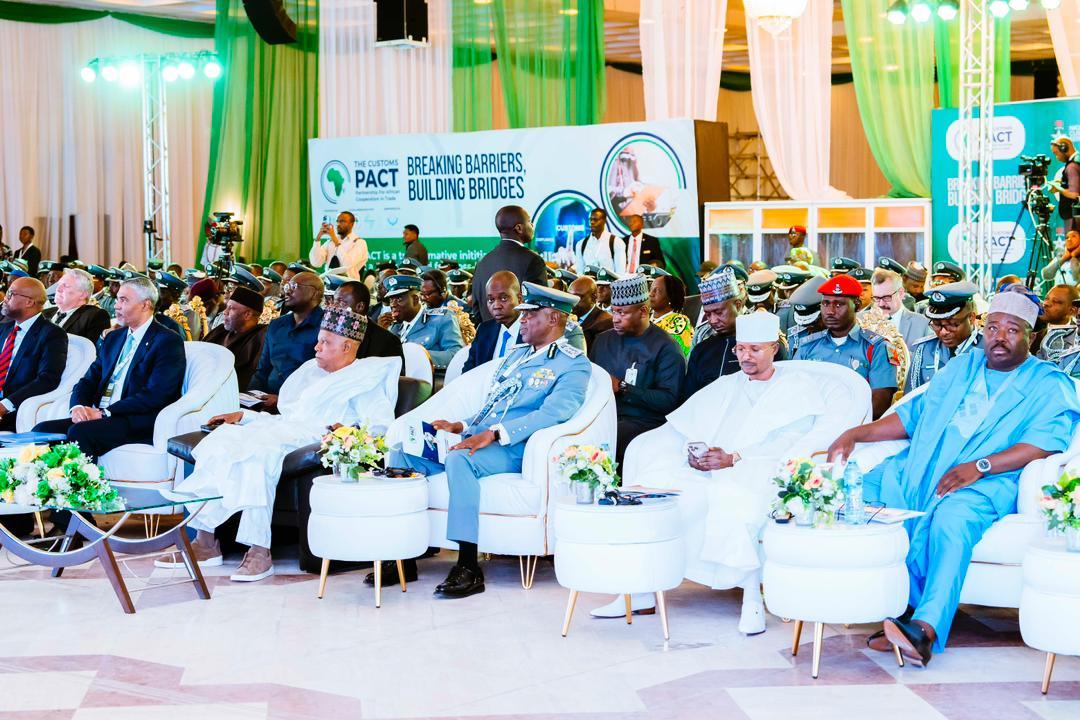
He implored African nations to be disciplined in working towards building borders that meet the high demands and rapid pace of contemporary technological advancement.
He expressed delight to be a part of the event, which brought together partners and leaders from across the continent, saying it demonstrates the collective resolve to discard the old habit of accepting slow borders as destiny.
AfCFTA’s Role
President Tinubu stated that while Africa had already taken the hardest step by agreeing on integration through the African Continental Free Trade Area (AfCFTA), what is crucial at the moment is execution.
“Success will be judged not by communiqués but by real outcomes: shorter border-crossing times, reliable local-currency settlements, and efficient movement of goods across borders and ports. Our vision must translate from conference halls to the daily experiences of traders, manufacturers, logistics operators, and farmers,” he maintained.
Modernization
The Minister of Finance, Mr. Wale Edun, who was also represented by the Minister of State for Finance, Dr. Doris Anite, urged relevant authorities in Africa to continue to dismantle barriers that hinder trade and revenue generation.
She stressed that the government of Nigeria remains committed to supporting modernization initiatives within customs administrations and aligning with global best practices aimed at creating a business-friendly environment.
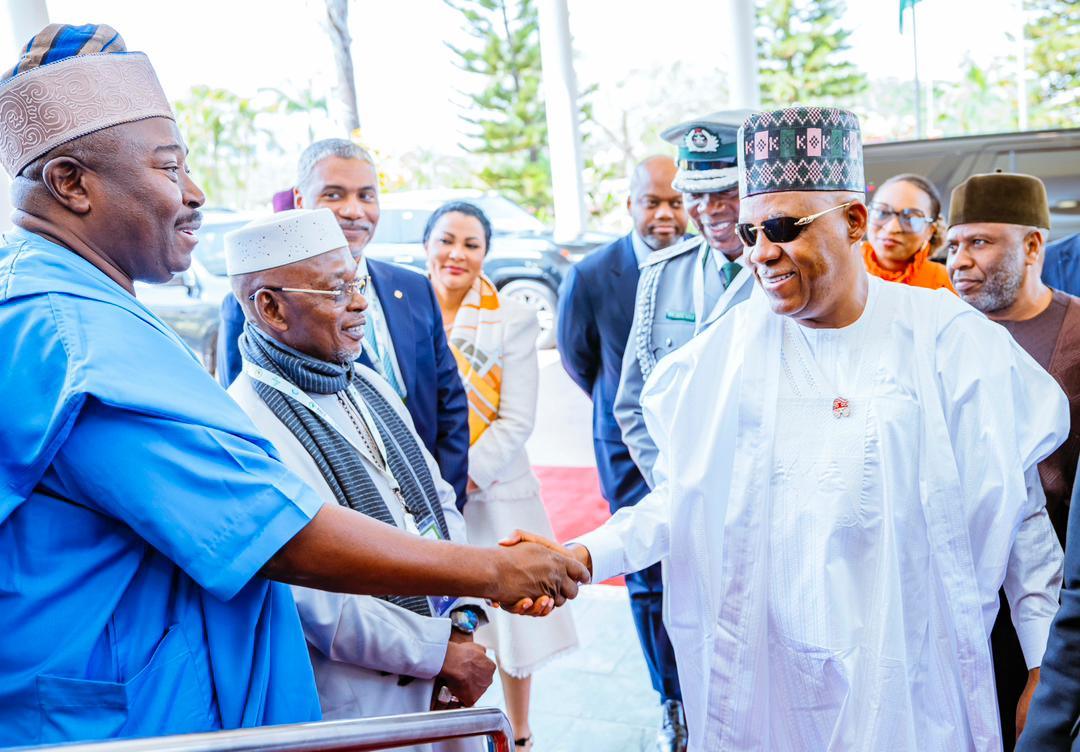
The Minister further expressed Nigeria’s commitment to ensuring that AfCFTA delivers tangible benefits for citizens while improving the ease of doing business at the borders.
Also, Minister of Industry, Trade, and Investment, Dr. Jumoke Oduwole, said that under President Tinubu’s decisive leadership, the administration has achieved a unified exchange rate, strengthened fiscal discipline, and is on course to accelerate regional economic integration under the Renewed Hope Agenda.
She upheld that Nigeria’s commitment to AfCFTA implementation remains unwavering, while urging participants to build an Africa that trades more with itself.
Secretary-General of the World Customs Organization (WCO), Ian Saunders, applauded ongoing reforms by the Tinubu administration, assuring them that the WCO stands with Nigeria in facilitating legitimate trade.
He also praised heads of Africa’s Customs for their efforts in incorporating modern standards into their operations, adding that leadership, investment, and consolidating gains in customs administration remain valuable.
The Vice President of Afreximbank, Kanayo Awani, backed modernization as a positive initiative adopted by several customs administrations, including Nigeria.
In his address of welcome, the Comptroller-General of Customs, Adewale Adeniyi, urged relevant authorities and stakeholders to adopt cross-country trade facilitation and integration, emphasizing, “We cannot continue to work in silos.”
Adeniyi said the primary outcome of the engagement in Abuja, which involved all African regions, is to ensure that customs administrations are more actively engaged in AfCFTA implementation, while strengthening dialogue and mutual understanding between customs administrations and the private sector across the continent.
The Secretary-General of AfCFTA, Wamkele Mene, said that the Secretariat would work closely with the NCS to ensure that the objectives of C-PACT unfold into a pleasant reality.
Olusola Akintonde