


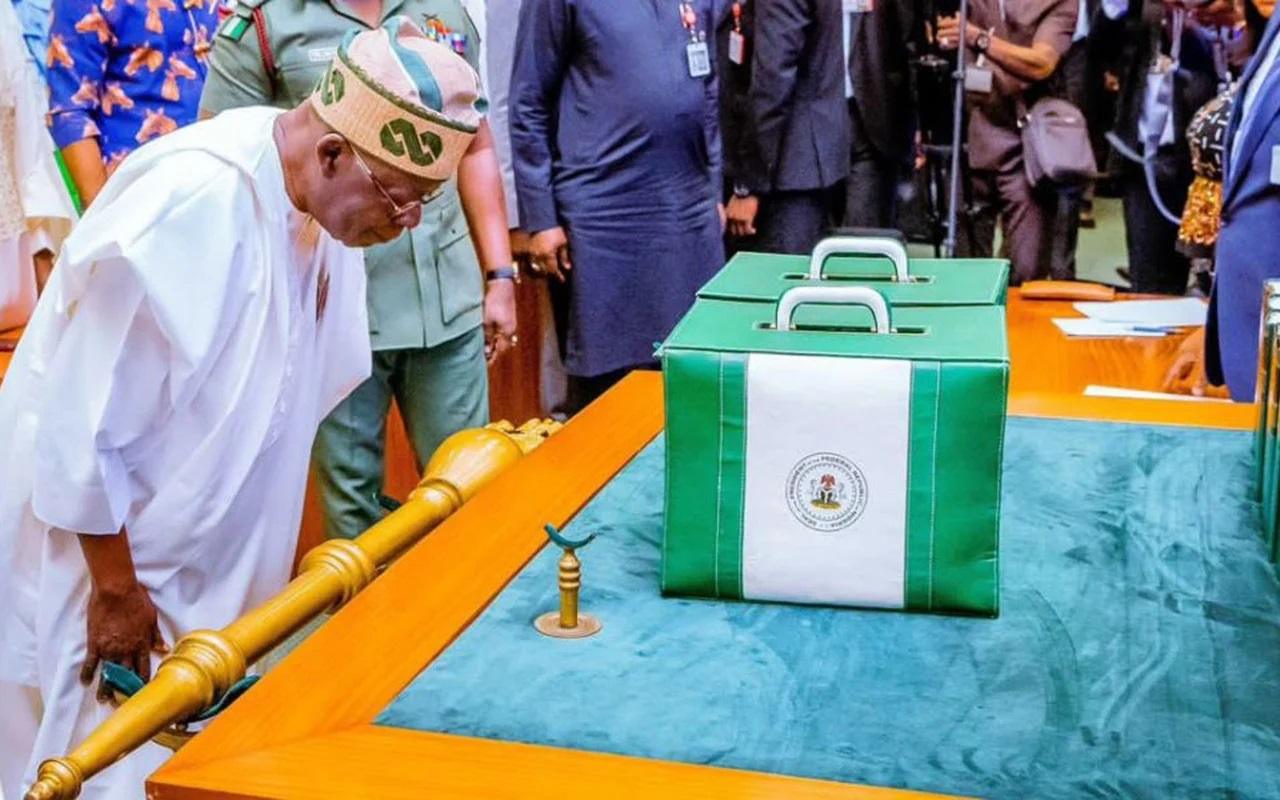
The Nigerian President Bola Ahmed Tinubu has written to the House of Representatives seeking approval for significant adjustments to the 2026 budget.
The letter, read at plenary by the Speaker of the House, Mr Tajudeen Abbas, cited the need to clear outstanding obligations and fund key national projects.
The President stated that “the proposed changes aim to address unpaid capital commitments from previous budgets, introduce new strategic projects, and maintain fiscal stability.”
READ ALSO: House of Reps Passes 2026 Budget for Second Reading
READ ALSO: Nigerian Senate Sets Date for Passage of N58.472tn 2026 Budget
The request includes; the regularisation of approximately ₦5.71 trillion in outstanding capital obligations carried over from the 2025 budget cycle.
Officials explained that “the move is necessary to prevent unresolved projects from burdening the 2026 fiscal plan.”
In addition, the government is seeking approval for roughly ₦2 trillion in new capital spending for priority projects across multiple sectors that were not captured in the current budget.
The proposal also outlines targeted interventions, including ₦478.6 billion in federal equity funding for legacy light rail projects in Lagos, Kano, Kaduna and Ogun states, as well as feasibility studies for new rail systems in Enugu and Maiduguri.
Further allocations include; about ₦482.76 billion for health sector interventions tied to international agreements, alongside funding for infrastructure studies under a national highway development initiative.
The judiciary is also set to benefit, with proposed allocations of ₦98.5 billion for the Court of Appeal and ₦36.7 billion for the Supreme Court, aimed at strengthening judicial processes ahead of and following the next presidential election cycle.
Overall, the government estimates that the total adjustment to the 2026 budget will be around ₦9.08 trillion, combining legacy obligations and new expenditures.
To finance the changes, the President stated that “the government plans to rely on external funding sources to reduce pressure on domestic borrowing, protect private sector access to credit, and stabilise interest rates.”
The letter urged lawmakers to give the proposal expedited consideration to ensure smooth implementation of the 2026 fiscal programme.