

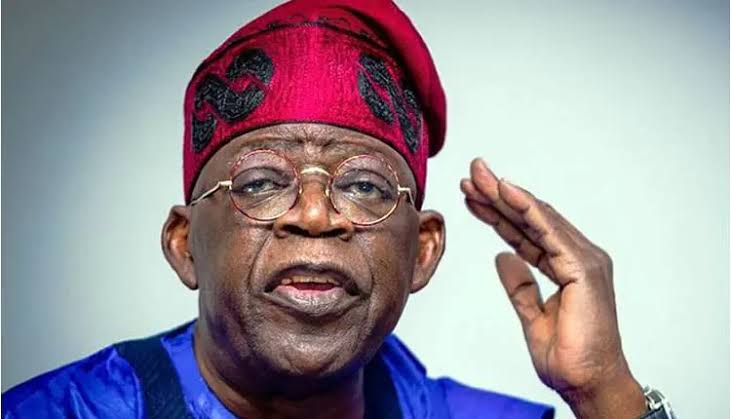
The Nigerian President Bola Ahmed Tinubu has emphasized the need for a multi-pronged approach to tackling Nigeria’s evolving security challenges.
He also called for a robust legal framework to enhance collaboration and intelligence sharing among security agencies.
President Bola Tinubu made the call during a one-day Legislative Dialogue On Constitutional Review And National Security Architecture, organized by the House Committee on Constitution Review in collaboration with the Office of the National Security Adviser, in Abuja.
He noted that it is time to align Nigeria’s security framework with present-day realities.
He warned that neither full centralization nor outright fragmentation can sufficiently guarantee NIgeria’s safety.
The President, who was represented by the Minister of Defence, Abubakar Badaru, said the security dialogue is imperative, owing to evolving security challenges and the need align the Constitution with present realities.
He explained that the federal government’s integrated security strategy, which is characterized by intelligence fusion, joint task force operations, has yielded significant results in different parts of the country.
“The time has come to align Nigeria’s security architecture with some vital life realities. Our national experience has shown that neither centralization nor fragmentation alone can secure the vast and diverse territory of Nigeria.
“The growing agitation for state police, the complex demand of cybercrime, cybersecurity, and the urgent need for efficient, intelligent sharing among agencies all point to one truth- our constitutional framework must evolve or risk becoming a danger to the very unity it was made to protect.
“Security in the 21st century is cooperative, non-competitive. Terrorism in the North East, banditry in the North West, piracy the Gulf of Guinea, farmer-headers’ crashes in the Middle-Belt, separatist agitation in the South East all share one characteristic they transcend the capacity of any single agency.
“This is why this dialogue is timely. It offers an opportunity to entrench constitutional provision that encourage real-time intelligence, joint operations planning and unified strategic response. The commander-in-chief of our armed forces has emphasized repeatedly security agencies must act as one, united in purpose and united in action.”
In his remarks, The Speaker Of the House of Representatives, Tajudeen Abbas reaffirmed the 10th National assembly to review existing laws.
The Speaker who was represented by the House Leader Prof Julius Ihonvbere said that the dialogue was timely, given the urgent need to review and update existing laws to address current and emerging security threats.
He said Nigeria’s complex security landscape demands strategies that are “multi-dimensional, inclusive, technology-driven, and adaptable,” anchored in a solid legal and institutional framework.
He highlighted the prevalence of terrorism, banditry, piracy, militancy, and oil theft across regions, stressing that the House is committed to taking practical legislative steps beyond motions and bills to support the government’s anti-insecurity efforts.
In his remarks, Deputy Speaker of the House of Representatives and Chairman of the Constitution Review Committee, Mr Benjamin Kalu, described the dialogue as a necessary diagnostic process.
He said previous legislation on security was often developed without adequate input from those directly involved in frontline operations.
He stressed that legislators reforms must be based on accurate diagnoses, hence the need to listen to those who wear the shoes and know where it pinches
National Security Adviser, Mr. Nuhu Ribadu, said that security and constitutional order are deeply intertwined.
Mr Ribadu who was represented by the National Coordinator, National Centre for Anti-Counter Terrorism, Maj.Gen Adamu Laka, stressed that a responsive, inclusive, and forward-looking constitution is essential for fostering national unity and addressing the root causes of insecurity.
He commended the National Assembly for initiating the dialogue and called for constitutional reforms that decentralize service delivery, strengthen institutions, and promote more effective governance.
“Security is not just about military hardware; it’s about legal clarity, institutional strength, and public trust. As we deliberate today, let us remember that constitutional reform is not just about structure, it’s about the survival, stability, and sovereignty of our Republic,” Gen. Musa said.
The Minister of Interior
Olubunmi Tunji-Ojo, called for mass mobilization of citizens to address the rising insecurity, recognizing that the government alone cannot effectively manage the escalating insecurity, emphasizing the need for citizens to participate in information gathering and support security agencies.
Olusola Akintonde