

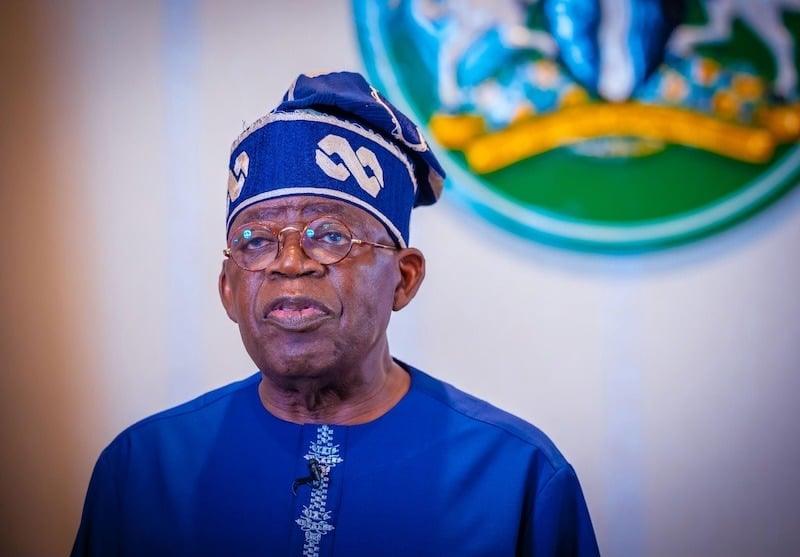
President Bola Tinubu has urged the World Bank to deepen its partnership with Nigeria by accelerating financing, streamlined processes, risk management, knowledge transfer, and capacity building to fast track inclusive growth and prosperity.
President Tinubu made the call at the State House, Abuja, while receiving a high-level World Bank delegation led by its Managing Director of Operations, Anna Bjerde.
The President also declared that his administration was firmly committed to sustaining its economic reforms and would not reverse course despite the initial pains of adjustment.
“Nigeria had crossed the most difficult phase of reform implementation and was determined to stay the course in the interest of long-term stability and prosperity.
“I give you the assurance that since we’ve gone into this tunnel of reform, we have our hands on the plough and we’re never going to look back. Initially it was painful and difficult, but those who win are not the ones who give up along the way in difficult times,” the President said.
He described Nigeria as the heart of the African continent, stressing that the scale of the country’s population and resources made reform not just desirable but inevitable.
The President stressed that while the subsidy removal and the unification of exchange rates initially triggered inflation, it has since reduced significantly, and the naira has stabilised, improving investor confidence and ease of doing business.
President Tinubu stated that the reforms being implemented are anchored in transparency, accountability, and stable policies.
Administration’s Priority
The President highlighted agricultural transformation as a priority of his administration, noting that investments have been made in the sector through zonal mechanisation centres, improved seed development, and fertiliser availability, supported by the growing petrochemical industry, to boost yields and move farmers from small-scale operations into strong cooperatives.
“Nigeria is the heart of the continent, and we must do what’s necessary to strengthen the economy, particularly looking at the young population of this country, looking at the vast area of arable lands.
“How do we employ mechanisation and make agriculture easier? I have embarked upon that. We have created zonal mechanisation centres to help the farmers,” he said.
President Tinubu reaffirmed government’s commitment to the ongoing economic reforms, acknowledging that though the process has been challenging, “There will be no turning back.”
“How do we help the farmers convert the local market for fertilisers to improve their yields and move them from ordinary small-scale holders to huge cooperatives that can bring opportunities to Nigerians? the President asked, urging the World Bank to identify areas where it could support seed development, mechanisation and agricultural value chains.”
In her remarks, Bjerde commended the Nigerian government for what she described as steady, disciplined and courageous reform leadership over the past two years.
She said Nigeria had become a frequent reference point in her discussions with presidents, policymakers and investors around the world.
“The results that have been achieved are really commendable,” she said, praising Tinubu’s consistent communication to Nigerians and the international community on the necessity of reforms, even when reform implementation is difficult, there has been no turning back, and that has given confidence and clarity.
Nigeria’s Reform Journey
Bjerde noted that Nigeria’s reform journey, which began about two years ago, was now delivering visible results acknowledged by the private sector and international partners alike.
She said the World Bank’s forthcoming Country Partnership Framework would be firmly anchored on Nigeria’s own development vision, including the ambition to grow the economy to $1 trillion and achieve annual growth of about seven per cent.
She identified job creation as the central priority for the partnership, stressing that Africa’s rapidly growing and youthful population made employment generation critical.
According to her, infrastructure investment, agricultural transformation, access to finance for small and medium-sized enterprises, and human development would form the backbone of the World Bank’s engagement.
Bjerde disclosed that the World Bank’s public sector portfolio in Nigeria currently stood at about $17 billion, while private sector investments through the International Finance Corporation had expanded to about $5 billion annually.
She said the Multilateral Investment Guarantee Agency was also increasing its presence in Nigeria, with plans to expand risk-reduction guarantees and insurance schemes to attract more private capital.
New Budget-Support Operation
She further revealed that the World Bank was preparing a new budget-support operation for Nigeria, building on earlier instruments that had been revived to align the Bank’s financing directly with the government’s reform agenda.
According to her, the new package would support ongoing reforms in areas such as trade, digital development and measures to manage inflationary pressures.
Earlier, the Minister of Finance and Coordinating Minister of the Economy, Wale Edun, said the meeting came as Nigeria and the World Bank were finalising the Country Partnership Framework for 2026–2032.
He described the engagement as a reflection of a shared commitment to deepening a partnership that had evolved into a collaborative agenda for structural transformation and sustainable growth.
Edun added that Nigeria’s far-reaching and internationally recognised reforms under the Renewed Hope Agenda had repositioned the economy for long-term resilience, with progress already acknowledged by rating agencies and global investors.