


The Federal Government of Nigeria under the Renewed Hope Agenda of President Bola Ahmed Tinubu, is investing in the strengthening of policies and action for the overall welfare of Nigerian children.
As part of its commitment to the protection, health, education and nutrition of Nigerian children, there are coordinated interventions spanning policy reform, service delivery, and direct humanitarian support for targeted sustainable sectoral impacts.
At the epi-center of the coordination of these national efforts, is the Federal Ministry of Women Affairs and Social Development, under the leadership of Hajiya Imaan Sulaiman-Ibrahim, driving the implementation of child-focused programmes while amplifying advocacy for safer, sustainable and more inclusive environments for children.
A major child protection milestone was recorded on 8 May 2025, with the launch of the National Plan of Action on Ending Violence Against Children (2024–2030) by President Bola Ahmed Tinubu in Abuja.
The Plan provides a comprehensive, multi-sectoral framework aimed at preventing abuse and exploitation, strengthening enforcement of child protection laws, supporting survivors, and mainstreaming child protection into national and sub-national planning and budgeting.
Deliberate Enforcement
Speaking at the launch, President Tinubu, represented by Vice President Kashim Shettima stressed that laws alone are insufficient without deliberate enforcement and institutional will.
“Our legal frameworks reflect our conviction. From the Child Rights Act to the Violence Against Persons (Prohibition) Act, Nigeria has laid down the statutory foundation for the protection of children. But legislation alone does not shield the vulnerable, it is the will behind those laws, and the systems that enforce them that make the difference,” he said.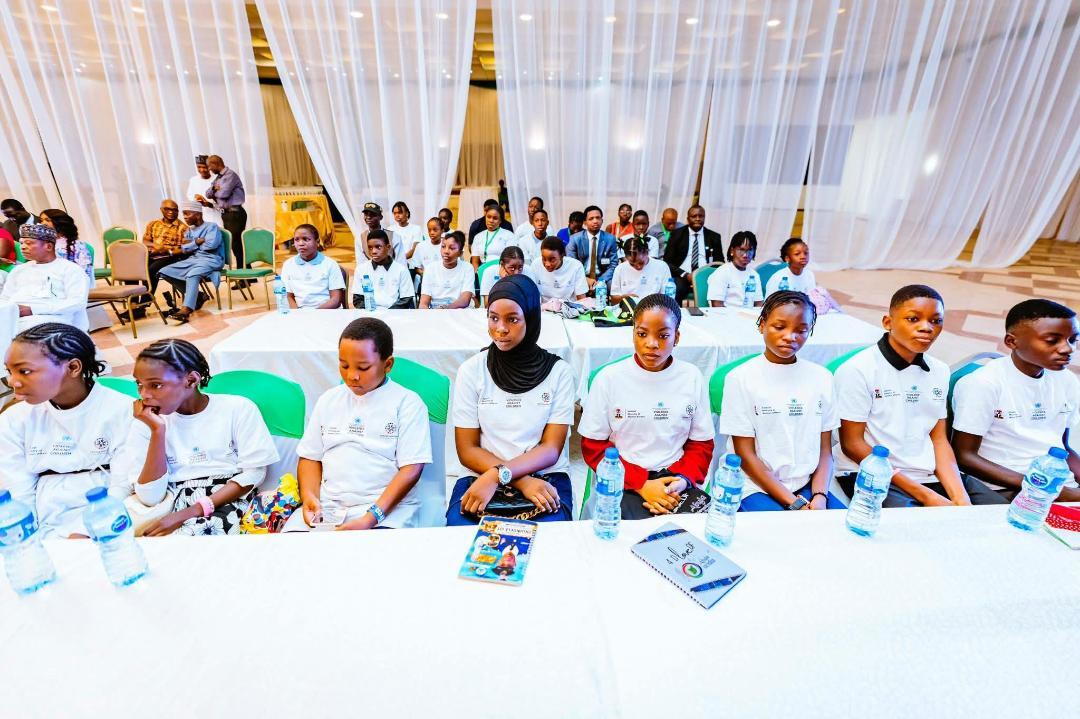
The President’s remarks set the tone for a results-oriented approach to child protection, reinforcing zero tolerance for violence, bullying, and neglect.
Furthermore, in an address commemorating the 2025 National Children’s Day, President Tinubu once again reaffirmed the commitment of government, in alignment with the Renewed Hope Agenda.
“We are committed to implementing proactive measures to strengthen existing efforts to support families and communities, including developing a robust institutional framework focused exclusively on Child Protection and Development.”
He added that government was “investing in social protection tools such as the Universal Child Grant and finalising a national Child Wellbeing Index to measure progress, track gaps, and hold ourselves accountable.”
Collective Effort
The president however called for collective effort, encouraging every Nigerian to become a child protection champion.
“…children’s safety cannot be solely anchored on government policies but on community vigilance. This is why I am launching a nationwide “See Something, Say Something, Do Something campaign,” he announced.
To ensure greater accountability in safeguarding the rights and well-being of every Nigerian child the government has also introduced a National Policy on Safety, Security, and Violence-Free Schools, and developed Guidelines for School Administrators .
Teachers training curriculum is now embedded with social-emotional learning and child safeguarding, while the National Commission for Almajiri and Out-of-School Children is bridging cultural gaps by providing inclusive pathways for every child to learn, thrive, and succeed.

Aligning with the President’s directive, the Minister of Women Affairs and Social Development, Hajiya Imaan Sulaiman-Ibrahim, is sustaining policy leadership and stakeholders coordination to strengthen the country’s child protection architecture.
Sulaiman-Ibrahim said; “Violence against women and children is unacceptable. Every child deserves to live in an environment that is safe, secure, and nurturing — free from fear, harm, or exploitation.”
At the 2025 National Children’s Day Press Briefing in Abuja, Minister Imaan Sulaiman-Ibrahim renewed calls for collective action against bullying and violence in all spaces where children live, learn, and grow.
“Bullying is not just a school issue; it is a societal problem that demands collective, sustained action. Our children deserve better, they deserve safe spaces to thrive, to learn, and to live,” she said.
Warning of the consequences of complacency, complicity and inaction, the Minister added:
“We must act now. It breeds fear, isolation, and in tragic cases, suicide.”
Child Policy Center
Adding protection building blocks to policy statements, the Federal Ministry of Women Affairs and Social Development On 24 December 2025, officially launched the Child Policy and Information Centre (CPIC) domiciled at its Abuja headquarters.
It will serve as a central hub for consolidated, real-time child protection data designed to enhance evidence-based decision-making and policy impact.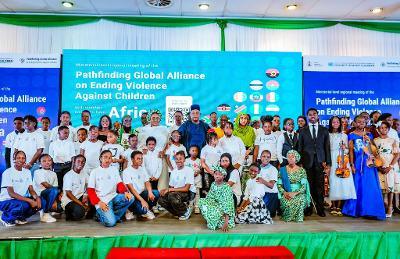
Addressing stakeholders at the launch, the Minister described the Centre as “a transformative milestone in our collective efforts to safeguard the rights and well-being of every child in Nigeria.”
She emphasised that: “For too long, child protection data has been fragmented, limiting our ability to track progress and respond effectively. With this Centre, we are consolidating reliable, real-time data to guide impactful action.”
The Minister further noted that the CPIC will serve as a strategic digital hub, integrating child protection indicators, research, dashboards, analytics, and a national knowledge repository to support policymakers, practitioners, and development partners in making informed, targeted interventions.
She expressed gratitude to President Tinubu for prioritising human capital development and child wellbeing:
“Mr. President’s Renewed Hope Agenda has placed human capital development, social protection, and the wellbeing of women and children at the heart of national development. This Centre stands as a practical expression of that commitment and enjoys the full support of the Federal Government.”
Data Bank
In addition, the Minister has also expressed intent to set up a data bank for the registration and protection of home support staff in the country.
This is intended to regulate the industry and ensure global best practices, through the proper documentation and tracking of children who are often sent out as home support staff far away from their parents to ameliorate the economic situation of their respective families.
This would also protect them from the dangers of child trafficking and sexual exploitation and ensure the overall safety Nigeria’s future leaders.
Within the broader human capital development agenda, the Federal Government has expanded integrated child health campaigns, vaccination outreach, malaria prevention, nutrition initiatives, and school feeding programmes.
Through the Nutrition 774 programme and School Feeding Scheme, government is working committedly to improve child health and cognitive development.
President Bola Tinubu said the Nutrition 774 project aims to ensure no child in Nigeria goes hungry.
“Through this project, we are reaching every community, guaranteeing that children receive the necessary nutrition to thrive in their academic pursuits, creative endeavours, and overall health.”
Other Projects
In line with this, the Ministry of Women Affairs and Social Development has also strengthened institutional coordination through the establishment of a Department of Nutrition, focusing on policy coherence for children and mothers.
These efforts aim to improve child survival, cognitive development, school attendance, and learning outcomes.
Reaffirming the philosophy guiding her child protection work as a national imperative, the Minister stated: “Child protection, development, and family cohesion are not just policy objectives — they are national imperatives.”
Driving continental synergy, Nigeria joined governmental institutions and non-governmental organizations from across Africa at the historic First African Forum of Children’s Parliament held in Rabat, Morocco, to forge a unified vision for children’s participation in Africa’s development.
The forum culminated in the adoption of the landmark Rabat Declaration on the Participation of Children in Africa’s Development, reaffirming collective commitment to the Sustainable Development Goals and the United Nations Convention on the Rights of the Child.
Nigeria was represented by the Minister of Women Affairs and Social Development, Hajiya Imaan Sulaiman-Ibrahim, who underscored the nation’s resolve to strengthen Children’s Parliaments and ensure that the voices of children are not only heard, but meaningfully integrated into policy-making and development processes, emphasizing that children are essential partners in building Africa’s future.
A major outcome of the forum was the historic decision to establish the African Network for Children’s Rights, a continental platform dedicated to advocacy, dialogue, and the meaningful participation of African children in decisions that shape their lives.
Morocco’s National Observatory for Children’s Rights was designated as the official headquarters of the Network and will provide support for its operational running costs. The establishment of the Network marks a significant step toward sustained continental cooperation in advancing children’s rights and amplifying the role of young voices in Africa’s development agenda.
Continental Partnerships
Beyond national programmes, continental synergy and policy reforms, the Minister’s commitment has extended to grassroots impact. During a recent visit to the Neonatal Intensive Care Unit (NICU) of the National Hospital, Abuja, Hajiya Imaan Sulaiman-Ibrahim provided diapers and cash support to families of premature babies undergoing intensive care.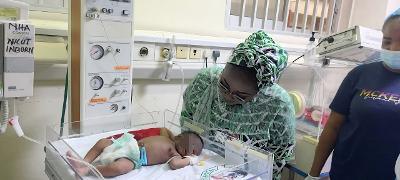
Some of the beneficiaries of this gesture included Baby Mba, born on 17 December 2025 at 27 weeks, weighing 0.8 kg, who tragically lost her mother shortly after birth, as well as Baby Nyandaiti , born at 26 weeks on 16 December 2025, weighing 900gm, and Baby Chiedozie.
For Mr. Lucky Jonny Mba, father of Baby Mba, the intervention brought relief amid grief and financial strain.
“Wow, God is great! May the Almighty God bless the Honourable Minister of Women Affairs and the entire staff of the Ministry… As they have shown us kindness, may God show them His goodness.” he said.
The Nyandaiti family likewise expressed appreciation, describing the support as timely and reassuring saying “We the Nyandaiti’s, are very much grateful for your kind gesture ma. Words alone are not enough to appreciate what you have done to us. Only God in heaven will bless you in a better way.”
For the Chiedozie family, gratitude also resonated; “we sincerely express our deepest gratitude for your kind financial support toward the care of our baby in the NICU. Your compassion, generosity, and timely assistance brought us great relief during this very difficult moment.”
From presidential resolve at the launch of a national plan to ministerial leadership in data systems, public advocacy, and compassionate frontline intervention, Nigeria’s child-centered initiatives under the Renewed Hope Agenda reflect a deliberate, coordinated, and human-focused approach.
With reinforced institutions, budgetary allocations, political will, and sustained community engagement, the Federal Government continues to prioritise the safety, dignity, and future of Nigerian children as a cornerstone for inclusive national development.
Observers and stakeholders, are however urging for not only increased budgetary allocations but also the timely release of funds to guarantee sustainable meaningful national impact. They stress that delayed disbursements more often than not undermine implementation and weaken outcomes, despite laudable policy intentions.
Beyond government action, stakeholders have also called for stronger collaboration with development partners, civil society organisations, and international institutions, stressing that a coordinated, multi-sectoral approach remains essential to addressing systemic gaps in child welfare.
Such partnerships they affirm are critical to ensuring that Nigerian children remain adequately protected, educated, and empowered, to reach their full potential and contribute productively to Nigeria’s long-term social and economic development.