

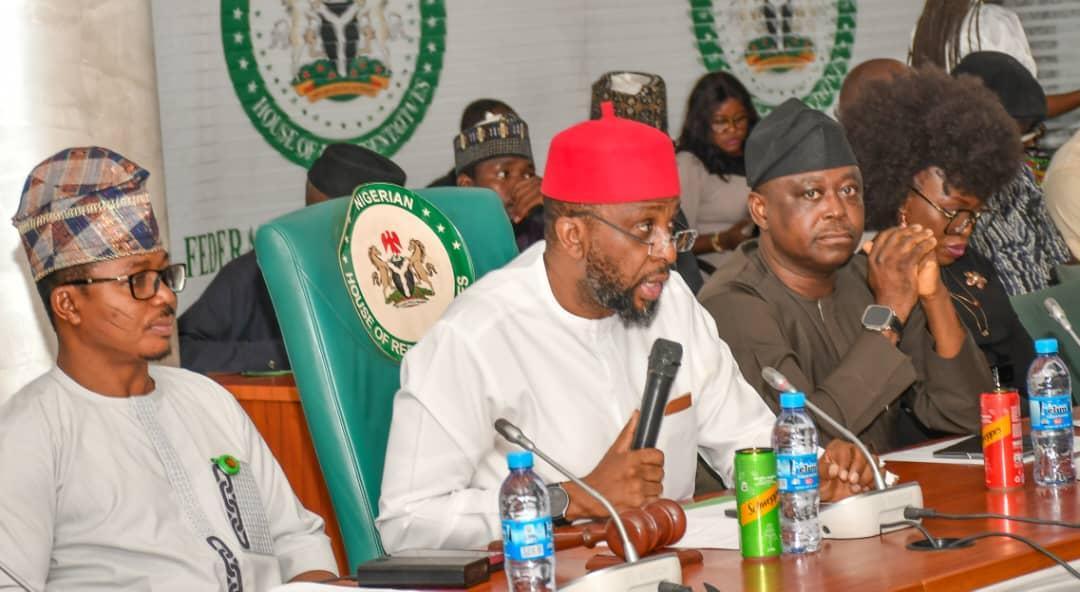
The Nigerian House of Representatives has held a public hearing on 12 bills aimed at repositioning the Mining sector.
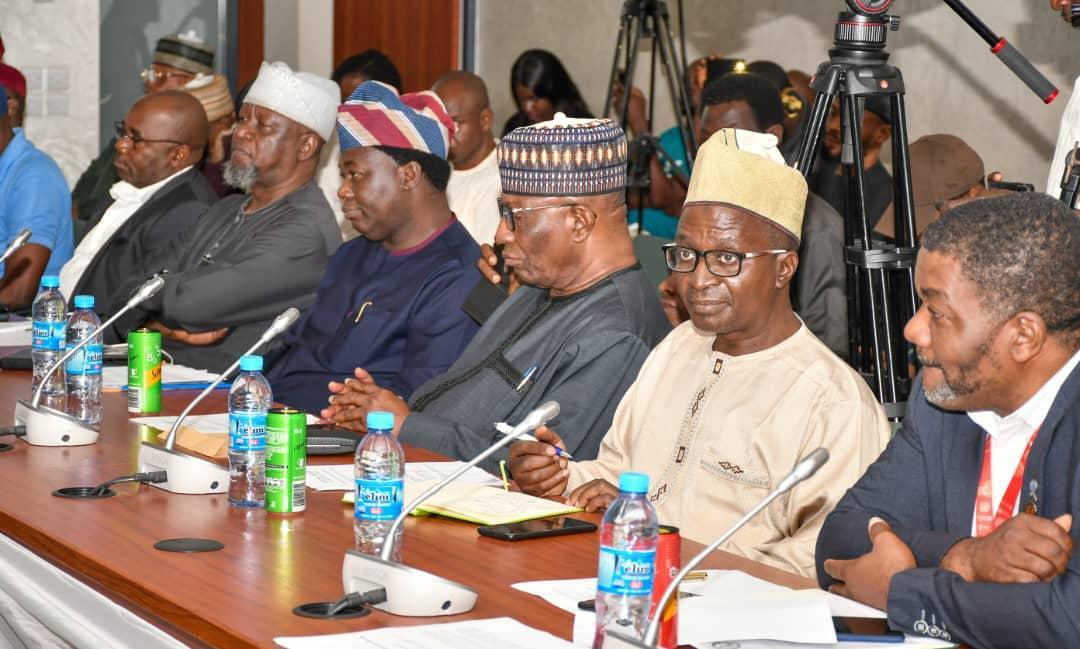
The public hearing, organised by the House Committee on Solid Minerals, brought stakeholders in the sector together to make contributions, suggestions, and submissions on the need to pass the bills.
Declaring the Public hearing open, the Speaker of the House of Representatives, Mr. Tajuddeen Abbas noted that it was not merely a procedural step but a fundamental pillar of Nigeria’s democratic process.
Represented by Mr. Mark Useni, the Speaker said “the hearing offered a vital platform for robust public engagement and for capturing a diverse range of perspectives on legislation that would shape the future of Nigeria’s solid minerals sector.
“The bills before us today represent a strategic pivot in our national economic agenda. For decades, our economy has been heavily reliant on a single commodity. As we look towards building a diversified, resilient, and inclusive economy, the development of our solid minerals sector is not just an option—it is an imperative. These bills collectively address the key challenges and opportunities in this sector, from legal frameworks and institutional reforms to funding mechanisms and human capital development.”
The Speaker said; “Specifically, we are here to deliberate on: “A Bill for an Act to repeal the Nigerian Coal Corporation Act and enact the Nigeria Coal Development Commission, which seeks to modernise and revitalise our coal industry.
“The Bill for an Act to assure adequate funding for mineral resources exploration and extraction through Public-Private Partnerships, which aims to unlock private capital to drive growth.
“The Bill to establish the Lithium Development Commission of Nigeria, a visionary piece of legislation that recognises the global importance of this mineral and seeks to position Nigeria as a key player in the clean energy value chain.
The Bills to establish multiple Federal Institutes of Mining and Geosciences across various States—Garaku in Nasarawa State, Takum in Taraba State, Ikoro in Ekiti State, Akamkpa in Cross River State, Gusau in Zamfara State, and Umuahia in Abia State—are a testament to our commitment to building the intellectual and technical capacity required to harness our mineral wealth responsibly.”
“We will also be examining the Bill to establish the Nigerian Mining Development Bank, which will provide the necessary financial support for indigenous miners.
“Lastly, we have a Bill for an Act to establish the Nigerian Solid Mineral Communities Development Commission and the Nigerian Institute of Mining and Geosciences (Amendment) Bill, 2024, which are designed to ensure that host communities benefit from mining activities and to strengthen our existing institutions,” he explained.
Mr. Abbas pointed out that the success of the legislative efforts hinged on the quality of input received from the public.
He said; “Your contributions will serve as a guiding light, enabling the Committee to refine these bills into comprehensive, forward-looking, and effective laws that will truly serve the national interest.”
The Speaker therefore urged the participants to engage in a constructive, open, and impactful dialogue.
“Let us work together to build a vibrant and transparent mining sector that creates jobs, attracts investment, and contributes significantly to our national development goals,”he said
On his part, the Chairman of the Committee on Solid Minerals, Mr. Gaza Jonathan Gbefwi, said the exercise was not just a constitutional duty but also a strategic step towards repositioning the solid minerals sector as a true pillar of Nigeria’s economic transformation.
Gbefwi stressed that the sector held enormous potential for national growth, job creation, revenue generation, and industrial development.
“Yet, for decades, this potential has remained underutilised due to outdated laws, weak institutional frameworks, and poor funding mechanisms. This House, through the Committee on Solid Minerals Development, is determined to reverse that trend by strengthening the legislative foundation of the sector.”
“The Bills before us today are designed to achieve several critical objectives:
“• To modernise old and obsolete legal instruments such as the Nigerian Coal Corporation Act, by replacing them with forward-looking structures like the proposed Nigeria Coal Development Commission.
“• To create new institutions, such as the Lithium Development Commission and the Nigerian Mining Development Bank, that will position Nigeria to benefit from global shifts in energy transition and critical minerals demand.
“• To establish Institutes of Mining and Geosciences in the various geo-political zones of the country, ensuring that capacity development, research, and innovation are accessible nationwide.
“• To guarantee adequate funding for exploration and extraction through Public-Private Partnerships, thereby opening the doors for sustainable investment.
“• And importantly, to provide for the welfare and development of host communities through the Nigerian Solid Mineral Communities Development Commission,” the Chairman disclosed.
Gbefwi emphasised that the public hearing provided a platform for all stakeholders, government agencies, industry players, community representatives, academia, and civil society to contribute their knowledge, perspectives, and recommendations.
He said; “The Committee is committed to a participatory process because the success of these legislative efforts depends on how well they reflect the realities and aspirations of all stakeholders.”
The Chairman urged participants to approach the deliberations with a sense of responsibility and patriotism.
“The laws we shape here will not only determine how Nigeria harnesses her mineral wealth but also how we safeguard the interests of future generations,” he added.
Stakeholders in the Solid Mineral sector supported the passage of the bills, noting that some of the laws guiding the sector were obsolete.
PIAK