


By Glory Ohagwu, Abuja
The Reserved Seats for Women Bill currently before the National Assembly has been described as a corrective measure, and not a privilege that will promote inclusivity, broaden governance perspectives, and align Nigeria with international best practices in democratic participation.
It has been described as a critical step towards strengthening Nigeria’s democracy by ensuring inclusive representation.
Political activist and Executive Director of Dinidari Foundation, Ndi Kato, says that the Bill is both urgent and necessary.
“This Bill is not a favor. It is justice. When women belong in parliament, when their voices count, we all gain,” she said.
Statistics show that out of 360 members of the House of Representatives, only 16 are women, while just 4 out of 109 senators are female.
Across the 36 state assemblies, women occupy only about 50 out of 993 seats, representing roughly 5% with 14 states having no women legislators at all.
“These dismally low figures are not accidental. They are the outcome of skewed and poorly thought-out policies, structural bias, and a political culture that privileges men,” Kato opined.
The Reserved Seats Bill proposes the creation of 182 additional seats in the Senate, House of Representatives, and State House of Assemblies, exclusively for women, expected to last for four election cycles, 16 years before review.
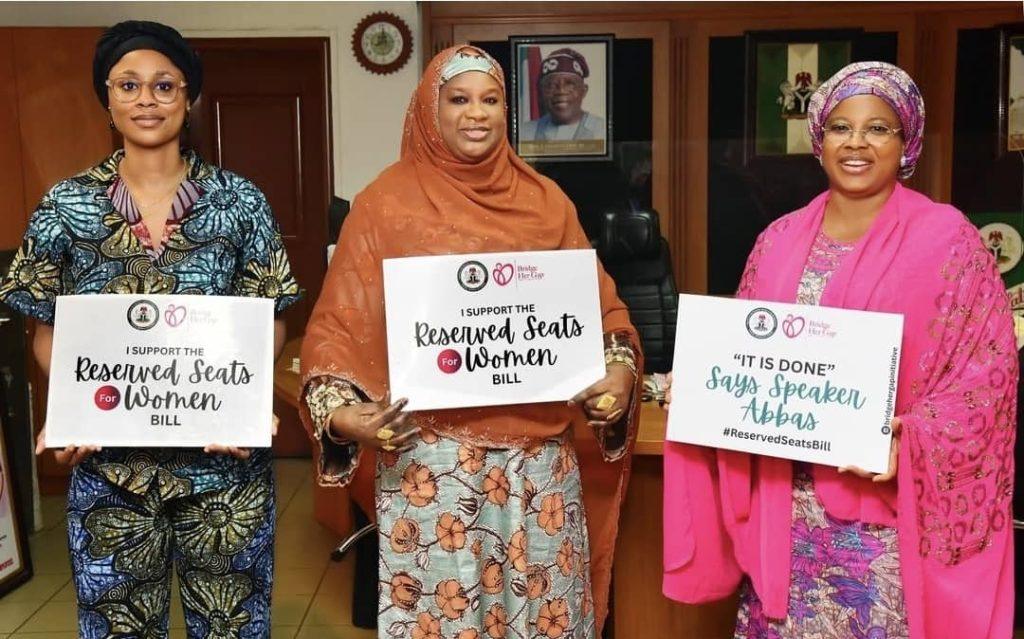
Recounting her personal experience contesting elections in Kaduna State, Northern Nigeria, Kato narrated systemic challenges faced by women.
“From the start, my candidacy wasn’t taken seriously because I was a woman. I was told publicly that I would not be given the party ticket to genuinely contest,” she explained.
She described the financial and structural burdens of the delegate system, as well as challenges during primaries. “The cost of running is staggering. Delegates are often paid outright on primary day. The financial burden is enormous,” she added.
Just like other supporters of the Bill, she maintains that its passage would strengthen governance outcomes.
“If this Bill becomes law, women will begin to break through the barriers. Those reserved seats will offer real legislative power, not tokenism,” Kato explained, noting that women legislators bring valuable perspectives to policies on maternal health, education, social welfare, and child protection.
Stakeholders including women’s organisations, development partners, and international agencies such as the United Nations have also expressed support for the Bill.
Once passed by both chambers of the National Assembly, it will require approval by at least 24 state assemblies before presidential assent.