

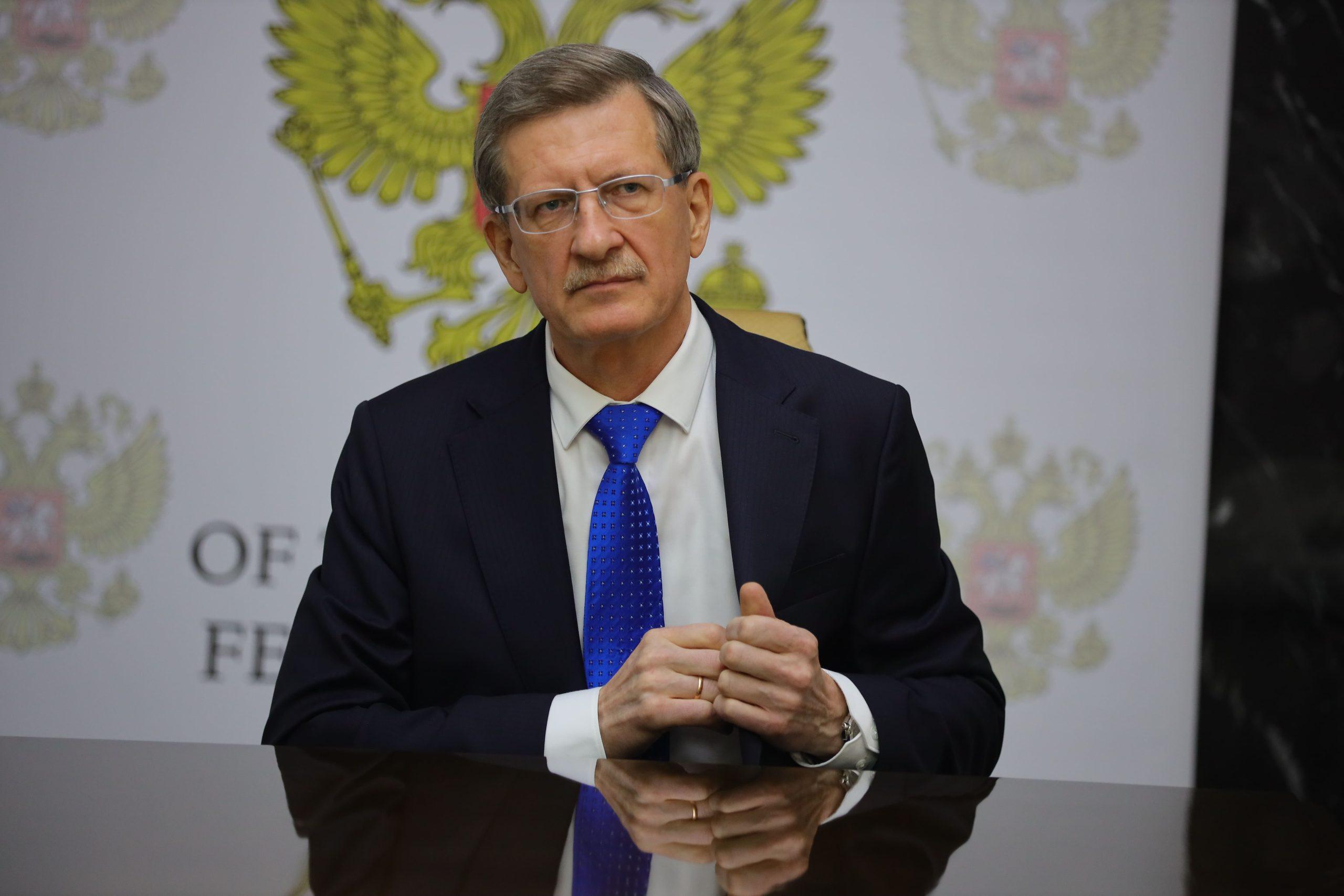
Russia says it could explore a collaborative automobile partnership with Nigeria in a bid to expand economic ties between Abuja and Moscow.
Speaking in an interview with Voice of Nigeria in Abuja, Russia’s Ambassador to Nigeria, Andrey Podelyshev, said this partnership would align with Nigeria’s National Automotive Industry Development Plan (NAIDP) and Russia’s strategic pivot to Africa amid geopolitical shifts.
If successful, this partnership would positively impact Nigeria’s high-potential automotive market, where demand for vehicles (720,000 units annually) far outstrips local production (14,000 units).
“I suppose that such possibilities do exist. This is indeed a very interesting idea. The Russian industrial sector, and in particular the automotive industry, has now in fact become independent from Western components and produces a significant amount of its own products, which are genuinely Russian-made.
“The establishment of our cooperation—both through the supply of such products here to Nigeria and, possibly, through the organization of joint assembly of Russian vehicles, both passenger cars and trucks, in Nigeria—is a very promising idea,” the Ambassador stated.
While he expressed optimism about the initiative, the Russian envoy said the potential for joint vehicle assembly and the need for reliable logistics routes to facilitate trade were crucial.
“However, it requires thorough consideration, as, like I have mentioned, one of the key factors hindering the development of trade between our countries is the absence of reliable logistics routes. If we succeed in developing such routes between Russia and Nigeria, it will then be possible to establish vehicle production here, as well as many other joint manufacturing projects.
“Therefore, I believe we should first focus on working out how our logistics routes will operate. Russian investors will be ready to come and discuss with the Nigerian side both vehicle production and the production of other types of machinery,” he said.
Ambassador Podelyshev said as the legal successor of the Soviet Union, Russia remains a party to the Bilateral Trade Agreement on Trade between the Government of the USSR and the Government of Nigeria, signed in Abuja on 10 December 1987.
He added that the agreement provides for various mechanisms to facilitate the development of trade and economic relations between our countries and establishes a solid legal foundation for offering preferences and special conditions, particularly in the context of large bilateral projects.
It should also be noted that Russia is a member of the Eurasian Economic Union (EAEU) — a common market that includes Russia, Belarus, Kazakhstan, Armenia, and Kyrgyzstan that applies unified trade rules with third countries.
“Nigeria has already been included in the EAEU’s approved list of countries eligible for preferential customs duty rates, amounting to 75% of the standard tariff. Additionally, within the EAEU framework, agreements are being concluded to establish free trade zones with third countries. Such agreements are already in force with Vietnam, Singapore, Serbia, and Iran, and negotiations are ongoing with a number of others.
“Nigeria is not yet represented among these countries. It should also be noted that one of the key objectives of the Russian Trade Mission, which was opened in Nigeria more than one and a half years ago, is to support and promote trade initiatives, including the identification and facilitation of projects that could qualify for special conditions or priority support from the Russian side,” he stated.
Current trends
Already, Russian automobile business interests have started making moves into the Nigerian market.
Plans are in top gear for AvtoVAZ, Russia’s largest automaker – majority-owned by the Russian government – to establish a spare parts hub and service center at the Lekki Free Trade Zone in Lagos before the end of 2025.
This would mark Russia’s most significant push into West Africa’s largest automobile market.
The proposed plant could attract over $200 million in foreign direct investment (FDI) and create more than 10,000 direct and indirect jobs.
But more importantly, a collaboration between Russian automobile interests and Indigenous Nigerian counterparts like Innoson and Nord would reduce Nigeria’s $8 billion annual vehicle import bill and improve Nigeria’s local content expertise.