

The Russian Federation asserts that the global political landscape is experiencing an irreversible shift, with the era of unipolar dominance drawing to a close.
In response, Russia advocates for a more equitable international system, enabling nations to act independently in a multipolar world free from external coercion or pressure.
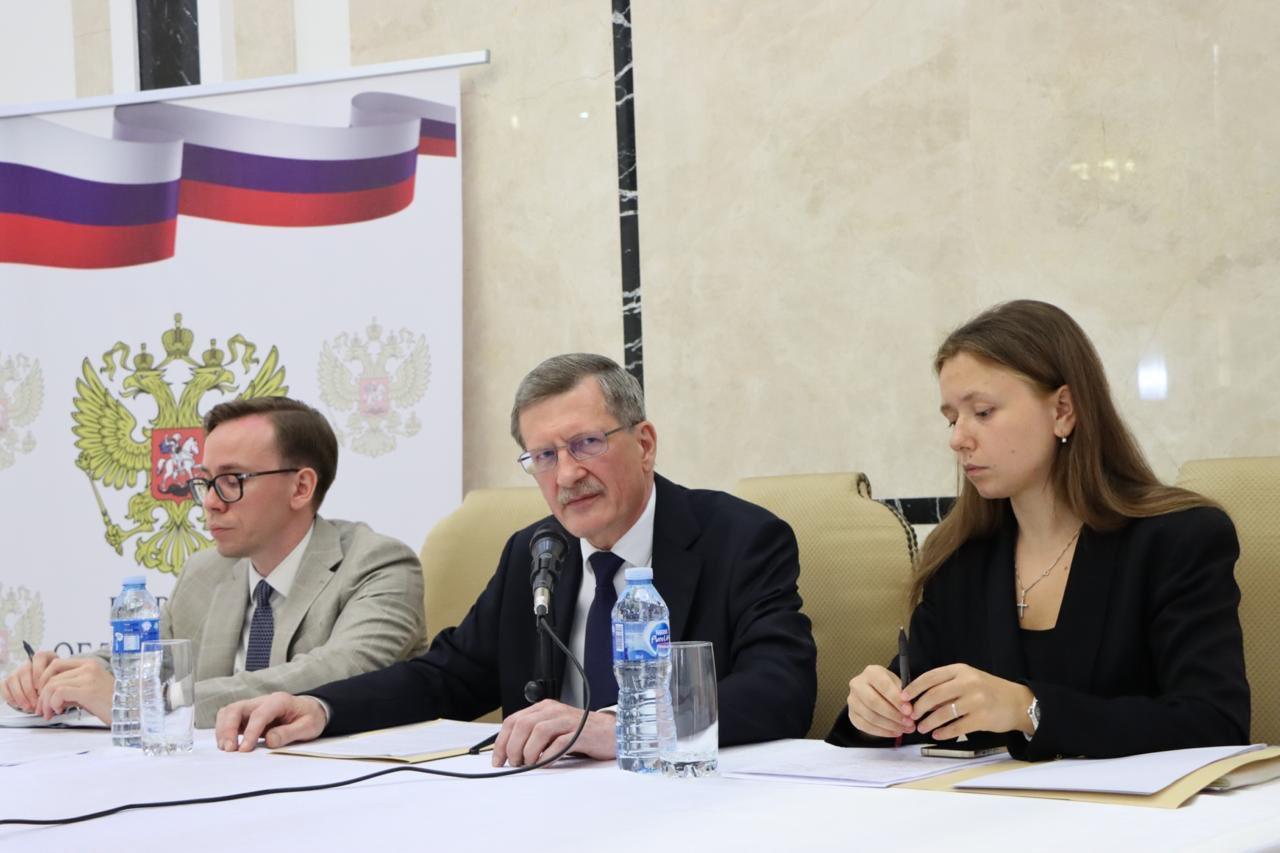
Andrey Podelyshev, Russia’s Ambassador to Nigeria, delivered these remarks during a press briefing in Abuja to commemorate Russia’s Diplomatic Service Day (also known as Diplomatic Workers’ Day, observed on February 10).
The ambassador emphasized that Russia’s foreign policy is grounded in the principle of cooperation as vital for global stability and development, as outlined in Article 2 of the UN Charter, which upholds the sovereign equality of all states.
Podelyshev highlighted Russia’s firm rejection of any form of “exceptionalism“—whether framed as a self-appointed “world policeman” or a “chosen nation.”
He criticized the so-called “rules-based order” when it refers to extra-legal norms imposed by a small group of states outside the framework of the UN Charter.
“History shows that claims of exceptionalism often result in the abuse of force and the undermining of international law,” he stated.
The ambassador pointed to unilateral military interventions not authorized by the UN Security Council—such as those in Yugoslavia and Iraq—as examples that have destabilized entire regions.
“True international rules must stem from universally agreed law, not from the dictates of an exclusive club,” he added.
💬 Russia’s FM Sergey #Lavrov : Today is #DiplomatsDay
I trust that you will continue to work honourably for the good of the Fatherland and to contribute your share to addressing foreign policy goals set by the President.
🎉 Happy Diplomats’ Day to all!https://t.co/8yO8rlzk58 pic.twitter.com/pSB8ydMm5f
— MFA Russia 🇷🇺 (@mfa_russia) February 9, 2026
The Diplomatic Service Day typically features press briefings, awards ceremonies, and discussions reflecting on Russia’s foreign policy priorities, including its vision for a multipolar world order.
Additionally, it provides a platform to discuss emerging international challenges and the strategies guiding Russia’s diplomatic engagement in global affairs.