

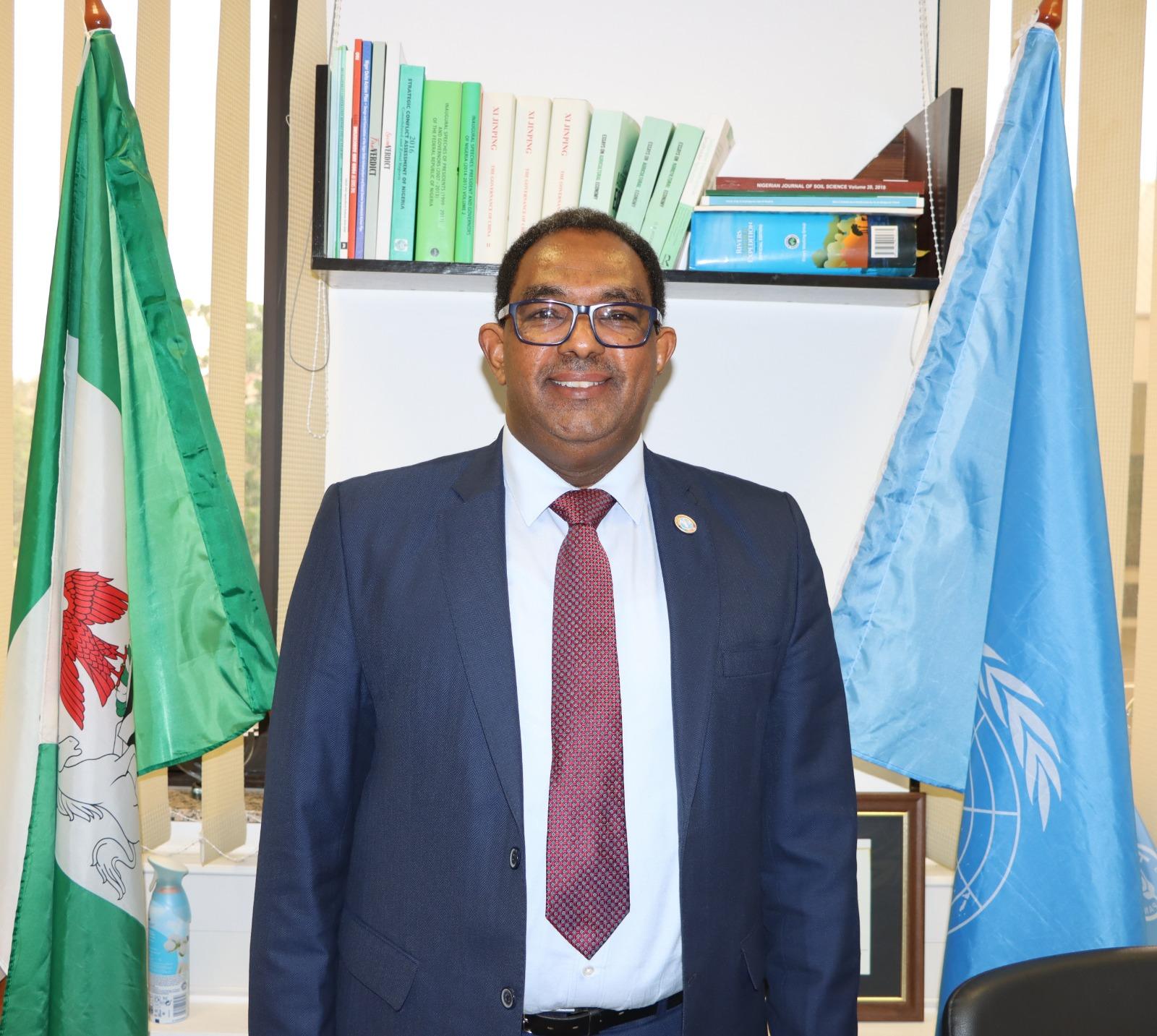
The Food and Agriculture Organisation of the United Nations (FAO) says protecting livelihoods through timely agricultural support is critical to addressing Nigeria’s food insecurity, as the country grapples with economic shocks, climate impacts and conflict.
Speaking with journalists on the sidelines of discussions around the 2026 Humanitarian Needs and Response Plan (HNRP), FAO Country Representative in Nigeria, Dr Hussein Gadain, said the plan required strong coordination among humanitarian and development partners.
“The humanitarian response plan represents a shared commitment for all of us as a humanitarian community in the country, particularly for communities facing the most food insecurity. FAO is the co-chair of the food security sector with WFP, and if you look at the plan, the majority of the needs are going to the food security sector,” he said.
He emphasised that FAO’s central message was that supporting livelihoods was not optional but lifesaving.
“As FAO, our key message today is that livelihoods are life-saving. Saving livelihoods saves lives. When farmers receive seeds and tools on time, they are able to produce their food. When livestock are protected and kept productive, and when communities can irrigate even a small plot behind their house, they will be able to produce the food they need,” he noted.
According to him, such interventions preserve dignity, stabilise household food access and reduce dependence on repeated emergency assistance at a time when global humanitarian funding is shrinking.
Looking Ahead
Looking ahead to 2026, Gadain said FAO would prioritise timely agricultural inputs ahead of the main planting season, alongside dry-season farming support.
“For this humanitarian needs response plan, FAO intends to focus on timely agricultural inputs ahead of the planting season, which starts in June. Even now, we are supporting a number of farmers planting during the dry season,” he said.
The FAO Country Representative, said that livestock support would remain a key focus.
“We would like to provide livestock health services, including feed, because livestock are very good assets for rural communities. They rely on them for nutrition, and also as assets. During the dry season, they sell them and buy food. Small-scale irrigation and water management are also central to FAO’s approach.
“Irrigating a small plot can be more than enough for families to produce the food they need, especially nutritious food like vegetables,” he said.
Gadain explained that FAO would continue to roll out what it calls “cash-plus” interventions, linking cash transfers with agricultural inputs, training and market access.
“Families need cash before they grow their food. With the cash and inputs together, while people are planting and harvesting, they have the cash to buy food”, he said.
He said partnerships were essential to success. “It’s not us alone who are going to make an impact.
“Together we will make an impact. FAO works closely with farmer groups, national NGOs and government institutions through platforms such as farmer field schools. We bring farmers together to learn from each other and train each other, and we also work closely in the food security sector to ensure coherence, avoid duplication and strengthen accountability to affected populations.”
He appealed to donors to release funds early.
“We would like to appeal to our partners to front-load flexible funding so that inputs reach farmers on time, before the rainy season. This is critical to transforming humanitarian assistance into resilience building at scale,” he said.
On the scale of the crisis, Gadain said Nigeria was facing one of the largest food insecurity burdens globally, noting that Nigeria today stands at about 38 million people who are food insecure, referring to the Integrated Food Security Phase Classification (IPC).
“They fall under phase three and four and above, crisis and emergency. Thanks to God, we don’t have famine classification this year.”
He said the situation was being driven by multiple, overlapping shocks.
“The situation is compounded by economic shocks, climate change, floods and droughts, and conflict, definitely in the northeast and northwest. It is complex and requires concerted efforts between the government and partners, including the UN and development partners.”
Locally Produced Nutrition Solutions
Gadain also spoke about locally produced nutrition solutions such as Tom Brown, a fortified food used to reduce malnutrition among children under five. He said scaling up local production was key to sustainability.
“Tom Brown is one of the techniques developed to reduce malnutrition, and the ingredients are produced locally. FAO has strong capacity in this area because most of the ingredients come from farms. If we want to make it commercial and accessible on supermarket shelves, we need to upscale it, and the government plays a very critical role. FAO did a study and found that children who used Tom Brown during crises saw a 35 per cent reduction in the recurrence of malnutrition,” Gadain said.
On ready-to-use therapeutic foods (RUTF), Gadain clarified FAO’s focus is not on treatment as the organisation do preventive nutrition. He noted that FAO promotes access to nutritious foods through vegetable production, livestock health, milk generation and poultry.
“Prevention is upstream, treatment is downstream. If we do not do prevention upstream, we will have a lot of problems downstream. The malnutrition situation in Nigeria is complex and structural. It is a policy issue with root causes that must be addressed, partners focused on treatment would secure funding to reach children suffering acute malnutrition”, he said.
Policy Implementation
On policy implementation, Gadain said governments led on policy development while FAO and other agencies provided technical support.
“The policies have been there, but with more effort they can work. FAO is very strong in developing strategies and policies, and UNICEF is leading especially on nutrition policies. We hope to work together to ensure these policies are effective,” he said.
When asked about the share of the 2026 HNRP budget devoted to agricultural solutions, Gadain said it remained limited but stressed integration mattered more than size.
“It does not matter how little the proportion is, but the integration. If we work together, identify beneficiaries together and target them differently, we will create resilience and sustainability and reduce the number of people needing repeated assistance every year”, he stressed.
According to him, FAO measures impact beyond food distribution through household-level monitoring and evaluation. noting that many households still fall below minimum dietary energy requirements.
“We use tools like the food consumption score. When we give inputs, we go back to the farmers, see how much they produce, how much the family consumes and how much they can sell. The minimum recommended is about 1,600 calories per day,” Gadain said. “In emergency contexts, food consumption scores are very low, and this helps us understand how productive and resilient households are”, he noted.
Dr. Gadain, expressed optimism that stronger collaboration under the humanitarian plan could improve outcomes.
He added that FAO, together with its partners, especially WFP, looks forward to working together to deliver a more food-secure 2026 for Nigeria.