


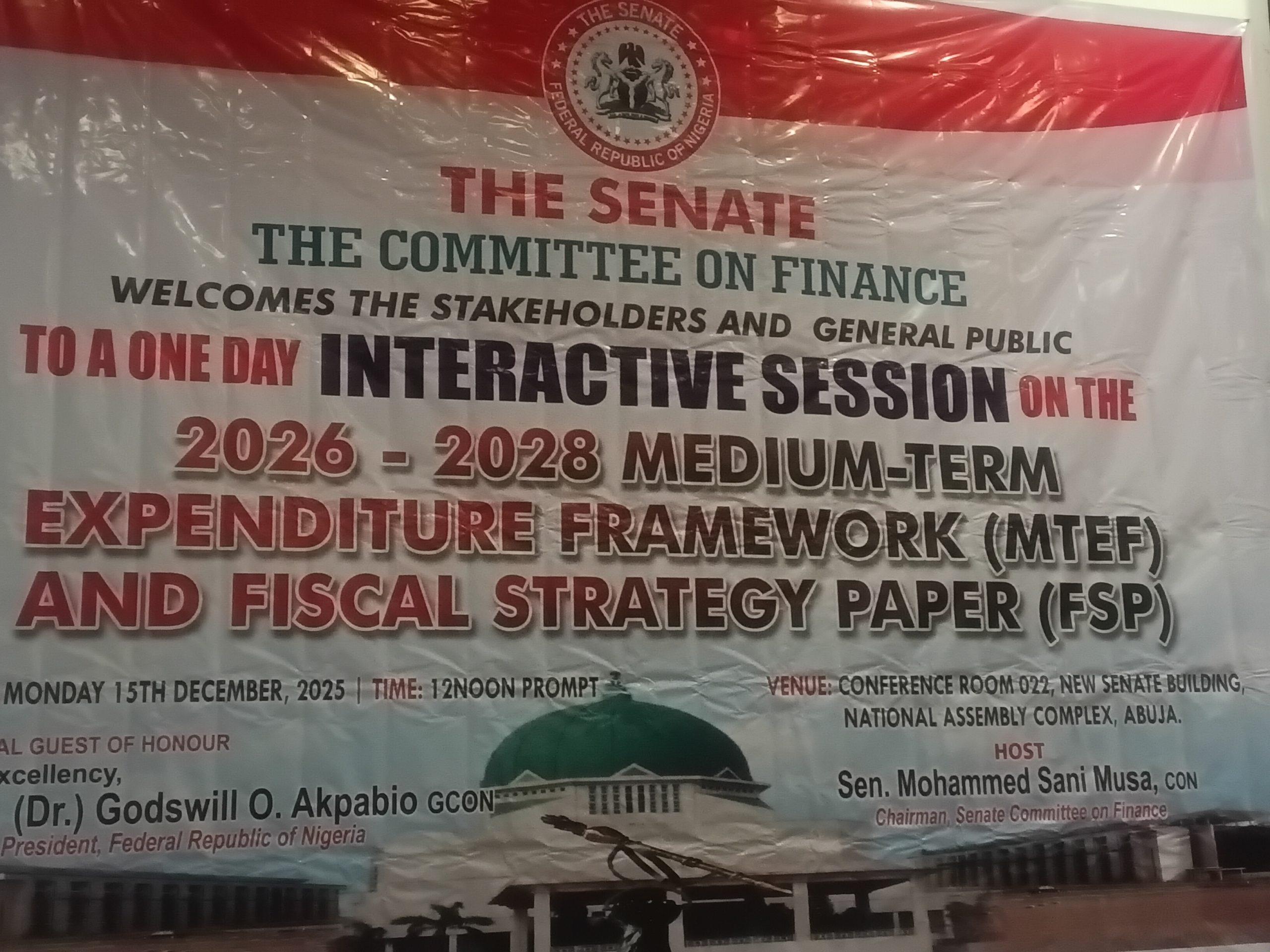
The Nigerian Senate Committee on Finance has held an interactive session with key Ministries, Departments, and Agencies (MDAs) of the Nigerian government to deliberate on the 2026–2028 Medium-Term Expenditure Framework (MTEF) and Fiscal Strategy Paper (FSP).
The three-year fiscal document, which serves as the foundational blueprint for Nigeria’s annual budgets, is fully aligned with the provisions of the Fiscal Responsibility Act.
During the session, the Minister of Finance and Coordinating Minister of the Economy, Mr. Wale Edun assured lawmakers that full funding has been secured and released for the capital component of the 2024 budget.
Mr. Edu further stated that “approximately 30 percent of the 2025 budget’s capital allocation is also readily available for implementation.”
He informed the committee that the Nigerian government has issued circulars to all MDAs outlining a comprehensive revenue optimisation programme for 2026.
The initiative places strong emphasis on automation and technology, with a directive mandating that all payments be processed exclusively through digital platforms to enhance efficiency, transparency, and revenue collection.
President Bola Tinubu had last week forwarded the 2026-2028 MTEF-FSP to the National Assembly for approval, a foundational step in the 2026 budget process.
President Tinubu explained that “the MTEF and FSP were approved by the Federal Executive Council on 3 December, 2025 and urged lawmakers to expedite legislative action as the 2026 budget will be prepared on their basis.”
The MTEF/FSP is a three-year planning tool that defines in broad strokes how the federal government intends to raise revenue, allocate expenditure, and deploy resources across ministries and sectors over a medium-term horizon.
It is required under the Fiscal Responsibility Act, 2007.
The document presents assumptions behind revenue projections (such as oil price, production, exchange rate), outlines strategic expenditure priorities, and forecasts overall fiscal stance, including debt servicing, transfers, recurrent and capital spending.
Lateefah Ibrahim