


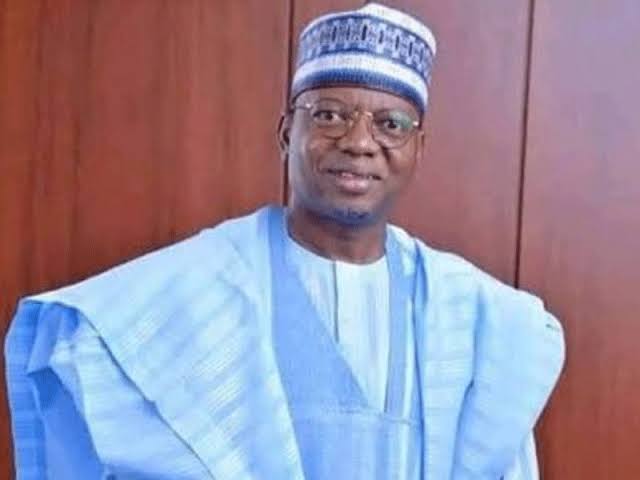
The Chairman of the Senate Committee on Finance, Senator Sani Musa, has stated that the newly signed tax reform laws reflect the true aspirations of Nigerians and are the product of broad consultations, especially with stakeholders who initially opposed the reforms.
Addressing State House Correspondents after the signing, Musa acknowledged the initial public concerns particularly from the northern Nigeria but said the National Assembly approached the task with balance and diligence.
“When he brought these bills to the National Assembly, we know the uproar that those bills attracted all over the country, especially in the northern part of the country, and we looked at those bills carefully.
“We had stakeholder consultations, even with those who were really kicking against these bills. We sat with them, we listened to them, we took what they brought, and we also gave them what we think about as a nation, so that this country can get something out of what we have done,” Musa said.
He added, “With the consultations and the painstaking nature of the legislative processes that we’ve taken, I believe we are bringing out, we brought out bills that seek the aspirations of Nigerians.
“And what are those aspirations, just as has been highlighted by the Chairman of the Presidential Task Force, we consider the less privileged in terms of earnings, and see that we don’t add burdens on them.”
The senator noted that one of the significant breakthroughs of the legislative process was the harmonisation of Nigeria’s fragmented and duplicative tax system.
“You will also recall that in this country, sometimes we have more than about 72 or three different kinds of taxes, and all those taxes have been harmonised right from local government, state and the national,” he said.
He said the review also extended to vital sectors such as oil and gas and the Export Processing Zones, ensuring the laws supported industrial growth and competitiveness.
“We also looked at how the Export Processing Zones operate, especially where it will add comparative advantage to our local industrialists,” Musa added.
Chairman of the House Committee on Finance, Hon. James Faleke, described the passage of the bills as a once “mission impossible” task made successful through national cooperation.
Faleke commended the efforts of lawmakers, governors, and the Nigerian public for what he called a united effort to overhaul the country’s tax regime.
“When a tax reform was brought in the House, it was like a mission impossible,” he said, adding “And we thank God, with the cooperation of all Nigerians, including the governors and of course, particularly from the House of Reps. I want to express appreciation to Mr. Speaker for allowing us to take our time to do the needful.”
He emphasised that the reforms do not introduce new tax burdens but rather expand the efficiency of collection and plug leakages.
“I want to also say boldly that with this tax reform, which has no barrier with an increase in taxes, it’s just covering more loopholes and taxpayers. And then, of course, giving Nigerian Revenue Service the capacity to use software, ICT, so that all of us will be in the tax net, the majority of us, rather than…so that we can have a GDP to tax [ratio] higher than what it is now,” he said.
The presidential assent to the bills was witnessed by the Senate President, the Speaker of the House of Representatives, the Senate Majority Leader, the House Majority Leader, the Chairman of the Senate Committee on Finance, and his House counterpart.
The Chairman of the Governors Forum, Abdulrahman Abdulrazaq of Kwara State; the Chairman of the Progressives Governors Forum, Hope Uzodinma of Imo State; the Minister of Finance and Coordination Minister of the Economy, Wale Edun; and the Attorney General of the Federation, Lateef Fagbemi, were also at the ceremony.
It would be recalled that President Bola Tinubu on Thursday signed into law the four fiscal reforms bills, declaring the landmark assent as a new dawn for Nigeria.
Newly Signed Bills
One of the four bills is the Nigeria Tax Bill (Ease of Doing Business), which aims to consolidate Nigeria’s fragmented tax laws into a harmonised statute.
“By reducing the multiplicity of taxes and eliminating duplication, the bill will enhance the ease of doing business, reduce taxpayer compliance burdens, and create a more predictable fiscal environment,” said the Presidency in a statement Wednesday night.
The second bill, the Nigeria Tax Administration Bill, will establish a uniform legal and operational framework for tax administration across federal, state, and local governments.
The Nigeria Revenue Service (Establishment) Bill, the third bill, repeals the current Federal Inland Revenue Service Act and creates a more autonomous and performance-driven national revenue agency— the Nigeria Revenue Service.
It defines the NRS’s expanded mandate, including non-tax revenue collection, and lays out transparency, accountability, and efficiency mechanisms.
The fourth bill is the Joint Revenue Board (Establishment) Bill.
It establishes a formal governance structure to facilitate cooperation among revenue authorities at all levels of government. It introduces essential oversight mechanisms, including establishing a Tax Appeal Tribunal and an Office of the Tax Ombudsman.