

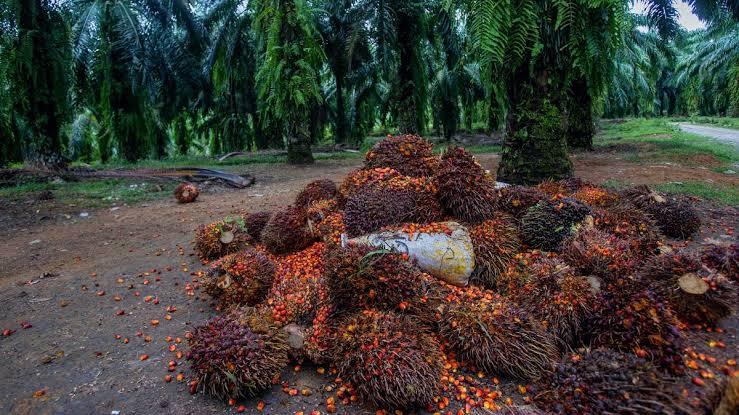
The Nigerian Government has revealed that smallholder farmers contribute over 80 per cent of Nigeria’s total palm oil production.
The Minister of Agriculture and Food Security, Senator Abubakar Kyari, made this known on Tuesday in Abuja during the inauguration of the Inter-Agency Committee for the National Palm Oil Traceability System (NaPOTS) Framework.
NaPOTS aims to improve product quality, promote sustainability, support climate-smart practices, and position Nigerian palm oil for competitive markets both domestically and internationally.
Represented by Dr. Marcus Ogunbiyi, Permanent Secretary of the ministry, Kyari emphasised that the inter-agency committee would design and oversee the Palm Oil Traceability Roadmap and coordinate efforts across multiple stakeholders.
Read Also: Group Targets Palm Oil Stability Through Plantation Expansion
Kyari said that a traceable palm oil supply chain would strengthen Nigeria’s competitiveness in global markets, attract investment, and increase non-oil export earnings.
“Traceability is essential for boosting consumer confidence and upholding product integrity.
“It helps eliminate adulteration and enforces compliance with national and international quality benchmarks.
“It also strengthens the competitiveness of our palm oil in key industries such as food processing, pharmaceuticals, and cosmetics.
“With smallholders accounting for over 80 per cent of Nigeria’s palm oil production, a traceability framework is a critical bridge to formal markets,” he said.
Mr. Kene Onukwube, Programme Manager for Solidaridad Nigeria, welcomed the framework’s integration, noting that it would add efficiency across production, processing, and marketing in the palm oil sector.
Onukwube lauded Solidaridad’s contributions, including climate-smart oil palm farming initiatives in Akwa Ibom, Rivers, Enugu, and Kogi.
He said the framework comes with policies to drive sustainable implementation.