

The Sokoto state government, is set to adopt the national policy on inclusive education to improve equitable quality education for all children across the 23 local government areas of the state.
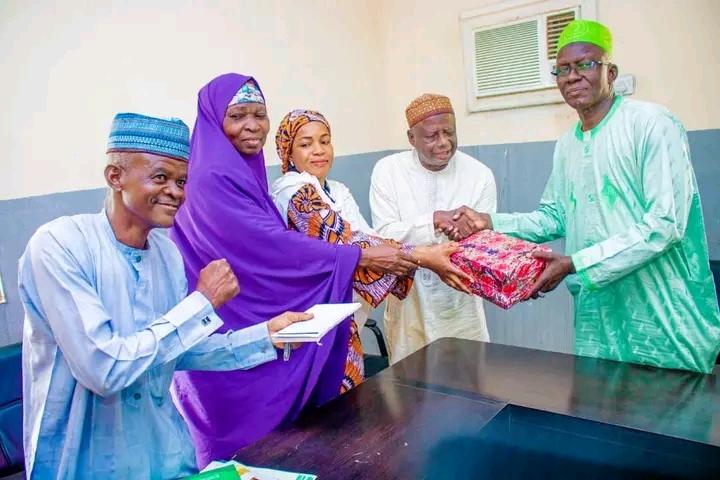
The Commissioner, Ministry of Basic and Secondary Education, Professor Ahmad Ladan Ala, stated this when he received the new document from the Rural Women and Youth Development (RUWOYD) team in his office in Sokoto north-west Nigeria.
He reaffirmed the Ministry’s commitment to carefully studying the documents towards ensuring effective implementation across the state.
He said the administration of Governor Ahmed Aliyu remains committed to fostering an equitable education system that leaves no learner behind.
“Inclusive education reflects the values, ethos, and culture of a public education system committed to excellence by enhancing educational opportunities for all learners. The inclusive education policy set out the government’s vision for giving all children the opportunity to develop and succeed, with particular attention given to those with special education needs.
“ It sets a new agenda for improvement and action at the state and local level,” he noted.
The Commissioner, represented by the Director of Policy of the ministry, Abdullahi Altine Durbawa, commended the contribution of ActionAid, Palladium, Rural Women and Youth Development, and participants from key ministries, departments, and agencies, as well as other stakeholders, for their financial assistance to the important policy initiative.
Read Also: Nigeria for Women Programme Targets 4 Million Beneficiaries
Women Group Unveils AgroTrade System to Connect Nigerian farmers
In his remarks, the Executive Director of Rural Women and Youth Development (RUWOYD), Mr Abdu Isuhu, said the inclusive education policy has been formulated following wide consultation with key stakeholders.
According to him, the achievement was made possible with the support of ActionAid Nigeria under the Breaking Barrier Project, and the Palladium Group through the SCALE Project.
“The policy framework has been made possible with the support of representatives of various directorates of the Ministry of Basic and Secondary Education, international and national non-governmental organisations, community-based organisations, the Joint National Association of Persons with Disabilities, development partners, teachers’ unions, as well as the Civil Society Action Coalition on Education For All.
“This milestone also comes after months of strategic engagements with key education stakeholders, including MDAs, the Education for All (EFA) Cluster members (Albarka Initiative, Dijah Initiative, CADI, YUGI, CHEI, RUWOYD), CSACEFA, JONAPWD, community-based organisations, as well as community and religious leaders,” he said.
He expressed his appreciation to Governor Ahmed Aliyu for his visionary leadership, which has been instrumental in shaping the policy framework that reflects their commitment to providing quality education for all.
Mr Abdu Isuhu called on all stakeholders and all those involved in the development of the education policy to use the document widely as the enabling tool designed to consolidate the principle of quality and equality of opportunity toward education for all.