

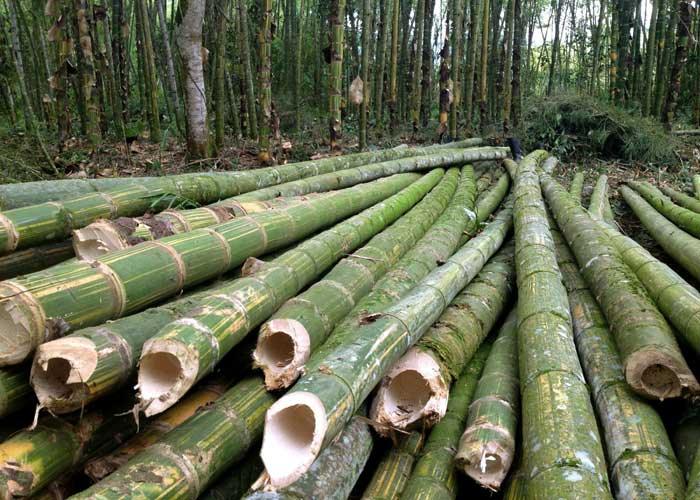
The Raw Materials Research and Development Council (RMRDC), Anambra Office, in collaboration with the Sahelian Institute for Bamboo Research and Entrepreneurship Development (SIBRED), on Monday organised an Investors’ Forum on Bamboo Value Chain Development in Awka, Anambra State, Southeast Nigeria.
The forum, with the theme “Strengthening Investment Opportunities in Bamboo Value Chain for Sustainable Industrial Growth and Economic Development in Anambra State,” drew stakeholders and experts who called attention to the untapped and underutilised potential of bamboo in Anambra and across Nigeria.
Some experts at the event expressed concern that the country is yet to fully harness the economic and environmental opportunities of bamboo.
Prof. Muyisa Kazimoto, Vice-Chancellor of the Open Learning University, Democratic Republic of Congo, described bamboo as a transformative green resource for Africa’s sustainability agenda.
Kazimoto identified weak policy coordination, lack of processing units, limited innovation, and restricted access to finance as key challenges in harnessing the benefits of bamboo resources.
“Africa faces environmental degradation, and youth unemployment. The green economy model emphasises equity, resource efficiency, and resilience.
“Green economy also improves human welfare and reduces ecological risks.
“Bamboo emerges as a renewable, fast-growing resource and an investment opportunity as it grows rapidly and regenerates without replanting.
“I recommend the institutionalisation of bamboo in the national development framework, the establishment of bamboo clusters and innovation zones.
“We need to mobilise public-private partnerships, integrate bamboo in climate finance systems, and support community-driven, inclusive bamboo enterprises,” Kazimoto said.
In his address, Prof. Nnayelugo Ike-Muonso, Director-General of RMRDC, said that the bamboo value chain holds significant potential for economic growth, job creation, and environmental sustainability.
“Bamboo, a valuable resource, is highly underutilised in Nigeria.
“Developing the bamboo value chain can contribute to Nigeria’s green economy, reduce deforestation, and provide raw materials for various industries.
“We must explore new investment models, modern processing technologies, and value addition opportunities,” he said.
Mrs. Diana Doheny, Co-founder of Afroforestry Impact and Regeneration, USA, said that the global market for bamboo was estimated at 67.13 billion dollars in 2024 and is projected to reach 90 billion dollars by 2030.
Doheny stated that China produces more than 60 per cent of the world’s bamboo and exports bamboo and bamboo-based products to more than 100 countries.
According to her, the 2024 global market estimate for bamboo is 67.13 billion dollars, projected to hit 90 billion dollars by 2030.
“Global market for bamboo furniture is projected to exceed 10 billion dollars by 2026.
“China remains the largest producer and exporter. Already, we see bamboo being used in structural timbers for commercial and residential construction.
“Bamboo can also potentially be used as a structural additive to cement,” she said.
In his remarks, Dr. John Ogbodo, Director of SIBRED, emphasised the need to pay close attention to the benefits of bamboo resources.
Ogbodo said that Nigeria, the second-largest bamboo-producing country in West Africa, lacks an operational national bamboo policy, as well as regulations and standards for establishing plantations.
“There is no single state in Nigeria that currently has even one hectare of planted bamboo forest.
“No known government-owned bamboo forest nursery with at least 1,000 bamboo seedlings exists anywhere in Nigeria.
“I hope that this forum will motivate investment in bamboo value chain development in Anambra and Nigeria at large,” he said.