

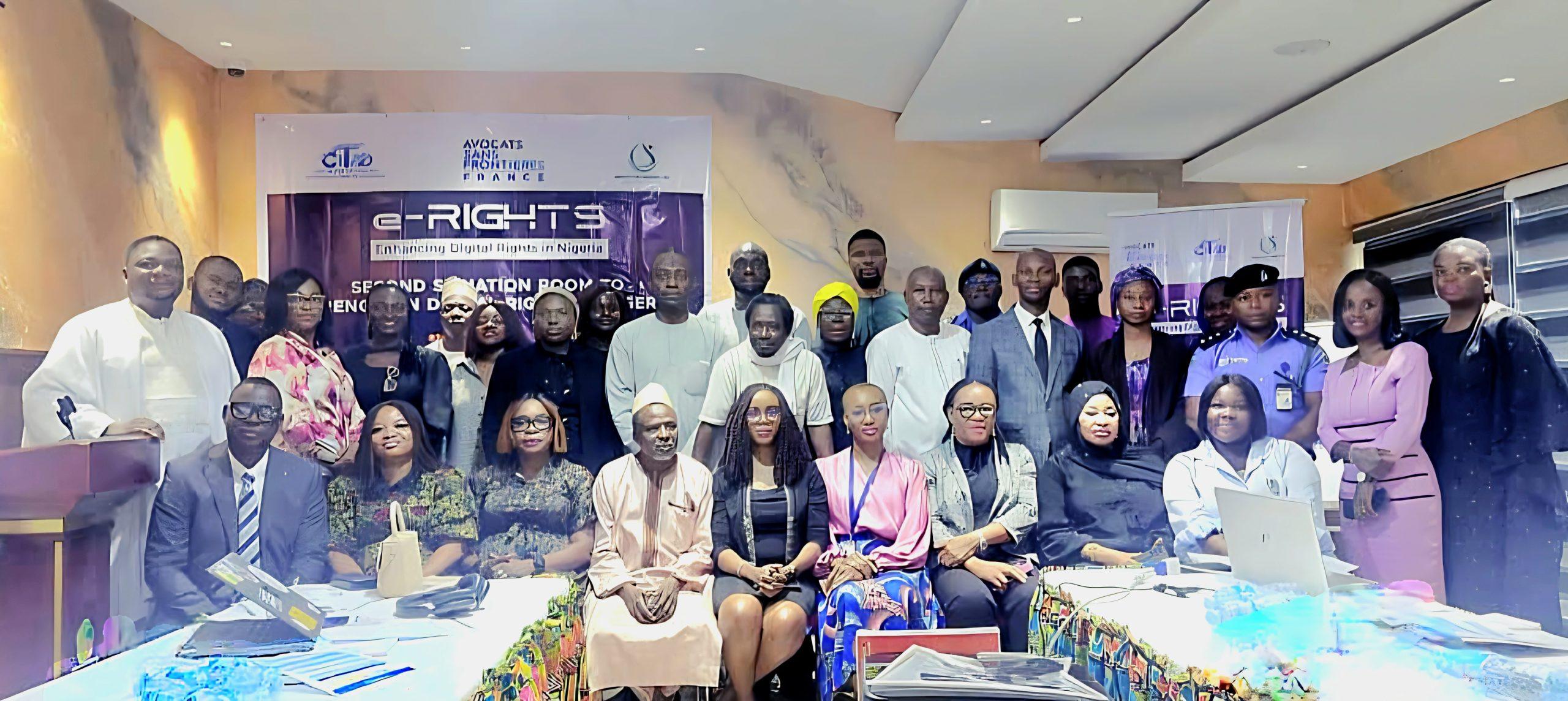
Stakeholders at the second Enhancing Digital Rights (e-Rights) in Nigeria Situation Room Dialogue held in Abuja have called for urgent reforms, stronger accountability, and increased public awareness to secure Nigerians’ digital rights ahead of the next electoral cycle.
The high-level forum, convened by Avocats Sans Frontières France (ASF France) with support from the European Union (EU) and Lille Avocats Solidarité, drew government representatives, civil society, media, academia, and development partners to chart practical measures for safeguarding citizens online.
Calls for Actionable Reforms
Angela Uzoma-Iwuchukwu, Country Director of ASF France, said the dialogue was designed to generate “short-term actionable recommendations” to strengthen protection of rights online. She revealed that a key outcome was the call for “specialised courts” to fast-track fundamental rights cases, especially digital violations.
“Justice is denied when matters of fundamental rights are not prioritised by the courts. We need dedicated courts to expedite digital rights cases,” she stressed, while cautioning against state-backed surveillance and censorship targeting journalists and activists.
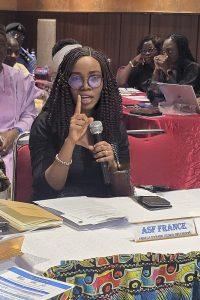
Representing the EU, Wynyfred Achu-Egbuson, Programme Manager for Civil Society and Youths, stressed shared responsibility: “The expectation is that each stakeholder leaves here determined to take at least one action within their organisation,” she said, urging the media to focus on awareness, civil society on capacity building, and government agencies on transparency and citizen engagement.
Strengthening Advocacy and Partnerships
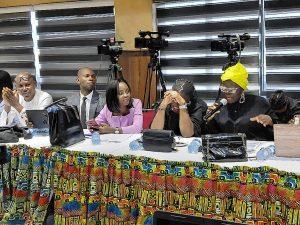
From the civil society perspective, Professor Yunusa Ya’U, Executive Director of CITAD, said the way forward requires a “two-legged walk”, stronger advocacy to clarify digital policies, and genuine partnerships with government.
He warned that poor digital literacy leaves citizens vulnerable to cybercrime: “People don’t know how to secure passwords, yet they wonder why their accounts are hacked. Ignorance makes citizens vulnerable.”
On child safety, Ya’U rejected overreliance on global tech companies: “A child of 15 or 16 is still a child in Nigeria. We must set our own standards and not allow Google or any other company to dictate what child protection means.”
Demanding Accountability
From academia, Dr. Abiodun Odusote, Associate Professor of Law at the University of Lagos, stressed that Nigeria’s immediate policy priority must be to harmonise its over 40 digital laws and empower institutions like the National Data Protection Commission (NDPC).
“As citizens, we must hold government accountable. We must demand enforcement of existing laws, and we must insist that the internet and its infrastructure should never be shut down,” he said.
He also pressed for accessible complaint systems: “When citizens have a complaint, they should be able to lodge it and get results without spending too much money. Rights enforcement must be accessible.”
Busola Ajibola, Deputy Director at the Centre for Journalism Innovation and Development (CJID), echoed this, calling for a national coordinating body on digital rights accountability: “When rights are violated, there must be a body that can provide quick resolution or mediation. This accountability framework is non-negotiable.”
She urged citizens to curb misinformation, fraud, and cyberbullying: “You must not share unverified news or engage in cyberbullying. We need to cultivate digital etiquette as citizens.”
On child protection, she highlighted the absence of legal safeguards: “The responsibility of how children access platforms and what they are exposed to starts with us adults.”
She also advised occasional digital detox: “Sometimes just take a break, put the phone down, and reconnect with the real world.”
Responsible Use and Digital Literacy
Dr. Quasim Akinreti, Head of Digital Media at Voice of Nigeria, said digital rights must go hand-in-hand with responsible use: “It’s about making people conscious of how valuable digital rights are and using them not only for personal benefit but to promote a good society.”
He cautioned against recklessness online: “Yes, we have rights to life and freedom, but in cyberspace we must be careful not to harm ourselves, our community, or our country.”

Youth voices also featured strongly. Excel Ekere, a 300-level undergraduate intern at the Ministry of Innovation, Science and Technology, underscored the need for robust digital education.
“As much as we want our children to be tech gurus, we must first prepare them with proper education to tackle cyberbullying and safe online transactions. One who sweats in training bleeds less in war. Let us train them early to avoid permanent scars.”
Future Outlook
In their closing commitments, the Nigeria Bar Association (NBA), represented by its Third Vice President Zainab Garba, pledged full support for advancing and protecting digital rights.
Similarly, the Nigeria Police Force National Cybercrime Centre, represented by SP Ehoda Emmanuel, is committed to combating cybercrime and strengthening citizens’ online safety.
The dialogue reinforced a shared message: Nigeria’s digital future depends on collective responsibility, government reforms, civil society advocacy, media awareness, citizen vigilance, youth education, and international partnerships.