

Stakeholders have renewed calls for rapid and coordinated reform of Nigeria’s juvenile justice system.
They warned that structural failures continue to endanger the welfare and future of children in conflict with the law.
The call was made in Abuja at a Sub-National Dialogue on Juvenile Justice System Reform, organised by the Rule of Law and Anti-Corruption (RoLAC Phase II) Programme of the International Institute for Democracy and Electoral Assistance (IIDEA).
Project Officer for Criminal Justice Reform at IIDEA, Mr Joshua Gbenga Dada, said Nigeria’s juvenile justice framework has suffered “long-standing neglect” despite years of reform efforts.
“We have observed that the juvenile system, quite unfortunately, hasn’t been given as much attention as it deserves,” he said, noting that the country has only about three borstal homes, which need urgent attention to meet global standards.
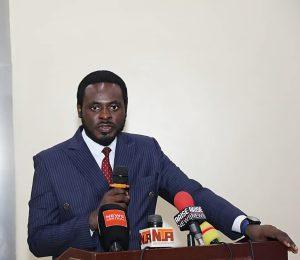
“The number of juvenile courts available, the number of juvenile judges or family court judges… point us to the fact that, quite unfortunately, the juvenile system hasn’t been given the kind of attention it deserves,” Dada stated.
Long-term Consequences
He stressed the long-term consequences of poor handling of young offenders, saying: “The way they are handled would influence how they eventually pan out as adults… If the children aren’t taken through the right system, we’re more likely going to have recidivism and more adults… involved with crime.”
Calling for proactive, reform-oriented approaches, he added: “The society needs to begin to focus on reform-oriented justice, not retributive… We need to begin to go into the root causes.”
Meanwhile, State Coordinator of the Child Protection Network, Lagos State Chapter, Aderonke Oyelakin, condemned the detention of minors in police stations.
“Detaining children in police stations is totally not acceptable,” she said, citing an ongoing Lagos case in which a child slept in a police station for more than four days.
“They’re supposed to go through the juvenile welfare centres… not labelling the child as a criminal. In no reason, in no circumstance should a child be left to sleep at the police station,” she said.
Highlighting diversion and rehabilitation programmes, she stressed: “A rehabilitation centre is supposed to be a place for children to… understand why they are doing what they are doing… and diversify them into different areas of vocational skills… We don’t have enough borstal homes, correctional facilities… We should look towards a better unified system for our children.”
Similarly, Executive Director of the Centre for Health, Ethics, Law and Development (CHELD), Professor Cheluchi Onyemelukwe, identified implementation gaps requiring urgent interventions.
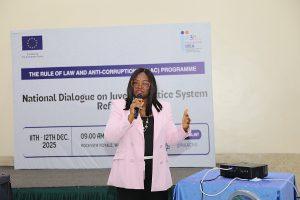
“The Child Rights Act requires that children should not be put together with adults in detention… In some states, the family courts are not working properly… The courtrooms are not child-friendly,” she said, urging actionable reforms from 2026.
Representing the Comptroller-General of Corrections, Deputy Comptroller Custody Jerry Dauda clarified that minors are not held in adult custodial centres.
“We don’t have juveniles in detention because the custodial centre is meant for those that are 18 years and above,” he said, adding that borstal institutions cater for those under 18 and that children born in custody receive special care.
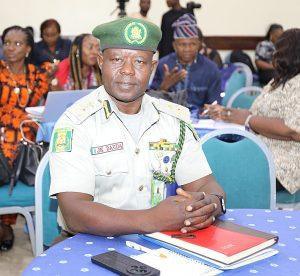
“We have juvenile institutions to take care of young offenders that came in conflict with the law. And most importantly, everything that has to do with their education is well taken care of. Their health, even the food they eat, is a special food, because we know they are the future of Nigeria, the future of this country. Without taking good care of them, we fall back to what we did not even expect,” he added.
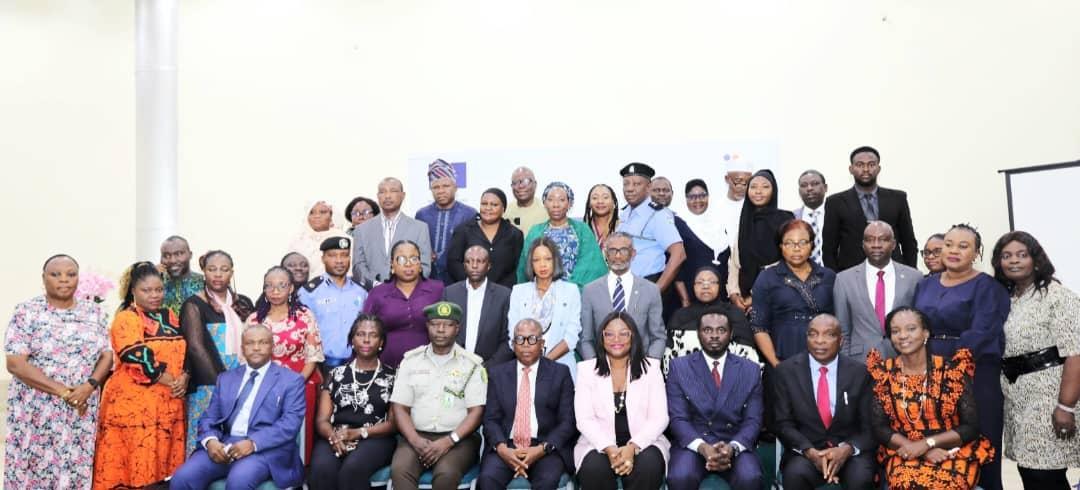
Key stakeholders in attendance included family court judges, magistrates, lawyers from the Nigeria Bar Association, and representatives from the Federal Ministry of Women Affairs and State Ministries of Women Affairs.
The dialogue aimed to strengthen inter-agency coordination, improve accountability, and develop state-led reforms to reset Nigeria’s juvenile justice system.
PIAK