


The Nigerian government says there is a need for urgent and coordinated action to improve water access in the country, emphasising its critical role in driving economic growth, public health, and gender equality.
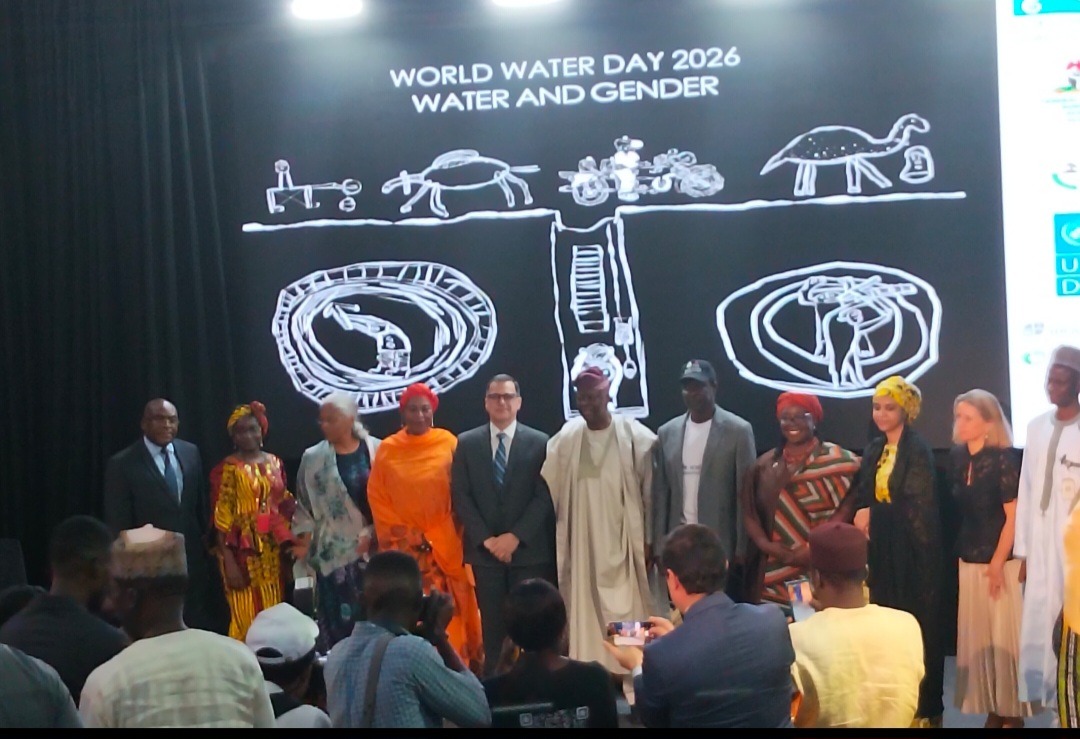
The Minister of Budget and Economic Planning, Senator Abubakar Bagudu, represented by the Permanent Secretary, Dr Deborah Odoh, stated this at the World Water Day 2026 programme, themed ‘Water and Gender’, held at the Brazilian Embassy in Abuja.
The Minister described water as “central to Nigeria’s development trajectory”, highlighting its impact on agriculture, energy systems, and community stability.
However, he warned that access to water remains a major social equity issue, disproportionately affecting women and girls across the country.
“Across many communities in Nigeria, women bear the primary responsibility for water collection and household management.
“This comes at a significant cost to their time, health, education, and economic opportunities.”
Senator Bagudu emphasised the importance of achieving water security in conjunction with promoting gender equality, in line with this year’s global theme.
Under the administration of Bola Ahmed Tinubu, the minister noted that Nigeria’s development agenda prioritises resilience, inclusion, and sustainable growth at the grassroots level.
He called for water management to be treated not only as a technical issue but also as a strategic national priority requiring cross-sector collaboration.
The CEO of Lokoja Dialogues, Mrs. Polly Alakija, outlined a grassroots approach to addressing water challenges, emphasising locally driven solutions.
She said sustainable interventions must begin with understanding the real needs of communities.
“Our mission is simple: find water, connect it to communities, and use that connection for productivity and social development,” she said.
Mrs Alakija said the organisation’s methodology includes community listening projects, expert-led working groups, field evaluations, and pilot initiatives designed to be scalable and financially viable.
She added that engaging local stakeholders is key to ensuring that solutions are relevant, inclusive, and sustainable.
UN Resident Representative Ma Elsie Attatuah painted a stark picture of the global water crisis.
Despite years of commitments under Sustainable Development Goal 6, she said, billions remain without access to safe water.
“Today, 2.2 billion people still lack safely managed drinking water,” she said, describing the current situation as an era of global water bankruptcy, where demand and pollution exceed sustainable supply.
Attatuah highlighted the gendered burden of water scarcity, noting that women and girls collectively spend an estimated 250 million hours daily collecting water worldwide.
She pointed to transformative outcomes when water access improves, including increased school attendance for girls, better health outcomes, and higher household incomes.
“When water and energy systems work together, the transformation is immediate.
“For women, it removes long-standing barriers to participation and economic empowerment.”
She called for integrated water and energy systems, improved financing models, and policies that treat water as a productive economic asset rather than a subsidy.
She also highlighted the strategic importance of Lokoja, describing it as a potential hub for integrated development due to its location at the confluence of major rivers.
She said new initiatives under the Lokoja Dialogue are demonstrating how coordinated, community-informed approaches can deliver sustainable results.
The United Nations reaffirmed its commitment, through the United Nations Development Programme, to support Nigeria in strengthening water governance frameworks and mobilising investment in the sector.
“Where water flows, equality grows,” she said, urging governments and stakeholders to treat water as one of the most strategic investments for Nigeria’s future.
The Minister of Budget and Economic Planning, Senator Abubakar Bagudu, represented by the Permanent Secretary, Dr Deborah Odoh, stated this at the World Water Day 2026 programme, themed ‘Water and Gender’, held at the Brazilian Embassy in Abuja.
Also present at the event were the minister of Finance and Coordinating Economy Wale Edun and the first lady of Yobe State Hajia Hafsat Bunmi.