

Stakeholders have renewed calls on the National Assembly to expedite the passage of the Bill for an ‘Act to Provide for the Documentation and Protection of Domestic Workers and Employers’, describing it as a critical step towards ending abuse, exploitation and child domestic labour in Nigeria.
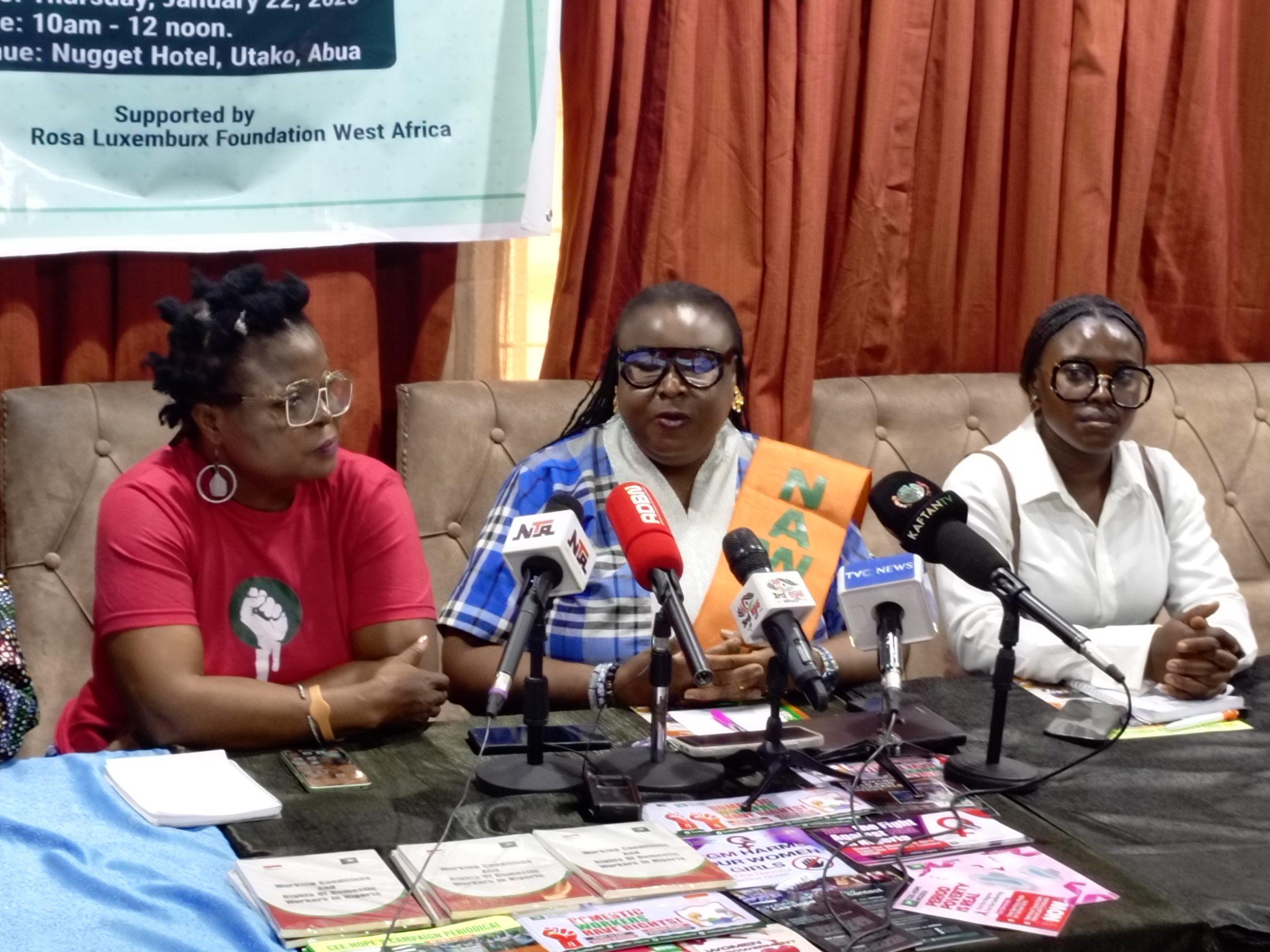
The call was led by the Centre for Children’s Health, Education, Orientation and Protection (CEE-HOPE), in collaboration with the Nigeria Association of Women Journalists (NAWOJ), during a one-day consultative meeting with journalists in Abuja, Nigeria’s Capital.
Speaking at the engagement, the Executive Director of CEE-HOPE, Mrs. Betty Abah, said the proposed legislation would provide long-overdue legal recognition and protection for domestic workers, many of whom operate in the informal sector without safeguards, contracts or access to justice.
According to her, domestic workers—particularly women and children—remain one of the most vulnerable groups in the country, often exposed to physical abuse, sexual violence, economic exploitation and, in extreme cases, death.
Mrs. Abah recalled that in July 2024, CEE-HOPE appeared before the Senate during a public hearing on the bill, where it submitted a memorandum advocating for formal documentation of domestic workers, regulation of working conditions and the right to unionise.
She stressed that the absence of a legal framework and recognised unions has worsened abuses, as domestic workers lack collective bargaining power and awareness of their rights.
“Nigeria has one of the largest populations of domestic workers in Africa, yet they remain largely invisible in the labour system. Countries such as Ghana, Kenya and South Africa have functional domestic workers’ unions guided by International Labour Organisation Convention 189. Nigeria must not be left behind,” she said.
Mrs. Abah also raised serious concerns about the widespread use of children as domestic workers, describing child domestic labour as a major social challenge driven by poverty, ignorance and weak enforcement of existing laws.
She disclosed that CEE-HOPE has intervened in several cases by withdrawing children from exploitative domestic work and enrolling nearly 200 affected children in schools, while engaging families to balance education with sustainable livelihoods.
Protecting Domestic Workers’ Dignity
In her remarks, the Vice President of NAWOJ Zone D, Mrs. Chizoba Ogbeche, said the association supports the bill and considers its passage crucial to protecting domestic workers’ dignity and fundamental human rights.
She noted that the abuse of domestic workers, especially children, reflects broader societal attitudes and a lack of accountability, stressing that legislation must be supported by sustained media advocacy and public enlightenment.
“The media has a responsibility to go beyond reporting incidents to following cases to their logical conclusion. Many households knowingly exploit domestic workers in ways they would never accept for their own children,” she said.
Mrs. Ogbeche also expressed concern over the role of labour agents, noting that the practice of paying domestic workers through intermediaries often amounts to exploitation and, in some cases, human trafficking.
She said NAWOJ would mobilise its chapters across the 36 states and the Federal Capital Territory to document abuses, support investigations and engage communities, religious institutions and schools to promote behavioural change.
Both organisations expressed optimism that the passage and effective enforcement of the domestic workers’ bill would strengthen accountability, curb child labour, regulate working conditions and ensure fair wages and respect for the dignity of domestic workers across the country.
They further called for sustained media engagement to amplify the voices of domestic workers and support national efforts towards inclusive labour protection and social justice.