

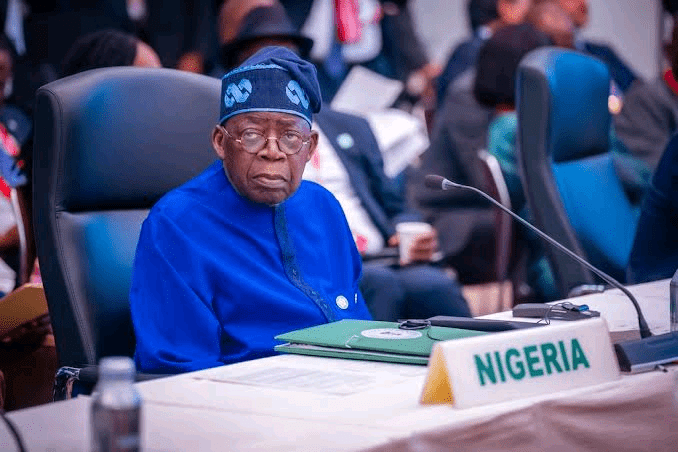
Nigeria’s foreign policy is undergoing a deliberate recalibration. President Bola Ahmed Tinubu’s recent appointment of 31 non-career ambassadors and 34 career diplomats is more than a bureaucratic reshuffle; it is a strategic signal of Nigeria’s intent to reclaim its voice on the global stage.
Following the initial three appointments of Nigeria’s foremost diplomats, Ambassador Aminu Dalhatu, Ambassador Ayo Oke, and Lateef Kayode, Nigeria received agreement from the United Kingdom and France. The early approval underscores the seriousness of this effort, aligning with President Tinubu’s 4D foreign policy doctrine: Democracy, Development, Demography, and Diaspora.
This repositioning did not emerge in a vacuum. In September 2023, Tinubu recalled 83 envoys, exercising his constitutional authority to reset Nigeria’s diplomatic machinery. That decision, though disruptive, was necessary.
However, prolonged vacancies weakened Nigeria’s ability to negotiate, sustain commitments, and engage host governments on critical issues such as security cooperation and migration management. In multilateral arenas, where coalition-building and technical follow-through are essential, Nigeria’s absence carried tangible costs.
Now, the government is filling those gaps with renewed vigour. Over the past eighteen months, extensive background checks preceded the appointments, while the 2025 budget earmarked ₦302.4 billion for foreign missions, and the 2026 proposal allocated ₦41 billion to upgrade 109 missions worldwide.
These figures reflect more than operational support; they represent an investment in diplomacy as an economic instrument. With external reserves estimated at $50.45 billion, Nigeria is leveraging its missions to widen market access, attract investment, and strengthen buffers against global shocks.
The new ambassadors are expected to embody outcome-driven diplomacy. No longer mere ceremonial representatives, they must function as negotiators, coordinators, and dealmakers.
They must also build on achievements recorded in the past 24 months. During this period, even without ambassadors, Nigeria signed at least 30 foreign agreements spanning infrastructure, trade, education, tourism, security, IT, energy, and sports.
These are not abstract commitments; they are deal-enablers for jobs, technology transfer, and export growth. President Tinubu’s visit to Türkiye, which yielded nine MoUs across defence, trade, and energy, exemplifies this pragmatic approach.
Nigeria’s envoys must also navigate the realities of insecurity at home. Banditry and terrorism remain pressing challenges.
Notably, foreign engagements are increasingly being used as platforms for intelligence sharing, counter-terrorism collaboration, defence industry partnerships, capacity building, and investment-linked cooperation with partners such as the United States, Türkiye, and China. In this context, missions abroad are not luxuries, they are extensions of Nigeria’s security architecture.
At the regional level, Nigeria’s ambassadors face equally weighty responsibilities. Within ECOWAS and the African Union, coalition-building and consensus management are vital to stabilising West Africa. Ambassadors must read political signals early, sustain dialogue with host authorities, and coordinate responses that protect civilians, uphold constitutional order, and safeguard Nigeria’s economic interests. Instability in the region is not abstract; it threatens trade routes, border communities, and regional commerce.
Diaspora engagement adds another layer of strategic importance. Nigeria’s envoys are tasked with mobilising remittances, skills, innovation networks, and cultural influence, while improving consular efficiency and citizen protection abroad. In an era where legitimacy is tested by how states treat their citizens overseas, this is a critical measure of Nigeria’s credibility.
Ultimately, President Tinubu’s ambassadorial appointments represent a decisive pivot. They restore diplomatic capacity, align resources with national priorities, and demand professionalism from Nigeria’s representatives.
In a world where nations compete fiercely for capital, technology, and influence, Nigeria cannot afford slow responses or inconsistent messaging. Its envoys must project clarity, patriotism, and speed.