

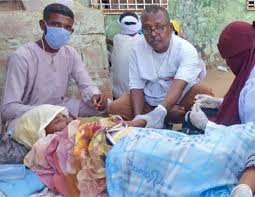
A rapidly spreading cholera outbreak is sweeping through Sudan, with health officials reporting more than 1,000 new cases each day in the capital, Khartoum. The resurgence of the disease comes as thousands of displaced Sudanese return to the war-ravaged city, only to find limited access to clean water and basic sanitation.
The outbreak is centred in Khartoum and its twin city, Omdurman, but has also been detected in several other regions, including North Kordofan, Sennar, Gazira, White Nile, and Nile River provinces. The country’s healthcare infrastructure is on the brink of collapse, further accelerating the spread of the disease.
“Khartoum is now reporting over 1,000 cases daily,” said Nicolas Jean, head of the Médecins Sans Frontières (Doctors Without Borders) mission in Sudan. “The main drivers are the lack of clean water, poor hygiene, and the population’s limited access to health services.”
The capital has seen a surge in returning residents—over 34,000 people—since Sudan’s military recaptured the area in March from the paramilitary Rapid Support Forces (RSF). However, months of brutal conflict have left Khartoum in ruins, with homes damaged, power plants attacked, and water systems barely functional. UNICEF reports that attacks on electricity infrastructure have deepened the city’s water crisis, leaving many with no option but to drink contaminated water—a primary vector for cholera.
Health experts warn the situation could worsen rapidly. Displacement centres are overcrowded, making it nearly impossible to isolate infected individuals. Sudan’s already fragile healthcare system has virtually collapsed, with over 80% of hospitals out of service and the few remaining facilities facing severe shortages of water, power, and medical supplies.
“Cholera is the disease of poverty,” said Dr. Sayed Mohamed Abdullah from Sudan’s Doctors Union. “It spreads in conditions of poor sanitation and where access to clean water is lacking.”
Cholera is a diarrheal illness caused by ingesting food or water contaminated with Vibrio cholerae. While treatable with oral rehydration solutions and antibiotics, the disease can be deadly within hours if left untreated. Most cases are mild, but the lack of medical care in Sudan puts even minor infections at risk of becoming fatal.
The World Health Organization (WHO) has sounded the alarm over dwindling resources to combat outbreaks. Its global stockpile of oral cholera vaccines has dropped below the minimum threshold of five million doses, making it harder to contain surges in conflict-affected and climate-vulnerable regions.
Cholera epidemics have been rising globally since 2021, driven by a combination of poverty, armed conflict, and extreme climate events such as floods and cyclones, according to the United Nations.
Sudan has been engulfed in civil war since April 2023, when long-simmering tensions between the military and the RSF erupted into full-scale fighting. The conflict has killed at least 24,000 people—though the real toll is likely much higher—and displaced more than 14 million, including over 4 million who have fled to neighbouring countries. Famine has been declared in several areas, particularly in the devastated Darfur region.
As the humanitarian crisis deepens, aid agencies are calling for immediate international support to prevent the cholera outbreak from spiralling further out of control.