

The Nigerian government says the ongoing tax reforms will significantly reduce the burden on low-income earners while simplifying the country’s complex tax system and improving transparency in revenue collection.
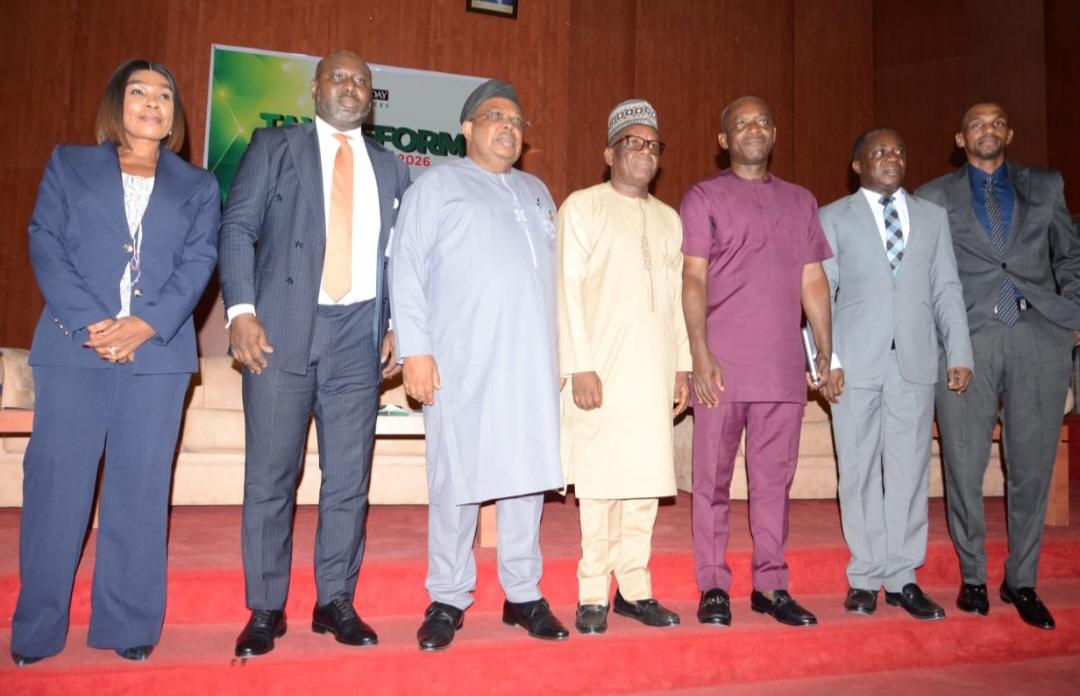
Speaking at a public forum, Tax Reform Conference, organised by BusinessDay Media in Abuja, the Chairman of the National Tax Policy Implementation Committee, Joseph Tegbe explained that Nigeria’s sweeping tax reforms are designed to simplify the country’s tax structure, protect low-income earners and improve transparency in revenue administration.
Tegbe, whose committee was set up by President Bola Ahmed Tinubu to drive the implementation of the new tax regime, said the reform represents the most comprehensive overhaul of Nigeria’s tax system in decades.
He said; “What we’ve tried to do with the reform is to consolidate all these laws, which then embodied four landmark legislations. The Nigerian Tax Act 2025, Nigerian Tax Administration Act, the Nigerian Revenue Service, that used to be called FRS, and then the Nigerian Revenue Board, which used to be called Nigerian Tax Board. These laws actually represent a structural reset of Nigerian tax architecture. Ultimately, a tax system must not work only for government.
“There’s no single new tax that this administration has introduced. No. It can be called another name, but a new tax has been not been introduced.We brought all of them together and actually made them even smaller and tighter, If implemented properly. And we will try to implement properly. And one way to implement properly is to have a distinct head. We are going to do this with human beings. That’s the mandate Mr. President gave me. Make sure the agencies, NRS, they are implemented with human faith. Four institutions are called the Nigerian Tax Architecture today. All these institutions, they were set up for better coordination across government. Also, improved dispute resolution and stronger taxpayer protection. For the first time, this government set up tax ombudsman,” Tegbe explained.
Also Read: FIRS Justifies Tax Reforms in Nigeria
Tegbe noted that the overhaul was necessary because Nigeria’s fiscal structure had become weak, with one of the lowest tax-to-GDP ratios globally.
Nigeria currently collects between six and 10 per cent of its GDP in taxes, he said, compared with about 26 per cent in South Africa and roughly 30 per cent in advanced economies.
He said that under the new framework, most low-income earners and small businesses would either pay less tax or none at all.
“Years ago, our fiscal structure as a country was very weak and fragile. So one of the reasons why these taxes were put together is to eliminate all these things. The incentives are better. But in the past, what has happened is that a small number of compliant businesses and individuals carry most of the tax burden, while segments of the economy remain outside the tax net. So the goal of this reform, is to make the tax system simpler, fairer, and more efficient for government, businesses, and for all of us in this room,” he added.
The Executive Secretary of the Joint Tax Board, Olusegun Adesokan said the reforms are designed to build a fair, transparent and technology-driven tax system that encourages investment and economic growth.
Adesokan said the reforms align with the fiscal philosophy of the administration of Bola Ahmed Tinubu, which aims to support businesses, protect jobs and ensure that lower-income Nigerians pay little or no tax.
“Before now, we had several different tax laws covering various sectors such as companies’ income tax, value added tax and others. The reforms aim to bring these provisions together in a simplified system so taxpayers can easily understand their obligations,” he said.
Adesokan explained that technology will also play a major role in the reforms, noting that digital platforms will reduce human interaction in tax processes, block revenue leakages and limit opportunities for corruption.
“For the majority of Nigerians, especially those earning relatively modest incomes, taxes will either be significantly reduced or eliminated entirely,” he said.
Adesokan also urged Nigerians to maintain proper financial records and comply with annual tax filing requirements, noting that employers are required to submit returns detailing taxes deducted from employees, while individuals must also file their personal tax returns within the statutory period.
On his part, Professor Uche Uwaleke, of Nasarrawa State University, said with the commencement of the New Tax Framework, Nigerians are entering a new era in fiscal governance, stressing that the reforms embodied in the Nigerian Tax Act 2025 represent one of the most comprehensive restructuring of Nigeria’s revenue systems in decades.
“The recent reforms are therefore designed to address these structural weaknesses by modernising tax administration, improving efficiency, broadening the tax base, and strengthening fairness. The New Tax Regime seeks to strike a delicate balance between revenue generation and economic growth. On the one hand, the government needs sustainable revenue to finance development priorities and reduce dependence on borrowing. On the other hand, the tax system must remain competitive, predictable, and supportive of investment and enterprise,” he said.
Meanwhile, the Acting Executive Chairman of the Federal Capital Territory Internal Revenue Service, Michael Ango, described the current reforms as the most comprehensive restructuring of Nigeria’s tax system in decades.
Ango said the reforms were developed through extensive consultations involving government officials, private sector experts and other stakeholders.
He noted that the decision by President Tinubu to establish a national implementation committee demonstrates the government’s commitment to ensuring the reforms are properly executed.
“The goal is to build a fiscal system that can support national development in a sustainable way. Taxation remains the most reliable source of revenue for government anywhere in the world,” he said.
Ango explained that tax revenue is essential for funding infrastructure such as roads, schools, hospitals and security services, adding that the reforms seek to ensure fairness by placing greater responsibility on higher-income earners.
Earlier, Organiser of the conference, Publisher of Business Day Media Limited, Frank Aigbogun, Represented by The Managing Editor North and FCT, Mr. John Osadolor said the event has been organised to take an in-depth look at the recent tax reforms introduced by President Bola Ahmed Tinubu.
“This event, therefore, has been put together by Business Day Media Limited to help provide clarity where there are doubts, remove misconceptions around the tax reforms, and ultimately make compliance easier especially for the business community,” Osadolor added.
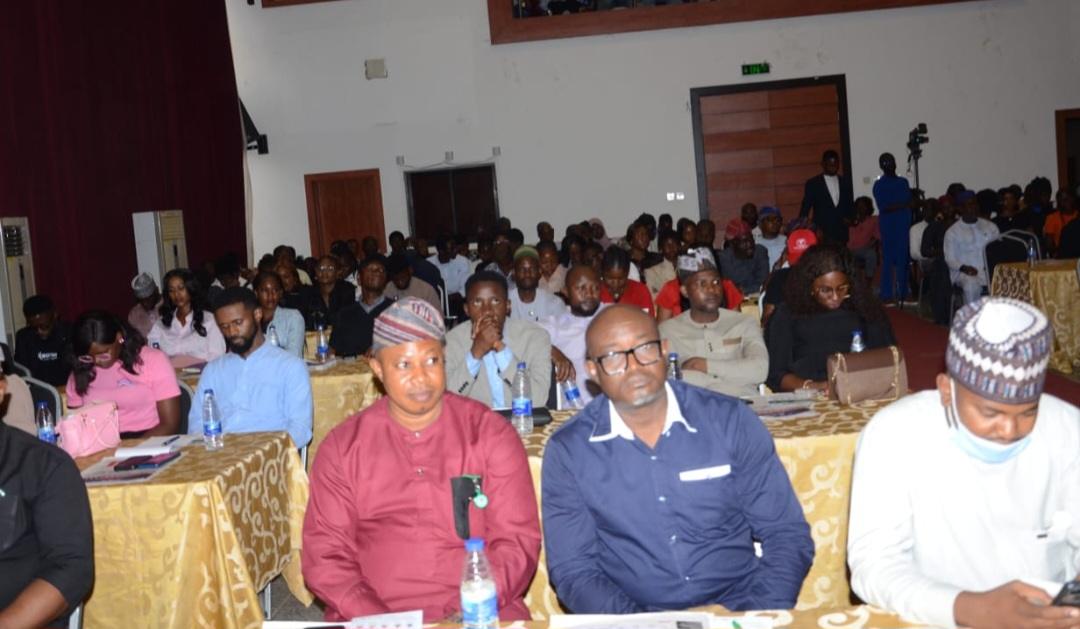
Stakeholders at the conference with the theme: “Navigating the new tax reform, what it means for your wallet,” maintained that stronger compliance would eventually translate into better infrastructure, improved public services and greater trust between citizens and government.