


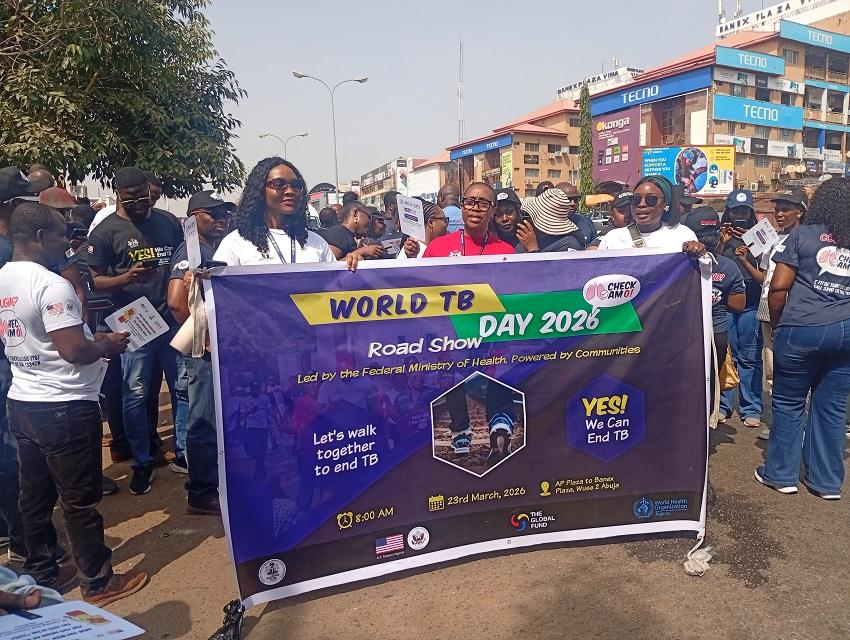
Nigeria has intensified nationwide awareness campaigns on tuberculosis (TB), as stakeholders in the health sector step up efforts to curb the disease and drive progress towards ending the epidemic.
The initiative, part of activities marking World Tuberculosis Day 2026, features a roadshow and week-long engagements aimed at educating citizens on the dangers, symptoms, prevention, and availability of free TB treatment.
The awareness walk drew participation from government agencies, implementing partners, and community-based organisations, all aligning with the global theme, “Yes, We Can End TB.”
Senior Programme Officer, Prevention, Care and Treatment at the Institute of Human Virology Nigeria, Kelechi Nzeadibe, said the campaign is critical in addressing misconceptions and encouraging early care-seeking.
“Many people still think tuberculosis is a disease of the past, but that is not true. TB is still very much present in our communities, and awareness like this helps people understand the need to seek care early,” Nzeadibe explained.
She stressed that ending TB requires collective responsibility across government, partners, and communities.
“The theme clearly states that ending TB is possible, but it requires everyone, government, partners, and the community to work together; without people buying into this process, we cannot end TB in Nigeria,” the Senior Programme Officer stated.
Nzeadibe noted that in collaboration with the National Tuberculosis and Leprosy Control Programme and support from partners such as the Global Fund, TB services are being expanded to reach more Nigerians, including through private health facilities and community-level interventions.
“We are ensuring that TB services are available not just in public hospitals but also in private facilities, community pharmacies, patent medicine vendors, and even faith-based organisations. We are also engaging community TB and HIV workers who go from house to house to screen people and refer them for testing
“All TB services from screening and diagnosis to treatment are provided free of charge, removing financial barriers that may prevent people from accessing care,” she said.
Also speaking, Impact Project Coordinator at KNCV Nigeria, Dr Eze Chukwu, said efforts are ongoing to scale up active case finding through hospitals, community outreach, and informal health settings.
“One of the key approaches we use is active case finding; we go into hospitals, communities, and even informal health settings like chemists and patent medicine stores to identify people who may have TB,” he said.
He highlighted the role of modern diagnostic tools such as portable digital X-ray systems and GeneXpert machines in improving detection, particularly for drug-resistant TB.
“Drug-resistant TB is a major concern, but with the diagnostic platforms we now have, we can quickly detect resistance and place patients on the right treatment regimen in line with national guidelines,” the Impact Project Coordinator explained.
Dr Chukwu warned that untreated TB remains highly infectious.
“One untreated TB patient can infect up to 15 people within a year, that is why we are out here to break that chain of transmission through awareness and early diagnosis,” he said.
He urged Nigerians to seek medical attention if they experience symptoms such as persistent cough, fever, unexplained weight loss, and night sweats, and to use the toll-free line 3340 for support.
Assistant Director at the National Tuberculosis and Leprosy Control Programme, Dr Stella Makpy, said the campaign is being replicated nationwide to close awareness gaps.
“The essence of this roadshow is to enlighten the public. Awareness about TB is still low, and many people do not fully understand how it is transmitted, prevented, or treated
“This is not just happening here, across the country, TB programmes at state and local government levels are carrying out similar awareness activities, we are taking the message to the people, especially in areas with high population density,” she emphasised.
Dr Makpy noted that additional outreach activities have been organised to provide screening and link individuals to care through designated DOTS centres.
“We have structures in place. If anyone wants to get tested, they will be referred to the nearest DOTS centre where services are available. The goal is to ensure that no one is left behind,” she said.
Participants distributed informational materials and engaged directly with the public, reflecting growing awareness and interest in TB prevention and treatment.
Stakeholders emphasised that ending TB in Nigeria is achievable through sustained investment, early detection, and strong community participation, urging citizens to take advantage of free services and help stop the spread of the disease.