


Nigeria’s ambitious economic plan of one-trillion-dollar economy has put much pressure on public institutions geared towards meeting up the set economic roadmap.
One of the government agencies that is in the forefront of achieving this economic stride is the Transmission Company of Nigeria (TCN). This is a sole bulk electricity transmission provider responsible for conveying power from generation plants to distribution load centres nationwide.
The agency is already taking deliberate steps toward strengthening grid stability and expanding transmission capacity.
Electricity powers industries, supports small and medium-scale enterprises, enable digital services, strengthen healthcare delivery, and improves the quality of life for millions of Nigerians as stable and reliable power supply remains a non negotiable foundation for achieving the laudable economic framework.
Where power supply is unstable, productivity suffers, operating costs rise, and economic competitiveness decline. On the other hand, a stable electricity grid unlocks growth, job creation, industrial expansion, and investor confidence.
The urgency of reform in the power sector is underscored by the Africa Trade Barometer report by Standard Bank, which reveals that Nigeria’s persistent power challenges are costing the economy an estimated twenty-six billion dollars annually.
In recent years, TCN under the leadership of Dr.Sule Abdulaziz has pursued a clear reform agenda focused on strategic planning, infrastructure renewal, operational discipline, and human capital development. Central to this transformation is the Nigerian Electricity Grid Maintenance, Expansion and Rehabilitation Programme.
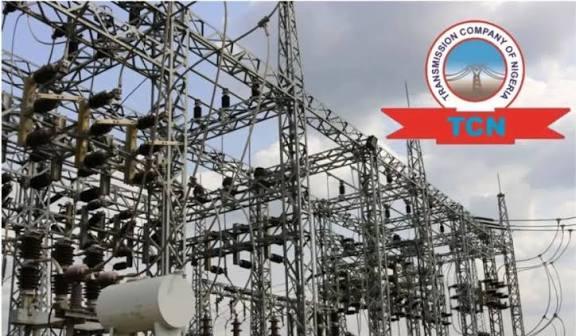
TCN has also prioritised the rehabilitation of ageing infrastructure, expansion of transmission capacity, and proactive maintenance of critical assets. New substations have been completed, weak and ageing transmission lines rehabilitated, obsolete transformers replaced, and existing ones upgraded to handle higher loads.
These TCN efforts are increasingly positioning the power transmission sub-sector as a strategic enabler of Nigeria’s journey towards a trillion-dollar economy.
These interventions have improved the grid’s ability to evacuate available generation and deliver electricity more efficiently across the country and the results have been significant as Nigeria has recorded multiple system generation peaks, including a historic high of over 5,800 megawatts, while the national grid achieved an unprecedented milestone of operating for more than 400 consecutive days without collapse between July 2022 and September 2023.
Today, TCN has the technical capacity to wheel about 8,700 megawatts across its 330kV and 132kV transmission networks, providing Distribution Companies with greater opportunity to take off power and support economic activities across States in Nigeria.
Beyond physical infrastructure, TCN has embraced digital transformation to enhance grid visibility and operational control. Through innovative in-house technology solutions and upgraded internal platforms, system operators now have improved access to near real-time data from generators and substations.
TCN has also deepened engagement with stakeholders across the electricity value chain, host communities, and security agencies through sustained dialogue and sensitization. The company continues to address challenges such as equipment vandalism, ensuring better protection of critical national infrastructure.
On March 4, 2025, a major milestone was achieved, when TCN successfully transmitted an all-time peak generation of over 5,801 MW, with a maximum daily energy delivery of over 129,370 MW nationwide, being the highest in Nigeria’s history.
Between January 2024 and November 2025, TCN also commissioned 82 new power transformers, adding over 8,500MVA to the national grid and significantly improving system reliability and capacity.
TCN has also made landmark initiatives through the strategic projects funded by development partners, valued at over $1.16bn.
One of such projects is the Abuja Feeding Scheme, which involves the construction of five new substations and a 330kV transmission line.
As Nigeria pursues economic diversification, industrialisation, and digital transformation under the Renewed Hope Agenda, the importance of a stable and reliable power transmission system cannot be overemphasised.