


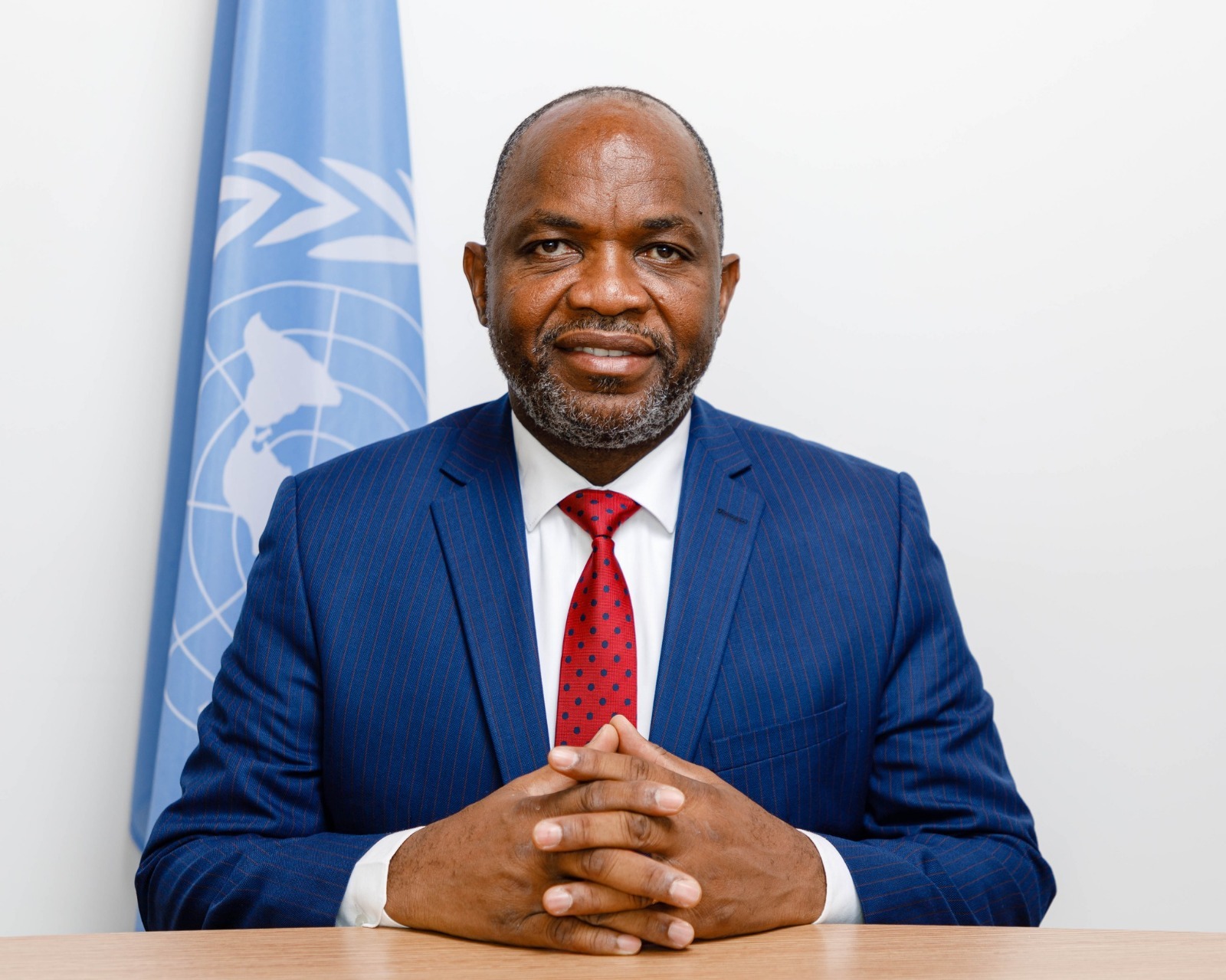
The UN Women Regional Director for West and Central Africa, Maxime Houinato, has stressed that traditional leaders hold a unique and powerful position to drive lasting change because of their cultural legitimacy and community trust.
In a statement ahead of a conference where Traditional leaders from across Africa will converge in Lagos to examine how cultural authority can be mobilised to end violence against women and girls.
Mr. Houinato underscored the urgency of locally led solutions to addressing the scale of abuse across the continent.
“Their influence-rooted in culture, authority and community trust-positions them not just as custodians of heritage, but as essential partners in redefining norms, protecting rights and leading a continental shift toward safety, dignity and equality for every woman and girl,” Houinato said.
The meeting, bringing together custodians of tradition from multiple countries, comes amid persistent reports of intimate partner violence, sexual abuse, child marriage and other harmful practices that continue to undermine women’s rights and development goals in Africa.
According to him, violence against women and girls remains widespread and significantly underreported, posing a major obstacle to the attainment of the African Union’s Agenda 2063 and the Sustainable Development Goals.
He cited recent United Nations and World Health Organisation findings showing that intimate partner and sexual violence persist at “alarming levels” across the region.
He noted that Sub-Saharan Africa, , records some of the highest rates of intimate partner violence globally, with studies indicating that more than 40 per cent of women surveyed have experienced emotional, physical or sexual abuse.
Beyond the immediate harm, Houinato said the impact spans generations, pointing to research across 37 African countries linking mothers’ exposure to violence with higher risks of illness, undernutrition and death among children under five.
“Harmful practices are not only violations of women’s rights, they are a major threat to child survival and public health,” he said.
While acknowledging progress in some countries, Houinato warned that deeply entrenched practices continue to endanger millions of girls.
“West and Central Africa, remain the global epicentre of child marriage, with nearly 60 million women and girls in the region married before the age of 18. Nigeria accounts for the largest absolute number,” he said
He pointed to Kenya as an example of how change is possible, noting that female genital mutilation prevalence dropped to about 15 per cent in 2022 from 21 per cent in 2014, according to the latest Demographic and Health Survey.
However, he cautioned that high prevalence persists in several communities, requiring sustained vigilance to prevent medicalisation and cross-border practices.
Emotional Violence
On Nigeria, Houinato said national surveys and administrative records indicate widespread physical, sexual and emotional violence, with thousands of cases reported annually—figures he described as a significant undercount of the true scale of abuse.
He however commended the Federal Government’s National Gender-Based Violence Data Collation Tool as a step toward improved reporting and coordination, stressing that nationwide scale-up and linkage to survivor-centred services would be critical.
“The upcoming Conference of African Traditional Leaders in Lagos signals a growing recognition that cultural authority can be mobilised to protect women and girls. UN Women’s engagement with traditional councils across Africa has shown that when leaders publicly denounce harmful practices, norms begin to shift and laws gain legitimacy, “he said.
According to Houinato, Africa’s legal framework on women’s rights has strengthened over the years, citing the Maputo Protocol and recent moves by the African Commission to develop a Model Law to accelerate domestication and harmonisation.
However, he argued that laws are most effective when reinforced by community values that affirm women’s dignity.
“Traditional and religious leaders who champion public declarations, alternative rites of passage and community bylaws help convert state law into lived practice, referencing lessons from the EU–UN Spotlight Initiative implemented with the African Union,” he said
He further urged traditional leaders attending the Lagos meeting to make concrete commitments, including publicly denouncing harmful practices such as child marriage, widowhood rites and female genital mutilation, promoting survivor-centred justice within customary systems, safeguarding girls’ education and childhood, and encouraging positive models of masculinity that reject violence.
“Culture is not a relic; it is a living promise we renew with each generation. As guardians of that promise, Africa’s traditional leaders can lead a continental transformation—from harmful silence to protective speech, from permissive norms to zero tolerance”, Houinato said.
The Lagos convening is being held with the support of the Ford Foundation, which UN Women said has played a long-standing role in advancing gender justice, human rights and community-led approaches to ending violence against women and girls across Africa.
Lateefah Ibrahim