

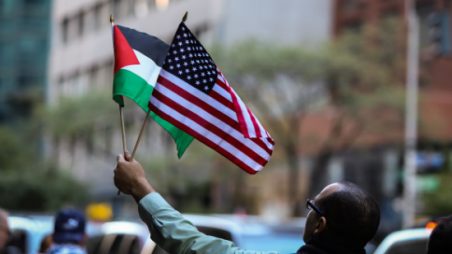
The United States imposed sanctions on Thursday on officials from the Palestinian Authority (PA) and the Palestine Liberation Organisation (PLO), accusing them of undermining peace efforts with Israel. The move deepens a growing diplomatic rift with key Western allies who are moving toward recognising Palestinian statehood.
The U.S. State Department announced visa bans for unnamed PA and PLO officials, stating the sanctions aim to hold them accountable for “not complying with their commitments and undermining the prospects for peace.”
“This is in our national security interest,” the statement said, adding that the two groups had taken actions to internationalise the conflict with Israel, including moves through the International Criminal Court, and accused both of continuing to support terrorism.
The PA and PLO—longstanding representatives of the Palestinian people—had no immediate response. Both organisations have been central in advocating for international recognition of a Palestinian state, efforts now gaining traction in global diplomatic circles.
The sanctions come as Canada, France, and the United Kingdom have indicated support for recognising a Palestinian state. Canada announced on Wednesday that it would support statehood recognition at the U.N. General Assembly in September. France announced its support last week, and Britain said it would do the same if fighting in Gaza persists.
U.S. President Donald Trump, in his second term since January, has remained noncommittal on a two-state solution and insists that recognising a Palestinian state would reward Hamas, which continues its conflict with Israel in Gaza.
Israel has condemned the moves by its allies. Israeli Foreign Minister Gideon Saar praised the U.S. sanctions, saying they represent moral clarity and criticised other nations for “recognising a virtual Palestinian state while ignoring its support for terror.”
The Deputy State Department spokesperson Tommy Pigott declined to connect the sanctions directly to the statehood recognitions, stating the decision was based on a regular Congressional review of Palestinian compliance.
It remains unclear how the visa bans will affect Palestinian diplomats, especially under the 1947 U.N. headquarters agreement, which obliges the U.S. to grant diplomatic access to the U.N. in New York. However, Washington can make exceptions based on security and foreign policy concerns. Waivers may be granted on a case-by-case basis, Pigott added.
The U.S. action follows an international conference on the two-state solution hosted this week by France and Saudi Arabia at the U.N.—an event boycotted by both Israel and the U.S.
Meanwhile, U.S. Special Envoy Steve Witkoff met with Israeli Prime Minister Benjamin Netanyahu on Thursday to revive stalled truce talks and address the humanitarian crisis in Gaza, where famine warnings persist.
The war in Gaza began on October 7, 2023, when Hamas militants launched a surprise attack on southern Israel, killing 1,200 people and taking 251 hostages. Israel’s subsequent military campaign has killed over 60,000 people, mostly civilians, according to Gaza health officials, and displaced nearly the entire population.
As global opinion shifts and peace efforts remain elusive, Washington’s latest move underscores the rising stakes and divisions in the international community over how to address the Israeli-Palestinian conflict.
Reuters/s.s