

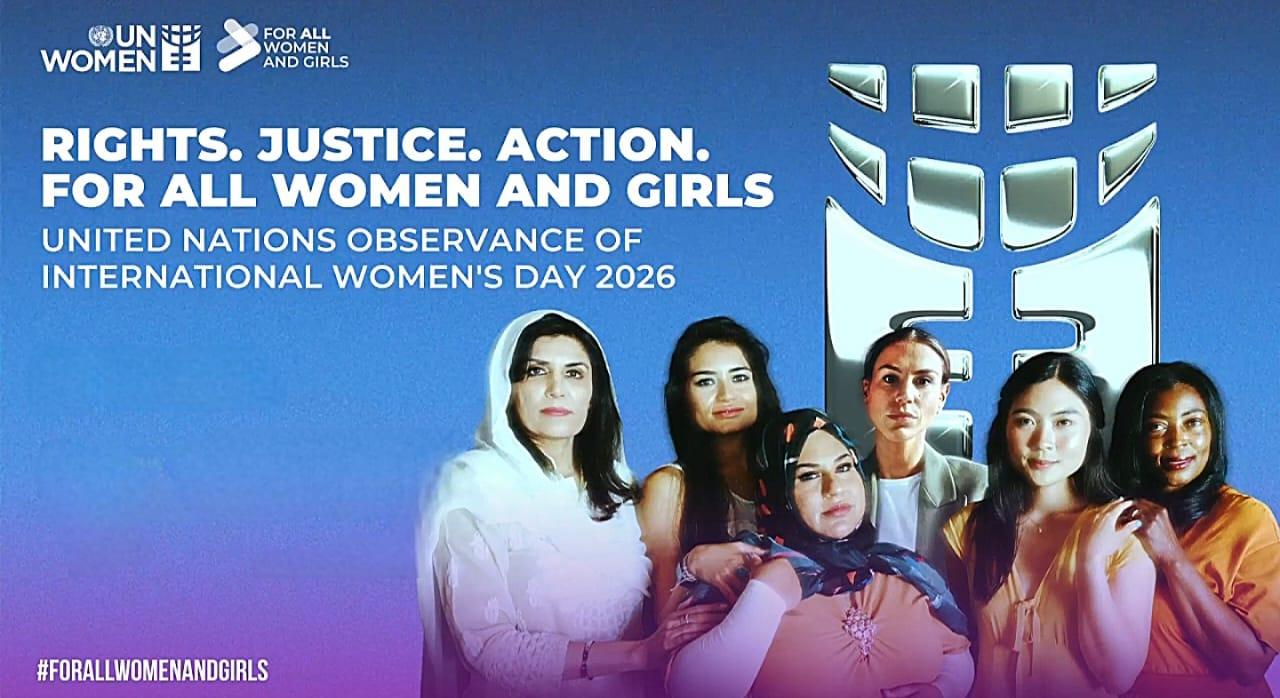
The Under-Secretary-General of the UN and Executive Director of UN Women, Sima Bahous, says “justice remains the foundation of equality for women and girls worldwide.”
Addressing the 2026 commemoration of International Women’s Day at the United Nations, Bahous commended the determination and achievements of women across generations while stressing the need for sustained advocacy.
“International Women’s Day is a celebration recognising all that has been achieved across generations and nations for women’s empowerment and gender equality,” she said.
However, she warned that gender equality is facing renewed resistance in many parts of the world.
“In its face, we do not back down. We redouble our efforts. We rise higher,” she said.
Bahous emphasised that legal equality for women and girls remains unrealised globally.
“Globally, no country meets its duty of full legal equality for women and girls.”
Calling for stronger justice systems and legal protections, she said women and girls must be able to live “a life free from violence, a life lived in peace for all women and girls everywhere.”
The UN Secretary-General, António Guterres, also urged urgent global action to advance gender equality.
“Women’s rights are human rights, and investing in women and girls is one of the surest ways to make the world a better place,” he said.
Represented by Courtney Rattray, Guterres called on governments to dismantle discriminatory laws and strengthen justice systems to protect survivors and hold perpetrators accountable.
“This moment right now demands action,” he said, adding that gender parity is “essential for a more just, peaceful, and sustainable future.”
Nobel Peace Prize laureate Malala Yousafzai delivered an emotional reflection on the impact of conflict and repression on children and girls worldwide.
“Today, I stand here heartbroken. Never have I seen so many children suffering from war and violence,” she said.
Highlighting the situation in Afghanistan, she noted that women and girls have been pushed out of public life under Taliban rule.
“This is not culture. It is not religion. It is a system of segregation and domination,” she said, urging governments to recognise what she described as “gender apartheid.”
“Speeches do not protect girls, but law, accountability, and political courage can.”
In a global call to action, Afghan student and musician Sambul Reha said:
“I know what it means when a girl’s voice is silenced. I have lived it. Protect a girl’s right to an education. Defend a woman’s right to speak out, safely and without retaliation.”
Chair of the Commission on the Status of Women, Maritza Chan Valverde, reminded delegates of the human consequences behind policy decisions.
“Behind every negotiating position is a woman and girl waiting to see if we mean what we say,” she said, stressing that the outcome depends on “political will.”
Global leaders and advocates renewed calls for stronger protections and equal rights, urging governments to move beyond commitments and take concrete action for women and girls worldwide.